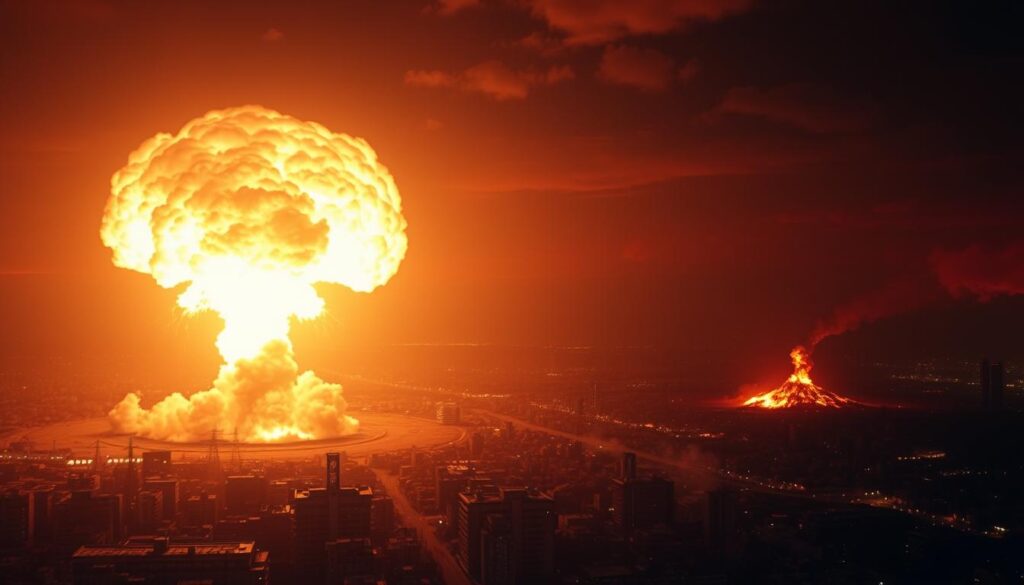
The atomic bombings of Hiroshima and Nagasaki happened on August 6 and 9, 1945. These events were a key moment in World War II. They caused huge nuclear damage, leading to Japan’s surrender1.
These bombings were the first time atomic weapons were used in war. They caused a lot of damage and loss of life in both cities. The U.S. dropped atomic bombs on these Japanese cities, marking a big change in the war2.
The effects of the bombings were huge. In Hiroshima, between 90,000 to 166,000 people died. In Nagasaki, between 60,000 to 80,000 people lost their lives1. The bombings made Japan surrender to the U.S., ending World War II in 19452.
In Hiroshima, about 80,000 people died in the first few minutes. More died from radiation sickness. Nagasaki saw 39,000 fatalities and 25,000 injuries from “Fat Man”2.
Introduction to the Atomic Bombings
The atomic bombings of Hiroshima and Nagasaki were a result of the U.S.’s efforts to end World War II. The bombings caused huge damage in both cities3. The decision to drop the atomic bombs was made by military leaders and President Truman3.
The bombings killed between 90,000 and 166,000 people in Hiroshima. In Nagasaki, an estimated 40,000 to 75,000 people died immediately3.
Key Takeaways
- The atomic bombings of Hiroshima and Nagasaki took place on August 6 and 9, 1945, respectively, resulting in devastating nuclear devastation.
- The bombings were a key moment in World War II, leading to Japan’s surrender and the end of the war.
- The estimated casualties in Hiroshima ranged from 90,000 to 166,000 killed, and in Nagasaki, estimated casualties ranged from 60,000 to 80,000 killed.
- The use of atomic bombs forced Japan to surrender to the United States, ending World War II in 1945.
- The bombings resulted in approximately 80,000 deaths in Hiroshima in the first few minutes, with an additional number from radiation sickness.
- The decision to drop the atomic bombs was approved by military leaders and President Truman, leading to massive devastation in both cities.
Historical Context of the Atomic Bombings
The journey to the atomic bombings was shaped by growing global tensions and major scientific breakthroughs in World War II. To grasp this, we must look at the events leading up to this critical moment in history.
The Lead-Up to World War II
Before World War II, the world saw big changes in politics and the military. The rise of dictatorships and their push for more land made things very tense. This tension led to a war that needed new and bold actions.
Key Players and Their Motivations
Important figures in making the atomic bomb included scientists like J. Robert Oppenheimer and Enrico Fermi. Military leaders like General Leslie Groves also played a big role. They were driven by a desire to learn, to win the war, and to end it quickly4.
Development of Nuclear Weapons
The Manhattan Project was key in making the atomic bomb, starting in 1942. It was a secret U.S. program that involved many sites and over 50,000 people at its peak5. Big scientific wins, like the first nuclear reaction in 1942, helped make the first atomic bombs6.
The Events of August 1945
On a fateful morning, the world saw nuclear devastation as the first atomic bomb was dropped. The mission to end the war quickly turned catastrophic.
Hiroshima: The First Target
At 08:15 on August 6, 1945, the B-29 bomber Enola Gay dropped the “Little Boy” atomic bomb over Hiroshima. This Hiroshima bombing used a gun-type design with uranium 235. It produced an explosion yield of about 15 kilotons and a fireball temperature of 7,000 degrees Celsius7. The blast destroyed the city, marking the first use of nuclear weapons in war.
Nagasaki: The Second Strike
Three days later, on August 9, 1945, Nagasaki was hit. The “Fat Man” bomb, a plutonium implosion-type weapon, was used. This bombing had devastating atomic bomb effects. Nagasaki was chosen for its industrial importance and previous damage from Hiroshima8.
Immediate Impact on the Cities
The bombings caused massive loss of life, with up to 166,000 deaths, mostly civilians7. The intense heat and radiation caused widespread destruction and long-term health issues. This showed the horrors of nuclear devastation.
| Aspect | Hiroshima | Nagasaki |
|---|---|---|
| Date | August 6, 1945 | August 9, 1945 |
| Bomb Type | “Little Boy” (Uranium-235) | “Fat Man” (Plutonium) |
| Yield | ~15 kilotons | ~21 kilotons |
| Estimated Deaths | 90,000–166,000 | 60,000–80,000 |
| Immediate Impact | Complete destruction of the city center | Significant industrial area devastation |
Aftermath and Long-Term Consequences
The atomic bombings left a lasting impact. Even today, the lives of atomic bomb survivors are deeply changed by their experiences9.
Human Casualties and Suffering
Survivors, known as hibakusha, saw higher rates of cancer and birth defects. These effects were seen in themselves and their children9. Many struggle with the physical and mental scars from the bombings10.
Political and Social Ramifications
The bombings changed the world’s politics, starting the Cold War and a nuclear race. Japan rebuilt and adopted a pacifist constitution. This changed its national identity and how it relates to the world9.
Legacy of Nuclear Weapons Today
Now, Hiroshima and Nagasaki are key symbols in peace efforts and nuclear disarmament. Many historical sites and memorials remember the victims. They teach future generations about nuclear war’s harm9. Efforts continue to promote peace and stop nuclear weapons use10.
FAQ
What were the atomic bombings of Hiroshima and Nagasaki?
The atomic bombings of Hiroshima and Nagasaki were two nuclear attacks by the United States in August 1945. Hiroshima was hit on August 6, and Nagasaki on August 9. These attacks caused huge destruction, loss of life, and health problems for survivors.
Why were Hiroshima and Nagasaki chosen as targets for the atomic bombings?
Hiroshima and Nagasaki were picked because of their military and industrial importance. Hiroshima was a key military base, and Nagasaki was a major port. The goal was to show Japan the power of nuclear weapons to make them surrender.
What was the immediate impact of the atomic bombings on Hiroshima and Nagasaki?
The bombings had a huge impact. In Hiroshima, 70,000–80,000 people died right away, and the city was destroyed. Nagasaki saw 40,000–75,000 deaths immediately. Both cities suffered from severe damage and survivors faced radiation sickness, burns, and long-term health issues like cancer.
Who were the key figures involved in the decision to use atomic weapons?
Key figures included President Harry S. Truman, who gave the order, General Leslie Groves, and scientists like J. Robert Oppenheimer. They faced big ethical questions about using nuclear weapons to end the war.
What was the Manhattan Project and its role in the atomic bombings?
The Manhattan Project was a secret U.S. effort during World War II to make nuclear weapons. It brought together top scientists and engineers to overcome big challenges. Their success led to the bombings of Hiroshima and Nagasaki.
How did the atomic bombings influence the outcome of World War II?
The bombings were key in Japan’s decision to surrender, ending World War II. The huge damage and the nuclear display forced Japan to give up, avoiding a long and costly invasion.
What are the long-term effects on the survivors, known as hibakusha?
Hibakusha, the survivors, faced many long-term effects. They had chronic health issues, like cancer, and psychological trauma. They also faced social stigma and economic struggles. Ongoing support is needed for their well-being.
How have Hiroshima and Nagasaki been memorialized in the years after the bombings?
Hiroshima and Nagasaki have become symbols of peace and nuclear disarmament. They have memorials and historical sites, like the Hiroshima Peace Memorial Park. Annual ceremonies and educational programs are held to honor victims and promote peace.
What were the political and social ramifications of the atomic bombings globally?
The bombings started the nuclear arms race and led to the Cold War. They showed the devastating power of nuclear weapons. This led to international efforts to prevent nuclear proliferation and promote disarmament.
How did the atomic bombings affect Japan’s postwar reconstruction and constitution?
After the bombings, Japan worked hard to rebuild its cities and economy, with U.S. support. The bombings also influenced Japan’s adoption of a pacifist constitution in 1947. This constitution renounces war and promotes peaceful conflict resolution.
What is the legacy of the atomic bombings of Hiroshima and Nagasaki today?
The legacy of the bombings is a reminder of nuclear warfare’s horrors. Hiroshima and Nagasaki continue to push for peace and disarmament. Their stories highlight the need to prevent future nuclear conflicts and promote global peace.
Source Links
- Atomic bombings of Hiroshima and Nagasaki – https://en.wikipedia.org/wiki/Atomic_bombings_of_Hiroshima_and_Nagasaki
- Decision to Drop the Atomic Bomb – https://www.trumanlibrary.gov/education/presidential-inquiries/decision-drop-atomic-bomb
- Bombings of Hiroshima and Nagasaki – 1945 – Nuclear Museum – https://ahf.nuclearmuseum.org/ahf/history/bombings-hiroshima-and-nagasaki-1945/
- Bombing of Hiroshima and Nagasaki ‑ Causes, Impact & Lives Lost | HISTORY – https://www.history.com/topics/world-war-ii/bombing-of-hiroshima-and-nagasaki
- Atomic bombings of Hiroshima and Nagasaki | Date, Significance, Timeline, Deaths, & Aftermath | Britannica – https://www.britannica.com/event/atomic-bombings-of-Hiroshima-and-Nagasaki
- The Story of the Atomic Bomb – https://www.afhistory.af.mil/FAQs/Fact-Sheets/Article/458993/the-story-of-the-atomic-bomb/
- 6 and 9 August 1945 – Hiroshima and Nagasaki – https://www.ctbto.org/news-and-events/news/6-and-9-august-1945-hiroshima-and-nagasaki
- The Atomic Bombing of Hiroshima and Nagasaki, August 1945 – https://www.archives.gov/news/topics/hiroshima-nagasaki-75
- Long-term Radiation-Related Health Effects in a Unique Human Population: Lessons Learned from the Atomic Bomb Survivors of Hiroshima and Nagasaki – https://pmc.ncbi.nlm.nih.gov/articles/PMC3907953/
- Photos: Hiroshima and Nagasaki, Before and After the Bombs | HISTORY – https://www.history.com/news/hiroshima-nagasaki-atomic-bomb-photos-before-after