
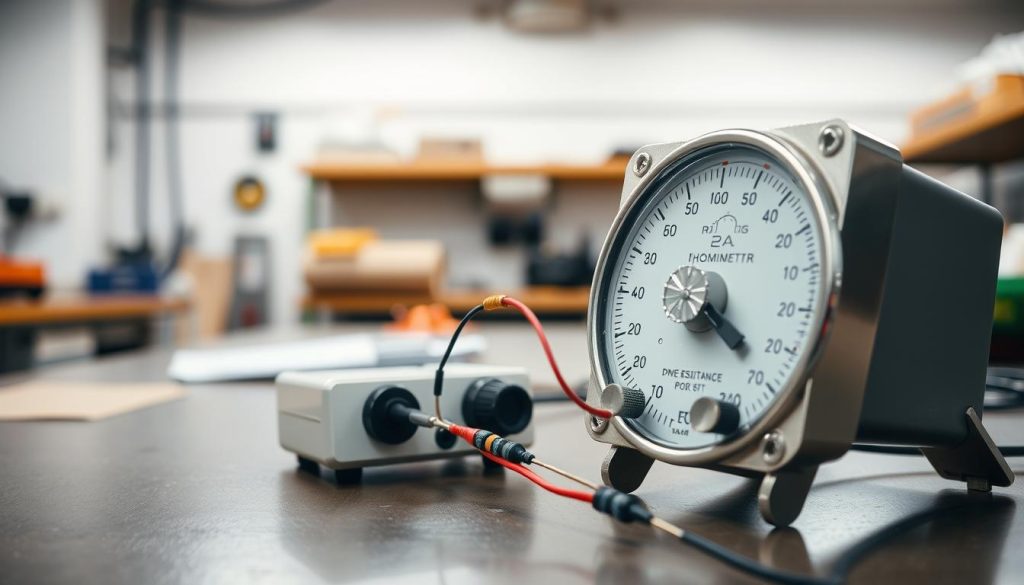
Mastering an ohmmeter is crucial for electrical diagnostics. This tool helps you check circuit health with great accuracy1. Ohmmeters are key multimeter functions for testing circuits and components1.
Over 750,000 users have explored ohmmeter techniques. This shows a big interest in electrical diagnostics1. These devices give vital insights into electrical systems, helping spot issues early.
Safety is key when using an ohmmeter. Pros say to make sure circuits are off before testing1. This prevents wrong readings and meter damage.
Learning about resistance measurement can boost your electrical troubleshooting skills. It’s a valuable tool for both pros and DIY fans.
Key Takeaways
- Ohmmeters are critical for precise electrical diagnostics
- Always disconnect power before measurements
- Check meter functionality before testing
- Understand proper scale selection for accurate readings
- Use test leads designed for your specific meter
Getting Started with Ohmmeter Basics
Ohmmeters are vital for electrical testing and troubleshooting. They help measure electrical resistance accurately. Multimeters can gauge four key electrical properties, including resistance (ohms reading)2.
Understanding Ohmmeter Components
A typical ohmmeter has several critical components for accurate continuity testing. These include a digital display, two probe leads, multiple measurement ports, and a range selection dial.
- Digital display for reading resistance
- Two probe leads (red and black)
- Multiple measurement ports
- Range selection dial
For setup, plug the black lead into the “COM” port. Insert the red lead into the ohms port3. Digital multimeters often have auto-ranging options to simplify measuring2.
Proper Ohmmeter Setup
Follow these steps for accurate ohms reading:
- Connect leads to appropriate ports
- Touch probes together to zero out the meter
- Select appropriate resistance range
- Touch probes to component being tested
Functional probes should read 0.5 ohms or less2. When test leads are shorted, the display should show 0 Ω3.
Safety Precautions
Always put safety first when conducting electrical measurements. Check your multimeter wires for cracks or fraying to avoid shocks2.
Don’t touch live circuits. Use the correct measurement settings for your specific test.
Remember: Proper preparation and careful handling are key to accurate and safe electrical testing.
How to Use an Ohmmeter for Electrical Testing
An ohmmeter is essential for measuring resistance in electrical components. It’s a key tool for troubleshooting circuits and devices. Analog or digital multimeters can test current, voltage, and resistance4.
Before testing, always disconnect power from the circuit. This ensures accurate and safe readings. Digital multimeters offer various modes for continuity and resistance checks4.
When first connected, the display shows OLΩ, indicating an open circuit. Resistance readings can change due to dirt, solder flux, or human touch. Your body can act as a parallel resistance path4.
Different components have unique resistance traits. Switches and relay contacts start low but increase with wear. Motors and solenoids often decrease as insulation breaks down4.
For precise measurements, use the relative mode (REL). This subtracts test lead resistance, typically 0.2 Ω to 0.5 Ω. The MIN/MAX button captures lowest and highest readings4.
Digital multimeters provide valuable insights into electrical systems. They’re powerful tools when used correctly. Master their use to improve your component troubleshooting skills4.
FAQ
What is an ohmmeter and what does it measure?
An ohmmeter measures electrical resistance in ohms. It determines how much a component or circuit resists electrical current flow. This tool is vital for diagnosing electrical issues and ensuring proper circuit function.
How do I choose the right range setting on my ohmmeter?
Pick a range slightly higher than the expected resistance value for accuracy. Many digital multimeters have auto-range features. This feature selects the right measurement scale automatically, making it easier for beginners.
What safety precautions should I take when using an ohmmeter?
Always unplug power sources before measuring. Check that your test leads are in good shape. Use insulated probes and avoid wet conditions.
Never use an ohmmeter on live circuits or components with voltage. This can damage the device and create safety risks.
How do I perform a continuity test with an ohmmeter?
Set your multimeter to continuity mode, often shown by a sound wave symbol. Touch the probes to both ends of the item you’re testing.
A beep or zero resistance reading means a complete circuit. No sound suggests an open circuit or broken connection.
What does an infinite resistance reading mean?
An infinite resistance (shown as “OL” or “∞”) indicates an open circuit. This means there’s no path for electrical current to flow. It could signal a broken wire, faulty component, or complete insulation.
Can I use an ohmmeter to test different types of electrical components?
Yes, ohmmeters can test various components like resistors, capacitors, and switches. They also work on fuses, wiring, and electrical connections.
Different components need specific testing techniques. Understanding typical resistance values for each component is important.
How accurate are typical ohmmeters for home and professional use?
Professional digital multimeters usually offer accuracy within 0.5% to 1.5% for resistance measurements. Home-use devices might be slightly less precise. Both are suitable for most basic electrical troubleshooting tasks.
What’s the difference between an analog and digital ohmmeter?
Digital ohmmeters give precise numerical readings and often include auto-ranging features. Analog ohmmeters use a moving needle to show resistance.
Digital models are generally more accurate and easier to read. They also offer extra features like data hold and backlight.
Source Links
- How to Use an Ohmmeter to Measure Resistance & Continuity – https://www.wikihow.com/Use-an-Ohmmeter
- How to Use a Multimeter – https://www.homedepot.com/c/ah/how-to-use-a-multimeter/9ba683603be9fa5395fab90d6f3ffa5
- How to Measure Resistance with a Digital Multimeter – https://www.fluke.com/en-us/learn/blog/digital-multimeters/how-to-measure-resistance?srsltid=AfmBOopAX5WG3bA3OcZx64WJu6DKQ2GX61295KW7VZtTcteKAvyvo29F
- How to Measure Resistance with a Digital Multimeter – https://www.fluke.com/en-us/learn/blog/digital-multimeters/how-to-measure-resistance?srsltid=AfmBOool5sboqKhuOqAorzbhczRKWy1KE5RM1rGKMZA8w61RPecmq8mw

