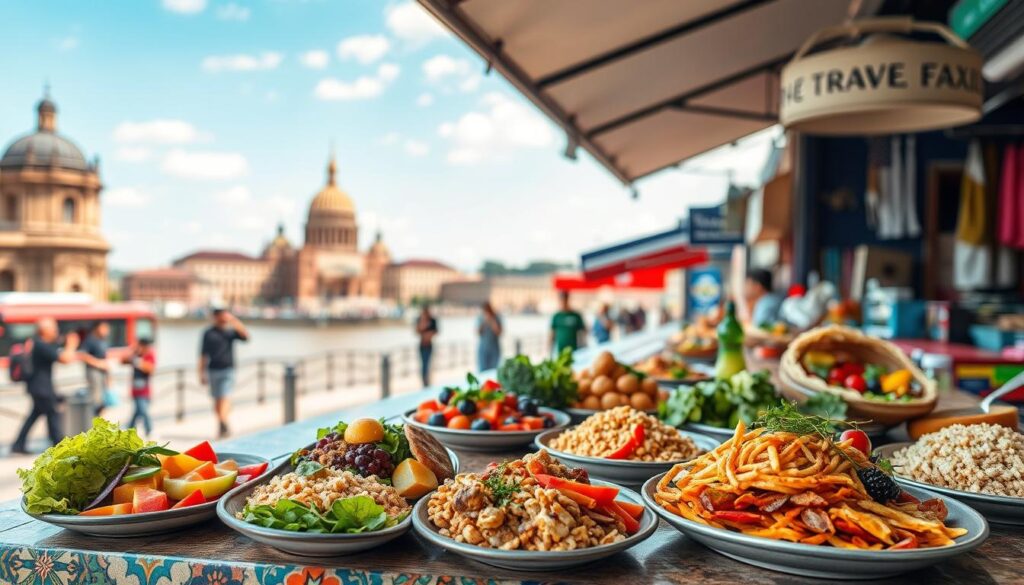
Planning is key for safe travels with dietary restrictions. You can enjoy tasty meals worldwide by understanding your needs. Each place offers unique food challenges, so research is vital.
Food safety is crucial for travelers with dietary restrictions. Choose fruits you can peel yourself. Stick to sealed bottled drinks. Be wary of street food and tap water.
Smart meal planning can turn obstacles into exciting food adventures. With the right approach, you’ll discover new flavors while staying healthy.
Key Takeaways
- Research destinations that cater to specific dietary needs
- Pack safe, nonperishable snacks as backup nutrition
- Learn key phrases to communicate dietary restrictions
- Carry necessary medical documentation
- Use specialized travel resources for dietary guidance
Understanding Your Dietary Needs
Traveling with dietary restrictions needs careful planning. You must know your specific nutritional needs. A balanced diet affects your health and travel experience3.
Identifying Your Specific Restrictions
Take time to assess your dietary needs before your trip. Know your calorie needs, allergens, and nutrient sensitivities.
A nutritionist can help create a personalized meal plan. This strategy ensures you meet your needs while traveling4.
- Assess food allergies and intolerances
- Review current nutritional requirements
- Understand portion control strategies
Learning About Common Allergens
Knowing common food allergens is vital for safe travel. Countries use different ingredient labeling practices. Research local terms for potential trigger foods.
Eating inappropriate foods poses health risks for those with dietary restrictions3.
“Knowledge of your dietary needs is your passport to safe and enjoyable travel.”
Planning Your Meals Accordingly
Effective meal planning starts with understanding nutrition labels. Learn to interpret percent daily values (%DV) for informed food choices.
Diets rich in whole, nutrient-dense foods support overall wellness. They can protect against various health conditions3.
- Research local cuisine ingredients
- Prepare translation cards for dietary needs
- Pack safe, familiar snacks
Understanding your dietary needs ensures a healthier travel experience. It helps you make better food choices while exploring new places4.
Researching Destinations
Careful planning is key when traveling with dietary restrictions. Your food choices can make or break your trip. Understanding local food options beforehand is crucial for a great experience.
Each destination offers unique food landscapes. These can either support or challenge your dietary needs. Research helps you prepare for any culinary hurdles you might face.
Finding Restaurants with Inclusive Menus
Finding restaurants that fit your diet is vital. Here are some helpful strategies:
- Use specialized apps and websites for dietary-friendly restaurant recommendations
- Read traveler reviews from individuals with similar dietary restrictions
- Check restaurant websites for detailed menu information
Checking Local Grocery Stores
Local grocery stores can be your food allies while traveling. Look for stores that offer:
- Fresh produce aligned with your nutritional needs
- Specialty food sections
- Pre-prepared meals matching your dietary guidelines
Accessing Community Support Groups
Online platforms are great resources for travelers with dietary needs5. Connect with local and online communities to:
- Get real-time recommendations
- Share experiences
- Discover hidden food options
Travel is about experiences, and understanding your dietary landscape helps you fully enjoy every destination.
| Research Strategy | Key Benefits |
|---|---|
| Online Food Communities | Authentic recommendations |
| Local Food Apps | Immediate dietary information |
| Restaurant Websites | Detailed menu insights |
Tips for Smooth Travel Experiences
Eating well while traveling can be tough with dietary restrictions. Good planning helps you stay healthy and stress-free on your trip. Smart food choices are key to a great journey.
Packing Your Own Snacks
Pack snacks that fit your diet before you leave. Bring nuts, dried fruits, and protein bars that match your needs6. These can save you when restaurants don’t have good options.
Communicating Your Needs Effectively
Clear communication is vital when dealing with food issues abroad. Use translation apps or cards to explain your diet in the local language7. This helps restaurant staff understand your needs and keeps you safe.
Using Apps for Dietary-Friendly Options
Tech can help you find the right places to eat. Get apps that show dietary-friendly restaurants and list ingredients. These tools make it easier to find good meals while traveling6.
FAQ
How can I prepare for traveling with dietary restrictions?
Research your destination’s food culture and meal options that fit your dietary needs. Pack essential medications and create translation cards explaining your restrictions. Carry nonperishable snacks as backup and use resources like Gluten Free Travel Site.
What should I do before traveling to ensure food safety?
Learn about local ingredient names and potential allergens. Prepare detailed medical documentation, including a Food Allergy & Anaphylaxis Emergency Care Plan. Research local cuisine and understand ingredient labels in different languages.
Learn key phrases to communicate your dietary needs effectively. This will help you stay safe and enjoy your trip.
How can I find restaurants that accommodate my dietary restrictions?
Use travel websites, apps, and review platforms to find restaurants with inclusive menus. Look for destinations known for accommodating specific diets, like Italy for gluten-free options. Connect with community support groups for recommendations from travelers with similar dietary needs.
What are the best strategies for managing meals while traveling?
Choose accommodations with cooking facilities and find local grocery stores for self-catering options. Pack your own snacks and carry necessary medications in your carry-on. Always have a backup plan ready.
Use smartphone apps to translate ingredient lists and communicate your dietary needs to restaurant staff. This will help you make informed choices.
How do I handle airline travel with dietary restrictions?
Inform the airline about your dietary needs well in advance. Carry a doctor’s note explaining your condition and pack essential medications in your carry-on. Bring your own snacks and be prepared to ask detailed questions about meal ingredients.
What precautions should I take for food allergies while traveling?
Always carry your epinephrine auto-injector and a comprehensive emergency care plan. Create translation cards in the local language explaining your allergies. Research local ingredient names and be proactive about asking food preparation details.
Consider bringing a small translation device or using smartphone apps to communicate your needs accurately. This ensures your safety throughout your trip.
Source Links
- 9 Ideas for Travelers with Dietary Restrictions | Frommer’s – https://www.frommers.com/tips/health-and-travel-insurance/9-ideas-for-travelers-with-dietary-restrictions
- Food and Drink Considerations When Traveling | Travelers’ Health – https://wwwnc.cdc.gov/travel/page/food-water-safety
- Healthy Eating 101: Nutrients, Macros, Tips, and More – https://www.healthline.com/nutrition/how-to-eat-healthy-guide
- How to Understand and Use the Nutrition Facts Label – https://www.fda.gov/food/nutrition-facts-label/how-understand-and-use-nutrition-facts-label
- The effect of food tourism experiences on tourists’ subjective well-being – https://pmc.ncbi.nlm.nih.gov/articles/PMC10861959/
- 5 Simple, Packable Remedies to Soothe Your Upset Gut While Traveling – https://www.viome.com/blog/5-simple-packable-remedies-to-soothe-your-upset-gut-while-traveling
- Diet and Traveling with IBD: Tips for a Smooth Journey – Lifestyle – Nutritional Therapy for IBD – https://www.nutritionaltherapyforibd.org/lifestyle/diet-and-traveling-with-ibd-tips-for-a-smooth-journey