
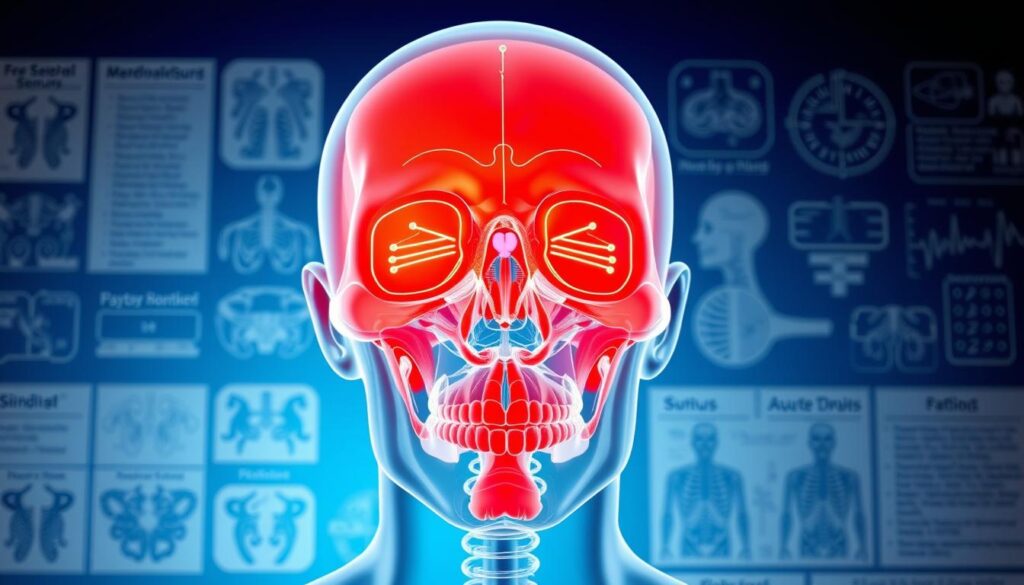
Sinus infections can be frustrating and uncomfortable. Acute sinusitis causes nasal congestion and facial pain1. Knowing the basics can help you find relief and manage your condition effectively.
Sinus infections happen when nasal passages get inflamed. This makes breathing hard and causes discomfort. Acute sinusitis affects 1 in 8 adults yearly1.
Most cases come from viral infections or colds. Symptoms usually last up to 4 weeks1. Factors like allergies, nasal issues, and pollutants raise your risk1.
Knowing these risk factors helps you prevent and manage symptoms. Taking action can make a big difference in your comfort.
Key Takeaways
- Acute sinusitis affects 1 in 8 adults annually
- Most cases are caused by viral infections
- Symptoms typically resolve within 4 weeks
- Environmental factors can increase infection risk
- Proper management can help alleviate discomfort
Understanding Acute Sinusitis Symptoms
Sinusitis can be frustrating and uncomfortable. Recognizing symptoms helps manage this respiratory challenge effectively. Your body sends clear signals when dealing with sinus inflammation.
Common Symptoms You May Experience
Acute sinusitis has several distinctive symptoms. These often include:
- Postnasal drip that feels uncomfortable and persistent
- Intense facial pressure around your cheeks and forehead
- A stuffy nose that makes breathing difficult
- Sinus pain that worsens when you bend forward
Acute sinusitis typically lasts from 4 to 30 days. Symptoms may persist for 2-3 weeks2. Most people experience only one or two episodes in their lifetime2.
Distinguishing Acute from Chronic Sinusitis
Acute sinusitis symptoms last 4 weeks or less. It’s typically caused by viruses or bacteria3.
Chronic sinusitis persists for more than 12 weeks. It may involve bacterial or fungal infections3.
| Characteristic | Acute Sinusitis | Chronic Sinusitis |
|---|---|---|
| Duration | Up to 4 weeks | More than 12 weeks |
| Common Causes | Viral infections | Bacterial/Fungal infections |
| Symptom Intensity | High | Moderate to Low |
When to Seek Medical Attention
Pay close attention to your symptoms. Contact a healthcare provider if you experience:
- Symptoms lasting more than 10-14 days
- Severe headaches that don’t improve
- High fever
- Vision changes
- Persistent facial pain
“Your health is your most valuable asset. Don’t ignore persistent sinus symptoms.”
Most cases of acute sinusitis resolve on their own. Understanding your symptoms helps manage the condition effectively3.
Identifying the Causes of Acute Sinusitis
Acute sinusitis has several root causes. These include viral infections, environmental triggers, and underlying medical conditions. Understanding these factors can help you manage and prevent this uncomfortable condition4.
Viral Infections and Their Impact
Most sinus infections start with viral attacks, like the common cold. These viruses inflame and block nasal passages, creating ideal conditions for sinus problems4.
Your body’s immune response to these invaders increases mucus production and swelling5. This can lead to further discomfort and complications.
Allergens and Environmental Triggers
Allergic rhinitis significantly contributes to sinus inflammation. Dust, pollen, and air pollution can worsen your sinus conditions5.
Nasal polyps can also complicate respiratory health. They create additional barriers to proper sinus drainage4.
- Dust and pollen triggers
- Seasonal allergies
- Air quality issues
The Role of Dental Issues
Surprisingly, dental infections can affect your sinus health. Upper tooth infections may spread to the maxillary sinuses, causing inflammation and discomfort5.
Regular dental check-ups can help prevent these potential complications. They’re an important part of maintaining overall sinus health.
| Risk Factor | Impact on Sinusitis |
|---|---|
| Viral Infections | Primary cause of acute sinusitis |
| Allergic Rhinitis | Increases inflammation and blockage |
| Dental Infections | Can spread to sinus cavities |
To reduce your risk, seek advice from medical professionals. They can offer personalized guidance on managing your sinus health. Learn more about sinusitis and its treatment5.
Effective Treatment Options for Acute Sinusitis
Acute sinusitis can be treated with various strategies. These range from simple home remedies to prescription medications. The choice depends on how severe your condition is6.
Home treatments can work wonders for sinusitis. Saline nasal sprays help clear blocked passages and ease congestion. Warm compresses on your face can reduce sinus pressure6.
Staying hydrated and resting support your body’s healing process. These simple steps can make a big difference in your recovery6.
Over-the-counter decongestants and pain relievers can help manage symptoms. For mild cases, your doctor might suggest intranasal corticosteroids7.
Antibiotics aren’t always needed, as most cases are viral. They’re usually saved for severe or persistent symptoms7.
If symptoms last over a week or worsen, you may need prescription meds. Amoxicillin is often the go-to antibiotic for bacterial sinusitis7.
Steam inhalation can provide extra comfort. However, its clinical effectiveness varies among patients8.
FAQ
What exactly is acute sinusitis?
Acute sinusitis inflames your sinus cavities for up to 4 weeks. It’s often caused by viruses, allergies, or environmental factors. Symptoms include nasal congestion, facial pain, and headaches.
Most cases clear up within 7-10 days. Self-care measures can help manage the condition effectively.
What are the most common symptoms of acute sinusitis?
Typical signs include thick yellow or green mucus and nasal congestion. You might feel pain around your eyes, cheeks, and forehead.
Other symptoms are ear pressure, headaches, and tooth pain. Some people experience reduced smell, coughing, and fatigue.
How is acute sinusitis different from chronic sinusitis?
The main difference is how long it lasts. Acute sinusitis stays for up to 4 weeks. Chronic sinusitis persists for more than 12 weeks.
Viruses usually cause acute sinusitis, which resolves faster. Chronic sinusitis often needs more intensive medical treatment.
What causes acute sinusitis?
Viral infections like the common cold are the main culprits. Allergies and environmental irritants can also trigger it.
Other factors include dental infections, nasal polyps, and asthma. Weak immune systems and facial abnormalities increase your risk.
Smoking, pregnancy, and previous facial injuries can make you more prone to acute sinusitis.
How can I treat acute sinusitis at home?
Use saline nasal sprays, warm compresses, and stay hydrated. Over-the-counter pain relievers and decongestants can help ease symptoms.
Nasal corticosteroids may provide relief. Some people find steam inhalation helpful, though its effectiveness varies.
When should I see a doctor?
Seek medical help if symptoms last over a week or worsen after improving. High fever, vision changes, or severe eye swelling are red flags.
Persistent or severe symptoms might need prescription drugs. These could include antibiotics or strong steroid nasal sprays.
Are antibiotics always necessary for acute sinusitis?
Antibiotics aren’t usually needed in the first 10 days. Most cases are viral and clear up with self-care and symptom treatment.
Your doctor can decide if antibiotics are right for you. They’re only prescribed for severe or persistent symptoms.
Can allergies contribute to acute sinusitis?
Yes, allergies can lead to acute sinusitis. They cause nasal inflammation and blockage, making sinus infections more likely.
Manage allergies with medication and avoid triggers. Good overall health can help reduce your risk of acute sinusitis.
Source Links
- Acute Sinusitis: What You Should Know – https://www.healthline.com/health/acute-sinusitis
- Acute sinusitis – https://patient.info/ears-nose-throat-mouth/acute-sinusitis
- Sinusitis – https://www.mountsinai.org/health-library/diseases-conditions/sinusitis
- Sinus Infection Basics – https://www.cdc.gov/sinus-infection/about/index.html
- Acute sinusitis – Symptoms, Causes, Diagnosis and Treatment – http://www.medparkhospital.com/en-US/disease-and-treatment/acute-sinusitis
- Acute sinusitis – Diagnosis and treatment – https://www.mayoclinic.org/diseases-conditions/acute-sinusitis/diagnosis-treatment/drc-20351677
- Acute Rhinosinusitis in Adults – https://www.aafp.org/pubs/afp/issues/2011/0501/p1057.html
- Approach Considerations, Symptomatic Treatment, Antimicrobial Therapy – https://emedicine.medscape.com/article/232670-treatment

