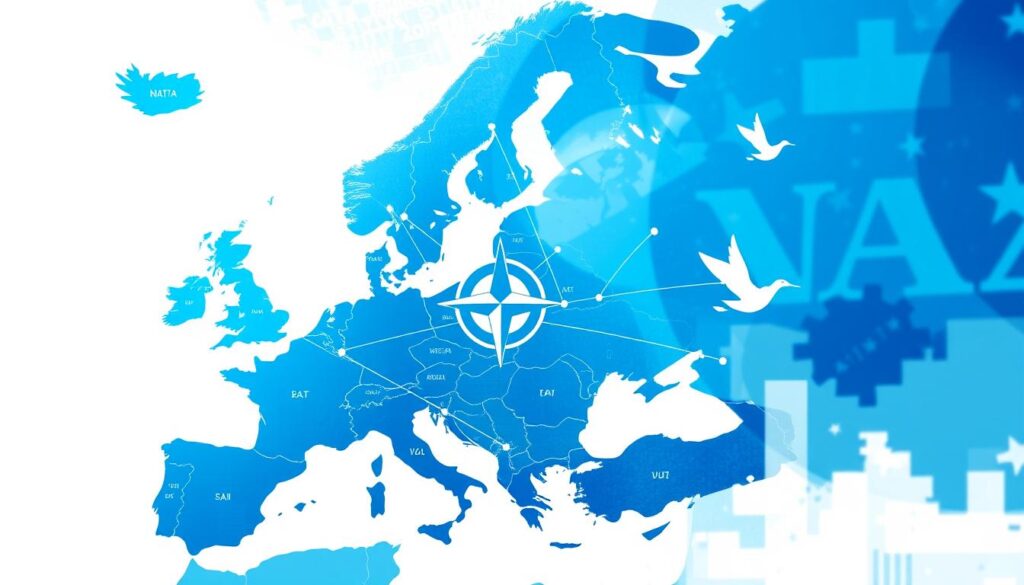
NATO, a security alliance of 30 countries from North America and Europe, was formed in 19491. It aims to protect its members’ freedom and security. Alliances like NATO are key in shaping global security through partnerships and joint ventures.
They focus on collective defense, a core principle of NATO1. This principle has been vital in international relations.
Think about how alliances have changed over time. They now tackle new challenges through strategic partnerships and joint ventures2. New threats like cyberattacks and economic coercion have made alliances adapt. Now, NATO focuses on working with non-NATO countries and developing new capabilities1.
Key Takeaways
- Alliances like NATO play a key role in shaping global security through partnerships and joint ventures.
- NATO was formed in 1949 as a security alliance of 30 countries from North America and Europe1.
- The fundamental goal of NATO is to provide collective defense, a cornerstone of international relations1.
- Strategic partnerships and joint ventures are vital in international relations, helping countries face common threats2.
- Alliances like NATO have evolved to tackle new challenges, such as cyberattacks and economic coercion1.
- Cooperation with non-NATO countries and developing new capabilities are now NATO’s priorities1.
The Role of Alliances in Shaping Global Security Dynamics
Alliances are key to keeping the world safe by helping countries work together. They boost military strength and build trust and stability worldwide.
Historical Context of Military Alliances
For centuries, military alliances have shaped how power is distributed. The UK has been a major player, using local allies to protect its interests and fight off threats. The Anglo-Portuguese Alliance, started in 1386, is a prime example3.
The Five Power Defence Arrangements (FPDA) have been in place for over 50 years. It includes the UK, Australia, Malaysia, New Zealand, and Singapore. They work together during emergencies3.
The bond between the UK and the U.S. is strong and has been for a long time. It includes key agreements like the UKUSA intelligence deal of 1946 and the Mutual Defence Agreement of 1958324.
Impact of Alliances on International Relations
Alliances greatly affect how countries talk and solve problems. They build a network of support that can stop aggression and help solve global issues4.
The U.S. alliance system has been a big help in keeping the peace. It has allowed for quick action in places like the Middle East and Africa4.
The Evolution of Collective Defense Principles
Collective defense ideas have changed to meet new threats. NATO’s Article 5 is a good example. It says an attack on one member is an attack on all3.
Just like in business, good alliance management is key. It makes sure everyone knows their role, building trust and predictability in both military and business settings.
Learning from business partnerships can help military alliances too. It can make them more effective in their public diplomacy efforts.
NATO’s Influence on Global Security Strategies
NATO has always played a big role in shaping global security. It does this through strategic operations and strong partnerships. Its influence goes beyond just its member countries, helping to keep the world stable and working together.
Key NATO Operations and Their Outcomes
NATO has been key in keeping the peace in places like Kosovo and Afghanistan5. These efforts have not only tackled immediate dangers but also helped build lasting security plans.
Cooperation with Non-NATO Countries
Working with countries outside NATO makes the alliance stronger and more effective6. Partnerships in Europe, the Middle East, North Africa, and the Indo-Pacific boost security for everyone6. Programs like the Partnership Interoperability Initiative show how important it is to work together towards shared goals.
Challenges Faced by NATO in a Changing World
Keeping up with the world’s changing politics is tough for NATO5. New threats like cyber attacks and global terrorism force NATO to update its plans5. Also, issues like different defense spending levels and political problems among members can make it hard for NATO to succeed6.
The Future of Alliances in an Uncertain Landscape
The world of global security is changing fast. Alliances must adapt and innovate to remain effective.
Emerging Threats and Strategic Adjustments
New threats like economic coercion and supply chain issues are pressing. Alliances, like NATO, are rethinking their strategies. They aim for resilience and flexibility in today’s complex world7.
The Role of Technology in Alliance Operations
Technology is key for alliances’ future. NATO’s Defence Innovation Accelerator and the NATO Innovation Fund support deep tech and dual-use tech7. In business, cross-company alliances boost innovation by sharing new tech and expertise8.
Strengthening Global Partnerships Beyond NATO
Expanding alliances beyond traditional members is vital. This mirrors cross-company alliances, which grow through shared success8. U.S. alliances in Asia show the need for adaptability in regional dynamics9.
For alliances to stay relevant, they must adapt and work together. Focusing on alliance success and cross-company alliances will help tackle tomorrow’s security challenges.
FAQ
What are international alliances, and how do they influence global security?
International alliances, like NATO, are partnerships between countries. They work together to keep everyone safe and tackle common threats. These alliances help by sharing resources, working together, and responding to crises as one.
By joining forces, alliances can stop threats, help solve conflicts, and keep the world stable. This is important for peace and safety everywhere.
How has the concept of collective defense evolved within alliances like NATO?
Collective defense has always been key for NATO. It started with military help but now includes fighting cyber attacks and terrorism. NATO’s Article 5 now covers more than just military attacks, showing it’s ready for new threats.
In what ways do military alliances parallel business collaborations and corporate alliances?
Military and business alliances share some similarities. They both need good management and clear goals. NATO works like a business, using member strengths to keep everyone safe.
Both types need good communication, shared resources, and a plan to succeed. This helps them achieve their goals.
What role does alliance management play in the success of organizations like NATO?
Managing alliances is key for NATO’s success. It means working together, planning, and solving problems. Good management makes sure everyone works well together and stays committed.
This keeps NATO strong and able to face new threats. It’s all about building strong relationships and clear rules.
How do partnership marketing strategies in business offer insights into the public diplomacy efforts of military alliances?
Business uses partnership marketing to build strong relationships and goals. NATO does the same in public diplomacy. It aims to improve its image, gain trust, and talk to the world.
By using business methods, NATO can share its values, build partnerships, and get public support. This helps it achieve its goals.
What are some key operations conducted by NATO, and what impact have they had on international security?
NATO has done important missions in Kosovo and Afghanistan. These aimed to bring peace, fight terrorism, and help rebuild. The Kosovo mission helped restore peace and fix infrastructure.
The Afghanistan mission aimed to stop terrorists and train local forces. Both missions have made the world safer by stopping conflicts and fighting terrorism.
How does NATO collaborate with non-member countries to extend its influence?
NATO works with non-members through partnerships, exercises, and talks. This helps NATO reach beyond its members. It works on shared security issues, improves teamwork, and helps other countries.
This cooperation helps fight global threats and keeps the world stable. It’s all about working together for safety.
What are the current challenges faced by NATO in today’s geopolitical landscape?
NATO faces many challenges today, like cyber attacks and new global powers. It must stay up-to-date with technology, work with more countries, and solve internal issues. NATO needs to be flexible and proactive to stay relevant.
How is technology shaping the future operations of alliances like NATO?
Technology is changing NATO’s future by improving security and communication. NATO is using new tech like AI and drones to stay ahead. This helps it face modern threats better.
What factors contribute to the longevity and success of alliances like NATO and cross-company partnerships?
Success in alliances comes from trust, shared goals, and good communication. Strong leadership, fair sharing, and teamwork are also key. Being able to adapt to new situations helps alliances last.
How are alliances adapting to address emerging threats such as economic coercion and supply chain disruptions?
Alliances are getting stronger against threats like economic pressure and supply chain issues. NATO is focusing on economic security and making plans for emergencies. This helps alliances stay strong and stable in uncertain times.
Source Links
- About NATO – https://nato.usmission.gov/about-nato/
- NATO: Still Relevant in a Dangerous World | George W. Bush Presidential Center – https://www.bushcenter.org/catalyst/global-challenges/lloyd-nato-still-relevant-in-a-dangerous-world/
- Why alliances matter – Council on Geostrategy – https://www.geostrategy.org.uk/research/why-alliances-matter/
- The Competitive Advantages and Risks of Alliances – https://www.heritage.org/military-strength-essays/2020-essays/the-competitive-advantages-and-risks-alliances
- NATO’s role in contemporary global security dynamics: beyond adaptability and resilience – https://euro-sd.com/2024/01/articles/36199/natos-role-in-contemporary-global-security-dynamics-beyond-adaptability-and-resilience/
- Reforming and Enhancing Partnerships to Strengthen NATO’s Strategic Posture – https://publications.armywarcollege.edu/News/Display/Article/3974674/reforming-and-enhancing-partnerships-to-strengthen-natos-strategic-posture/
- Analytics – https://valdaiclub.com/a/highlights/alliances-and-allies-in-a-new-era/
- Strategic Alliances: Shaping Future And Global Impact – https://www.linkedin.com/pulse/strategic-alliances-shaping-future-global-impact-lundberg-m-s–kymkc
- Cultivating America’s alliances and partners in the Indo-Pacific – https://www.brookings.edu/articles/cultivating-americas-alliances-and-partners-in-the-indo-pacific/