
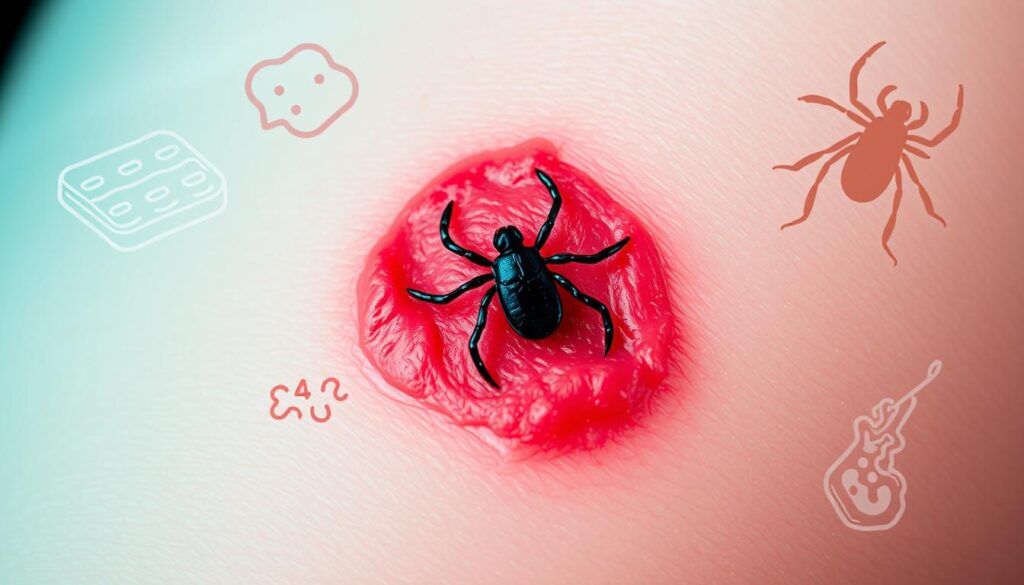
Alpha-Gal Syndrome (AGS) might be behind your mysterious meat allergy. This unique food allergy can cause delayed anaphylaxis hours after eating red meat1. AGS is triggered by tick bites and has become a growing health concern in the U.S1.
Outdoor activities may expose you to this unusual condition. AGS can affect anyone, even those without previous food sensitivities1. It’s most often diagnosed in adults and impacts up to 450,000 Americans2.
AGS is complex due to its unique features. Symptoms can appear 2-6 hours after eating mammalian products. This delay makes it hard to pinpoint the cause.
The lone star tick is a major player in transmitting AGS. It’s responsible for over 90% of tick bites in southeastern states1.
Key Takeaways
- Alpha-Gal Syndrome is a unique tick-bite-induced meat allergy
- Symptoms can appear hours after consuming red meat
- The condition affects up to 450,000 Americans
- Tick bites, especially from the lone star tick, are the primary cause
- Anyone can develop AGS, regardless of previous food sensitivities
What is Alpha-Gal Syndrome and Its Causes
Alpha-gal syndrome is a unique allergic condition that changes how you view meat. It’s triggered by tick bites, mainly from the Lone Star tick3. This red meat intolerance can cause unexpected allergic reactions.
Understanding Tick-Triggered Allergies
The Lone Star tick introduces alpha-gal molecules into your body when it bites you. This causes your immune system to react differently to mammalian meat4.
Over 110,000 suspected cases of alpha-galactose allergy were found in the U.S. from 2010 to 20224.
How Alpha-Gal Reactions Develop
Alpha-gal syndrome creates an unusual allergic reaction. Symptoms typically appear 3 to 6 hours after eating red meat3. This delay happens because alpha-gal molecules take longer to enter your bloodstream.
Common Risk Factors
- Living in southeastern United States3
- Frequent outdoor activities
- Multiple tick exposures
- Spending time in wooded or grassy areas
Your risk of developing this meat allergy increases with repeated tick bites. The condition mostly affects adults but can impact people of all ages4.
“Understanding alpha-gal syndrome is the first step in protecting yourself from unexpected allergic reactions.” – Allergy Specialists Network
Recognizing Alpha-Gal Syndrome Symptoms
Alpha-gal syndrome causes unique reactions to mammalian meat. Your body’s response can be complex and delayed. Recognizing the symptoms of galactose-alpha-1 sensitivity is vital.
Symptoms usually appear 2-6 hours after eating mammalian products. This timing differs from other food allergies5. The alphagal carbohydrate can trigger various reactions.
- Intense skin itching and hives
- Severe gastrointestinal distress
- Difficulty breathing
- Potential anaphylactic shock
From 2010 to 2022, over 110,000 suspected cases were found in the United States6. Children are especially at risk. Nearly 90% show detectable alpha-gal specific antibodies7.
| Symptom Category | Frequency |
|---|---|
| Urticaria and Angioedema | 99% |
| Anaphylaxis | 29% |
| Gastrointestinal Predominant Form | 20% |
Interesting note: Some patients react worse to fatty meats or when drinking alcohol with meat5. Knowing these triggers can help you manage symptoms better.
Prevention is crucial for Alpha-Gal Syndrome, as no definitive cure exists yet6.
Conclusion
Managing Alpha-Gal Syndrome demands a proactive health approach. Stay informed about risks and develop smart management techniques. Monitor symptoms closely, as they can range from mild to severe.
Prevent tick bites to reduce Alpha-Gal Syndrome risks. Work with healthcare providers who understand this condition. Only 5% of professionals feel confident in diagnosing AGS, so be your own advocate8.
Your strategy should cover dietary restrictions and medical interactions. Seek specialists to guide you through complex immunological responses linked to Alpha-Gal Syndrome9. Many patients succeed by staying alert and informed.
Create a personalized plan for Alpha-Gal Syndrome management. This will protect your health and give you peace of mind. Team up with knowledgeable healthcare providers for the best results.
FAQ
What is Alpha-Gal Syndrome?
Alpha-Gal Syndrome (AGS) is a unique food allergy caused by tick bites. It triggers reactions to red meat and other mammalian products. Symptoms appear 2-6 hours after eating these foods and can be mild or severe.
How do I get Alpha-Gal Syndrome?
Alpha-Gal Syndrome typically develops from Lone Star tick bites in the United States. These ticks can transmit alpha-gal molecules into your body. This triggers an immune response, leading to meat allergies.
What are the typical symptoms of Alpha-Gal Syndrome?
Symptoms show up 2-6 hours after eating mammalian meat. They include hives, itching, nausea, vomiting, and stomach pain. Diarrhea and breathing problems can also occur.
In severe cases, you might experience anaphylaxis. This requires immediate medical help.
Who is most at risk for developing Alpha-Gal Syndrome?
You’re at higher risk if you live in or visit tick-prone areas often. Spending lots of time outdoors or having multiple tick bites increases risk. While it can affect anyone, adults are more commonly diagnosed.
How is Alpha-Gal Syndrome diagnosed?
Diagnosis involves reviewing your medical history and evaluating symptoms. Specific blood tests check for alpha-gal antibodies. Your doctor will use this info to determine if you have the syndrome.
Can Alpha-Gal Syndrome be cured?
There’s no cure for Alpha-Gal Syndrome yet. The main strategy is avoiding mammalian meat and alpha-gal products. Some people may improve over time.
Working closely with healthcare providers is key for managing the condition effectively.
How can I prevent Alpha-Gal Syndrome?
Prevent Alpha-Gal Syndrome by avoiding tick bites. Use insect repellent and wear protective clothing outdoors. Check for ticks after outdoor activities and remove them quickly.
Take extra care if you spend time in tick-prone areas.
What unexpected products might contain alpha-gal?
Alpha-gal can hide in surprising places beyond meat. It’s found in gelatin, some medicines, cosmetics, and certain vaccines. Always read labels carefully.
Ask healthcare professionals about products that might contain alpha-gal.
Source Links
- Alpha-gal Syndrome: Causes, Diagnosis & Treatment – https://my.clevelandclinic.org/health/diseases/24493-alpha-gal-syndrome
- Alpha-gal Information – Alpha-gal Information – https://alphagalinformation.org/
- Alpha-gal syndrome – Symptoms and causes – https://www.mayoclinic.org/diseases-conditions/alpha-gal-syndrome/symptoms-causes/syc-20428608
- About Alpha-gal Syndrome – https://www.cdc.gov/alpha-gal-syndrome/about/index.html
- Alpha-gal syndrome with GI symptoms – https://patient.gastro.org/alpha-gal-syndrome-with-gi-symptoms/
- What Health Officials Should Know About Alpha-Gal Syndrome – https://www.astho.org/communications/blog/what-health-officials-should-know-about-alpha-gal-syndrome/
- “Doc, Will I Ever Eat Steak Again?” : Diagnosis and Management of Alpha-gal Syndrome – https://pmc.ncbi.nlm.nih.gov/articles/PMC7737235/
- Health Care Provider Knowledge Regarding Alpha-gal … – https://www.cdc.gov/mmwr/volumes/72/wr/mm7230a1.htm
- The alpha gal story: Lessons learned from connecting the dots – https://pmc.ncbi.nlm.nih.gov/articles/PMC4600073/

