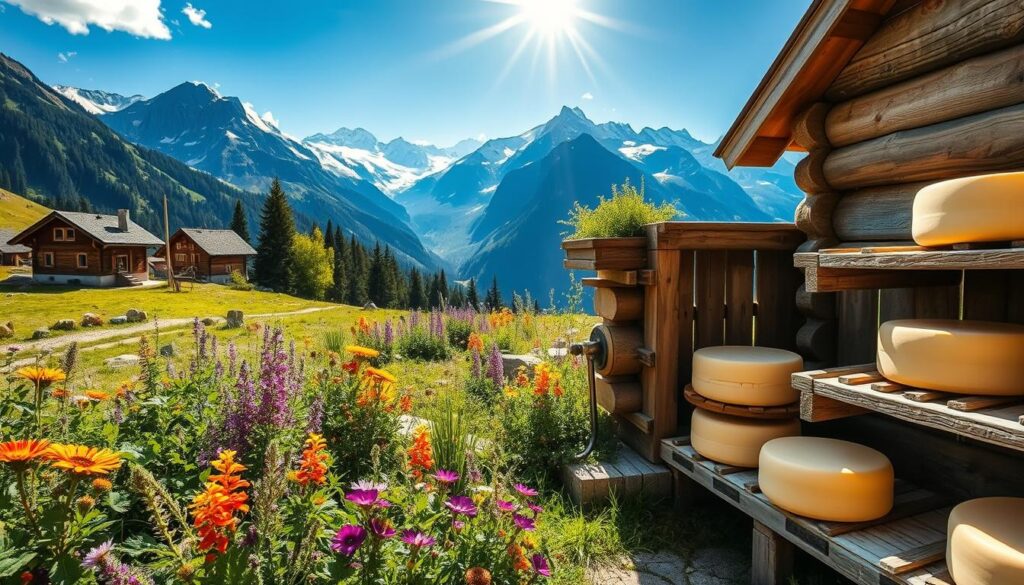
Traditional cheese making in Alpine regions is a captivating art. It transforms simple milk into extraordinary flavors. This mountain craft has been honed for generations, creating a rich dairy heritage.
Alpine cheese crafting uses precise techniques and carefully chosen ingredients. Mountain cheesemakers developed methods for robust, long-lasting cheeses. Special cultures like Thermophilus, Helveticus, and Propionic shape these cheeses’ unique traits.
Specialized cultures create complex flavor profiles in Alpine cheeses. Choozit Flav54 brings out sweet, nutty, and savory notes during aging. These details make ordinary milk into remarkable cheese.
Key Takeaways
- Alpine cheese making is a time-honored tradition with deep cultural roots
- Specialized bacterial cultures are essential for developing unique cheese flavors
- Mountain cheese techniques ensure long-lasting, transportable dairy products
- Temperature and cultural selection are critical in cheese production
- Each cheese tells a story of its regional origins
The Art of Making Alpine Cheese
Alpine cheese crafting transforms simple ingredients into culinary treasures. Each cheese variety tells a unique story of tradition and skill. From creamy swiss to sharp provolone, these cheeses delight taste buds worldwide.
Creating exceptional Alpine cheese demands precision, passion, and top-notch ingredients. The process starts with selecting perfect milk for the desired cheese variety. Mastering nuanced techniques is crucial for producing delectable wheels of various cheeses2.
Understanding Alpine Cheese Varieties
Alpine cheeses boast distinctive traits reflecting their regional roots. Each type offers a unique flavor profile. Here are some popular varieties:
- Gruyère: Rich, nutty flavor
- Emmental: Iconic Swiss cheese with signature holes
- Comté: Smooth, complex taste
- Raclette: Perfect for melting
The Importance of Quality Ingredients
Your cheese’s success hinges on ingredient quality. Raw milk from grass-fed cows is ideal for authentic Alpine cheese3. The milk’s source greatly affects the final product’s flavor and texture.
“Great cheese begins with great milk” – Alpine Cheesemaking Tradition
Essential Equipment for Cheese Making
| Equipment | Purpose |
|---|---|
| Large Cheese Vat | Heating and mixing milk |
| Thermometer | Monitoring precise temperatures |
| Curd Cutter | Separating curds and whey |
| Cheese Molds | Shaping the cheese |
| Cheese Press | Compressing and forming cheese |
Mastering Alpine cheese making requires understanding temperature control and bacterial cultures. Aging techniques also play a crucial role in the process. With practice, you’ll create extraordinary cheeses that honor centuries-old culinary traditions2.
Step-by-Step Guide to Alpine Cheese Production
Alpine cheese crafting is a meticulous art form. It transforms fresh milk into a culinary masterpiece. This process requires precision, patience, and passion.
Gathering Your Ingredients
Start with high-quality ingredients for the best results. Choose fresh milk from grass-fed cows. The quality of your milk directly impacts the flavor of your final cheese.
- Fresh whole milk
- Thermophilic culture
- Liquid rennet
- Cheese salt
The Cheese Making Process Explained
Begin by heating the milk to 92°F. Add thermophilic culture and let it rest for 90 minutes4.
Next, add rennet to coagulate the milk5. This step is crucial for cheese formation.
“Cheesemaking is part science, part art, and entirely delicious.”
- Heat milk to 92°F
- Add thermophilic culture
- Let culture ripen for 90 minutes
- Add rennet and allow milk to coagulate
- Cut curds into 1/4-3/8 inch pieces4
Aging Your Cheese for Optimal Flavor
Aging is where cheese develops its unique flavor. Cheesemakers typically age their creations at 50-55°F with 85% humidity5.
The aging process can last from weeks to months. It depends on the desired flavor profile6.
| Cheese Type | Aging Time |
|---|---|
| Petit Moléson | 7-8 weeks |
| Vacherin | 9 weeks to 6 months |
| Gruyère | 5-6 months to a year |
Patience is key in cheese production. Each step contributes to creating a unique flavor. The result is a delightful dairy product that will please your taste buds.
Pairing and Enjoying Your Alpine Cheese
Alpine cheese and wine pairings can enhance your dining experience. Swiss, provolone, and Gruyère offer unique flavors that complement various wines7. Their mild yet complex taste suits casual snacking and gourmet dining cheese tasting adventures7.
Best Wines to Pair with Alpine Cheese
Choose lighter wines to enhance your alpine cheese selection. Chardonnay pairs well with brie-style alpine varieties7. Pinot noir complements Swiss cheeses, highlighting their nutty and buttery notes7.
Delicious Recipes Featuring Alpine Cheese
Alpine cheeses shine in many dishes. Grate gouda over pasta or melt Swiss cheese into a creamy fondue8. These cheeses add depth to gratins, sauces, and appetizers8.
Tips for Serving Cheese at Gatherings
Create an impressive cheese board with alpine cheeses of different textures and strengths8. Serve at room temperature with rustic crackers, fresh fruits, and nuts7. Your guests will enjoy the thoughtful presentation and delicious variety.
FAQ
What makes Alpine cheese unique?
Alpine cheese comes from grass-fed cows in Europe’s mountains. It’s made using traditional methods and high-quality milk. These cheeses boast complex flavors, firm textures, and long aging periods.
What are some popular varieties of Alpine cheese?
Popular Alpine cheeses include Gruyère, Emmental, Comté, and Raclette. Each has its own unique flavor profile. They range from smooth and nutty to robust and complex.
What is the typical aging process for Alpine cheese?
Alpine cheeses age from a few months to over a year. The aging process develops their distinct taste and aroma. Careful control of temperature and humidity is crucial during this time.
What kind of milk is best for making Alpine cheese?
Raw milk from grass-fed cows is ideal for authentic Alpine cheese. Cows grazing on Alpine pastures produce high-quality milk. This milk gives the cheese its unique flavor and nutritional profile.
What equipment do I need to make Alpine cheese at home?
You’ll need a large cheese vat, thermometer, and curd cutter. Cheese molds and a press are also essential. Don’t forget cultures, rennet, and temperature control equipment.
What wines pair well with Alpine cheeses?
Chardonnay and Riesling complement Alpine cheeses nicely. Light-bodied reds like Pinot Noir also pair well. These wines enhance the rich, nutty flavors without overpowering the cheese.
How should I serve Alpine cheese?
Serve Alpine cheese at room temperature to enjoy its full flavor. Create a cheese board with various Alpine types. Add crusty bread, nuts, and fruits to highlight the cheese’s complex taste.
Can Alpine cheese be used in cooking?
Alpine cheeses are perfect for cooking. Use them in fondues, gratins, or as toppings. They’re great grated over pasta or melted into sauces. Their complex flavors work well in simple and gourmet dishes.
Source Links
- Alpine Style Cheese Info – https://cheesemaking.com/pages/alpine-style-cheese-making-recipe-info?srsltid=AfmBOop7yasZ7Xb3KktL_cy5IXfwoPTHkNdjM3iZ_-JXW0hh7o5IedBt
- Alpine Cheese – Jennifer Murch – https://jennifermurch.com/2022/01/07/alpine-cheese/
- On Location: Making Alp Cheese in Switzerland – https://cheeseunderground.com/2015/09/08/on-location-making-alp-cheese-in-switzerland/
- Alpine Tomme Recipe – https://cheesemaking.com/products/alpine-tomme-recipe?srsltid=AfmBOooBMpsxXDCN_f036cg81jYWJZF6NKc8Ns0hN38TtjdgoCAe7F4W
- Beginners Guide to Cheesemaking (with Recipes!) – https://practicalselfreliance.com/beginner-cheesemaking/
- An Inside Look into Alpine Cheese Making | Moléson-Sur-Gruyères, Switzerland — And Then I Met Yoko | Visual Travel Guides – https://www.andthenimetyoko.com/travel-blog/alpine-cheese-le-moleson-sur-gruyeres
- The Cheese Lover’s Guide To Alpine-Style Cheese | Wisconsin Cheese – https://www.wisconsincheese.com/the-cheese-life/article/143/alpine-style
- How to Create the Best Alpine Cheeseboard | The Cheese Professor – https://www.cheeseprofessor.com/blog/best-alpine-cheeseboard