
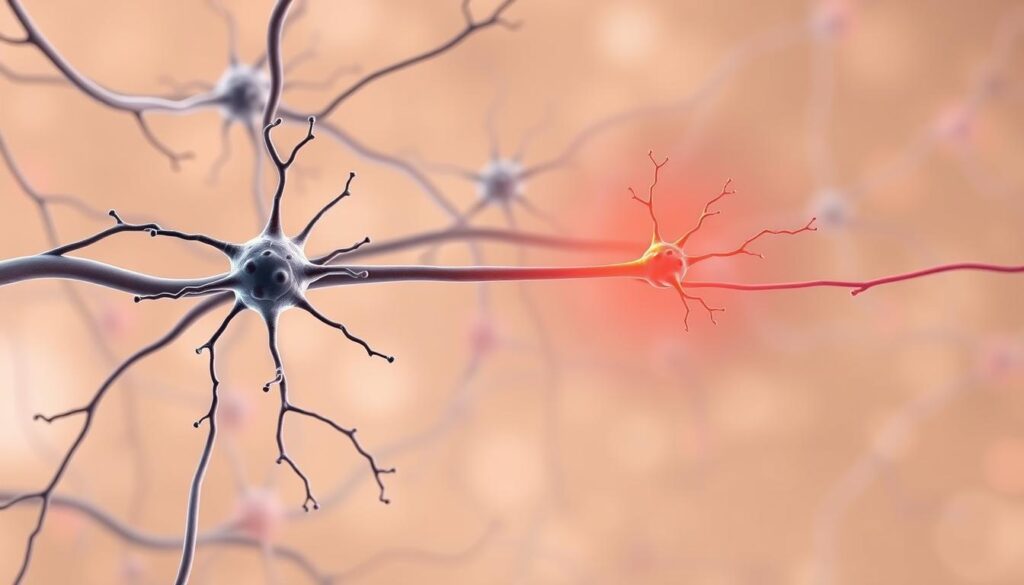
Amyotrophic Lateral Sclerosis (ALS) is a tough motor neuron disorder. It attacks the nervous system, making muscle control difficult1. ALS usually hits people aged 40 to 70, with 55 being the average diagnosis age1.
ALS is complex and affects more men than women. This gender gap shrinks as people get older1. Most ALS cases, about 90%, happen randomly without genetic links2.
Military veterans face a higher risk of getting ALS1. Despite the challenges, ongoing research brings hope. Doctors work hard to understand ALS and find better treatments.
Key Takeaways
- ALS is a progressive motor neuron disorder affecting individuals mainly between 40-70 years old
- About 90% of cases have no known genetic cause
- Military veterans have an increased risk of developing ALS
- The disease affects more men than women, especially in earlier age groups
- Ongoing medical research continues to explore potential treatments
What is Amyotrophic Lateral Sclerosis (ALS)?
ALS is a complex brain disorder that affects how our bodies move. It changes how muscles work and makes it hard to move around.
ALS slowly damages the nerves that control our muscles. This causes muscles to waste away and eventually leads to paralysis3.
Definition and Overview
ALS is a disease that hurts motor neurons in the brain. These neurons control how we move our muscles on purpose. When they break down, simple tasks become tough4.
Key Characteristics
- Affects voluntary muscle control
- Progressively damages motor neurons
- Impacts speaking, moving, and breathing
Diagnostic Insights
Doctors usually find ALS in people between 55 and 75 years old. Men get it a bit more often than women. But this gap is getting smaller4.
| ALS Prevalence | Statistics |
|---|---|
| Annual Diagnoses | Approximately 5,000 people3 |
| Total US Cases | Less than 30,000 individuals4 |
| Survival Rate | 10% survive a decade or more3 |
“ALS is not just a disease of muscles, but a complex neurological challenge that transforms lives.” – Neurology Research Foundation
Types of ALS
There are two main types of ALS: sporadic and familial. Most cases (90%) are sporadic, with no clear family link. Familial ALS makes up about 10% of cases.
It’s linked to specific genetic changes3. Living with ALS is tough, but new research brings hope. Scientists are working hard to understand and treat this brain condition better.
Causes and Risk Factors of ALS
ALS is a complex neurological condition with many contributing factors. Researchers are still uncovering its mysteries. Several key elements emerge as potential triggers and risk determinants.
Genetic Foundations of ALS
Genetic factors play a significant role in ALS development. About 10% of ALS cases have a clear genetic origin5. Familial ALS accounts for a small percentage of diagnoses.
Specific gene mutations drive disease progression6. Key genetic markers include:
- C9ORF72 gene mutation: Found in up to 40% of familial ALS cases6
- SOD1 gene mutations: Present in 10-20% of familial ALS cases6
- TARDBP gene mutations: Observed in approximately 5% of familial ALS patients6
Environmental and Lifestyle Influences
Environmental factors can significantly impact ALS risk. Certain occupations and exposures may increase susceptibility:
| Risk Factor | Potential Impact |
|---|---|
| Military Service | Nearly twice the ALS risk compared to civilians7 |
| Workplace Exposure | 3-6 times increased risk with chemical exposure7 |
| Head Trauma | Higher risk with severe injuries7 |
Age and Demographic Considerations
ALS risk changes with age and demographic factors. The disease becomes more common between 60 and mid-80s5. Men have a slightly higher risk before age 65.
The male-to-female ratio is 1.2-1.56.
“Knowledge is the first step in understanding and potentially managing ALS risk.” – ALS Research Foundation
Sporadic ALS remains the most common form. Ongoing research sheds light on potential prevention and management strategies7. Your awareness can help with early detection and support for those affected.
Diagnosing ALS: What to Expect
ALS diagnosis can be tough. Understanding the process helps you feel prepared and informed. Doctors use a thorough approach to identify this complex condition.
They combine multiple tests and expert evaluations. This comprehensive method ensures accurate diagnosis and proper care.
Common Diagnostic Tests for ALS
Your healthcare team will conduct several tests to rule out other conditions. These tests help confirm the presence of ALS.
The main diagnostic methods include:
- Neurological examination to assess muscle strength and reflexes
- Electromyography (EMG) to evaluate electrical activity in muscles8
- Nerve conduction studies to measure electrical impulse transmission
- Blood and urine tests to eliminate other potential conditions
- MRI scans to examine brain and spinal cord structures
Important Questions to Discuss with Your Doctor
Prepare a list of questions about your ALS diagnosis and treatment options. This helps you better understand your situation.
Consider asking about:
- Specific test results and their implications
- Potential treatment strategies
- Medication options that might slow disease progression8
- Available support services
- Lifestyle modifications to manage symptoms
The Role of Specialists in Diagnosis
Accurate ALS diagnosis requires a team of specialized healthcare professionals. Neurologists play a crucial role in conducting exams and interpreting test results.
They work with other specialists to provide a definitive diagnosis. Together, they develop a personalized management plan8.
“Early and accurate diagnosis is key to managing ALS effectively and maintaining the best possible quality of life.”
Your diagnostic journey might involve multiple specialists. These include neurologists, physical therapists, and occupational therapists.
They collaborate to provide comprehensive care and support throughout the process. Their expertise ensures you receive the best possible care.
Living with ALS: Support and Management
ALS is a fast-moving nerve disease that affects muscle control. It’s challenging, but modern medicine offers hope and support. Patients and families can find helpful resources to manage this condition.
Treatment Options Available
FDA-approved drugs like riluzole can help manage ALS symptoms. These medications might slow down the disease’s progress. Doctors can prescribe treatments for fatigue, muscle cramps, and stiffness.
Breathing support devices are available for those with weakened chest muscles. These tools can greatly improve quality of life for ALS patients.
Coping Mechanisms and Support Groups
Emotional support is vital when dealing with ALS. The ALS Association offers comprehensive guides for patients and families. These resources help navigate the challenges of ALS.
Support groups and counseling services can provide mental health assistance. They help manage the emotional toll of living with ALS.
Resources for Caregivers and Patients
Caregivers are essential in ALS management. They need patience, knowledge, and energy to provide effective care.
The ALS Association provides nationwide support groups and treatment centers. Remember to practice self-care and stay informed about ALS. Open communication with your healthcare team is crucial910.
FAQ
What is Amyotrophic Lateral Sclerosis (ALS)?
ALS is a progressive neurological disorder affecting motor neurons in the brain and spinal cord. It causes muscle weakness and gradual loss of voluntary movement control. The disease impacts speaking, eating, moving, and breathing as motor neurons deteriorate.
What are the early signs of ALS?
Early ALS symptoms include muscle twitches, cramps, stiffness, and weakness in arms, legs, or neck. You might notice difficulties with fine motor skills and unexpected muscle fatigue. Changes in speech may also occur.
As ALS progresses, you may face more challenges with chewing, swallowing, and speaking.
Is ALS hereditary?
About 90% of ALS cases are sporadic, occurring without a known family history. However, 5-10% are familial ALS (FALS), which can be inherited through specific gene mutations.
Genes like C9orf72 and SOD1 are associated with genetic forms of ALS. If you have a family history, genetic counseling might be recommended.
How is ALS diagnosed?
Diagnosing ALS involves a comprehensive approach with no single definitive test. Doctors conduct physical exams, review medical history, and perform neurological examinations.
Diagnostic tests may include electromyography (EMG), nerve conduction studies, MRI, and blood tests. A spinal tap or muscle biopsy might be needed to rule out other conditions.
Are there treatments available for ALS?
While there’s no cure for ALS, FDA-approved medications can help manage symptoms and potentially slow disease progression. Riluzole, edaravone, and tofersen are available treatment options.
Treatment typically involves a multidisciplinary approach, including rehabilitation services. Physical, occupational, and speech therapy help maintain quality of life.
What is the life expectancy for someone with ALS?
The average survival time for people with ALS is two to five years after diagnosis. However, some individuals live longer.
Early diagnosis and comprehensive care at specialized ALS treatment centers can improve quality of life. A supportive care approach may potentially extend survival.
Where can I find support for ALS?
The ALS Association offers extensive resources, including Certified Treatment Centers of Excellence and support groups. They provide emotional support, practical advice, and connections to comprehensive care services.
Online and local support groups can help you and your caregivers navigate ALS challenges.
Are certain groups at higher risk for ALS?
Military veterans have a higher risk of developing ALS, possibly due to toxin exposure or head injuries. The exact causes are not fully understood.
Researchers continue to investigate potential environmental and lifestyle factors that might contribute to ALS development.
Source Links
- Understanding ALS – https://www.als.org/understanding-als
- What is ALS? – https://www.als.org/understanding-als/what-is-als
- Amyotrophic Lateral Sclerosis (ALS) – https://www.ninds.nih.gov/health-information/disorders/amyotrophic-lateral-sclerosis-als
- About Amyotrophic Lateral Sclerosis (ALS) – https://www.cdc.gov/als/abouttheregistrymain/about-amyotrophic-lateral-sclerosis-als.html
- Amyotrophic lateral sclerosis (ALS) – Symptoms and causes – https://www.mayoclinic.org/diseases-conditions/amyotrophic-lateral-sclerosis/symptoms-causes/syc-20354022
- Risk factors for amyotrophic lateral sclerosis – https://pmc.ncbi.nlm.nih.gov/articles/PMC4334292/
- ALS Risk Factors – https://www.als.org/research/als-research-topics/als-risk-factors
- Amyotrophic lateral sclerosis (ALS) – Diagnosis and treatment – https://www.mayoclinic.org/diseases-conditions/amyotrophic-lateral-sclerosis/diagnosis-treatment/drc-20354027
- VA.gov | Veterans Affairs – https://www.caregiver.va.gov/Tips_by_Diagnosis/ALS.asp
- Living with ALS Resource Guides – https://www.als.org/navigating-als/resources/living-als-resource-guides

