
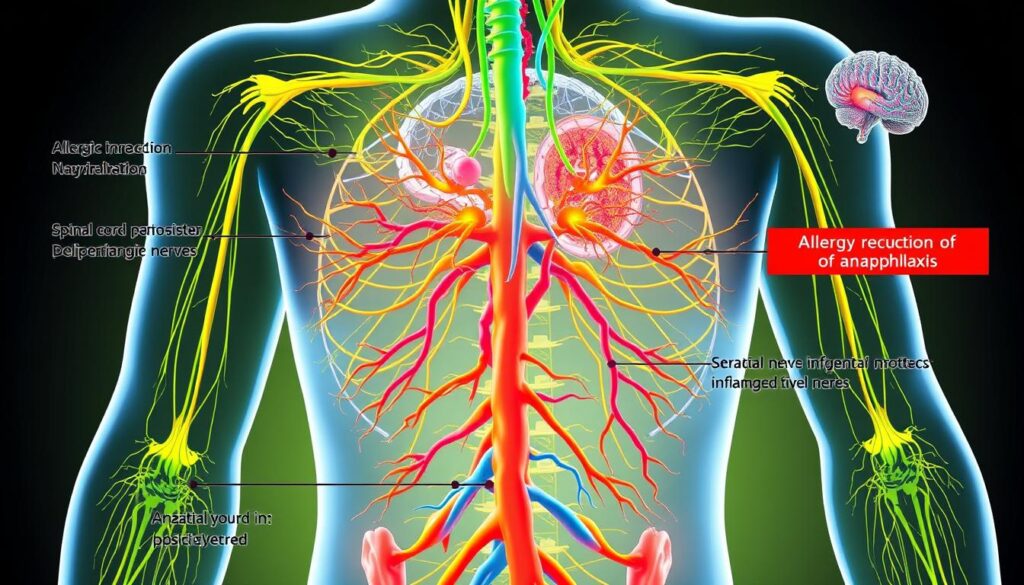
Your body’s response to severe allergies involves a complex dance between immune and nervous systems. Anaphylaxis, a life-threatening condition, affects up to 5% of Americans yearly1. Foods, medications, or insect bites can trigger this dangerous allergic reaction2.
New research reveals how the nervous system influences anaphylaxis. During severe allergic reactions, heat-sensing nerve cells activate, causing complex body responses2.
Immune cells, like mast cells near blood vessels and nerves, release substances. These substances lead to rapid drops in blood pressure2.
Knowing these intricate processes can help manage and prevent serious allergic reactions. The link between nervous and immune systems offers new treatment possibilities2.
Key Takeaways
- Anaphylaxis is a severe allergic reaction affecting up to 5% of Americans
- The nervous system plays a critical role in allergic responses
- Mast cells trigger complex physiological changes during anaphylaxis
- Understanding these mechanisms can improve treatment approaches
- Potential new prevention strategies are emerging from recent research
Understanding Anaphylaxis: An Overview
Anaphylaxis is a severe allergic reaction that can be life-threatening. It affects multiple body systems quickly after exposure. Knowing the signs and causes is vital for safety and fast response.
Anaphylaxis can be caused by food allergies or medication sensitivities. About 4 million Americans have confirmed food allergies3. This common condition needs careful attention and understanding.
What Is Anaphylaxis?
Anaphylaxis happens when your immune system overreacts to a trigger. It releases chemicals that cause severe allergic symptoms. These symptoms can develop quickly and affect various body parts at once.
Common Triggers of Anaphylaxis
Symptoms to Watch For
Anaphylaxis symptoms can be diverse and dangerous. Key signs include:
- Skin reactions: Hives, intense itching, flushed or pale skin
- Respiratory issues: Difficulty breathing, wheezing, throat swelling
- Cardiovascular changes: Rapid pulse, dramatic blood pressure drop
- Gastrointestinal distress: Nausea, vomiting, abdominal pain4
Quick recognition and immediate medical intervention are critical in managing an anaphylaxis reaction.
Anaphylaxis can occur through various ways, from food to medication exposure. About 1 in 5000 exposures to certain antibiotics can trigger anaphylaxis3.
Knowing these potential triggers helps you stay alert and prepared. Being informed can make a big difference in managing this serious condition.
The Role of the Nervous System in Anaphylaxis
Anaphylaxis is a complex medical emergency deeply involving your nervous system. Understanding this relationship can help you grasp this life-threatening condition better. Your nervous system’s response is crucial in anaphylaxis.
Research shows sensory nerves play a key role in triggering severe symptoms. These nerves are vital in how your body reacts during an anaphylactic event5.
How the Nervous System Responds
During anaphylaxis, your body experiences a complex neurological response. Heat-sensing neurons become highly activated, creating signals that impact your physiological state6.
- Sensory neurons interact with mast cells
- Allergens trigger specific nerve responses
- Body temperature regulation becomes disrupted
Allergen-activated mast cells release mediators that interact with sensory neurons. This interaction can cause symptoms like hypothermia and blood pressure changes5.
The Connection Between Stress and Anaphylaxis
Stress can greatly influence your body’s anaphylactic response. Your nervous system’s heightened state may amplify allergic reactions. Stress management is crucial for people prone to anaphylaxis7.
Understanding the nervous system’s role is key to managing anaphylactic risks.
| Nervous System Factor | Anaphylaxis Impact |
|---|---|
| Heat-sensing neurons | Trigger temperature dysregulation |
| Sensory nerve activation | Initiate inflammatory responses |
| Stress levels | Potentially intensify allergic reactions |
About five percent of people in the U.S. may experience anaphylactic shock. This fact highlights the importance of understanding your nervous system’s role in anaphylaxis756.
The Immune Response During Anaphylaxis
Anaphylaxis is a severe, fast-acting immune response affecting the whole body. It’s vital to understand this intense reaction for managing life-threatening situations.
Recognizing anaphylaxis signs is crucial for quick medical help. This knowledge can save lives in emergency situations.
What Happens in the Body?
Anaphylaxis causes major body changes due to a severe allergic reaction. Mast cells release powerful chemicals, causing widespread inflammation8.
Various substances can trigger this reaction. Common triggers include:
- Foods (particularly peanuts and tree nuts)
- Medications
- Insect venom
- Latex
Key Players in the Immune Response
The immune system’s complex reaction involves several vital components. Mast cells are the main actors, releasing histamines and other inflammatory substances9.
These cells activate through specific pathways involving:
- Immunoreceptor tyrosine-based activation motifs
- Tyrosine kinases
- Signaling enzymes
“The body’s immune response during anaphylaxis is like a complex alarm system gone into overdrive” – Immunology Research Team
Most anaphylactic reactions are IgE-mediated, though other mechanisms exist8. This rapid response can cause major systemic effects.
Potential complications include cardiovascular and respiratory issues9. Quick action is crucial to prevent these serious health risks.
| Immune System Component | Role in Anaphylaxis |
|---|---|
| Mast Cells | Release inflammatory chemicals |
| IgE Antibodies | Trigger initial immune response |
| Histamines | Cause blood vessel dilation |
Recognizing the signs of an anaphylactic reaction can be crucial for timely medical intervention.
Anaphylaxis and Autonomic Nervous System
Anaphylaxis and the autonomic nervous system have a complex relationship. This connection affects your body’s critical functions during severe allergic reactions. Knowing this link helps in recognizing and managing these reactions.
Anaphylaxis triggers major changes in your autonomic nervous system. Your body’s immediate response to allergic triggers is managed by this system10. An anaphylactic reaction involves multiple body systems.
- Skin and mucous membranes (80-90% of cases)10
- Respiratory system involvement (70% of reactions)10
- Cardiovascular system impacts (45% of cases)10
Understanding the Autonomic Nervous System
Your autonomic nervous system controls involuntary bodily functions. These include heart rate, breathing, and temperature regulation. During anaphylaxis, this system experiences significant disruption.
The interaction between your immune response and nervous system can be severe. It may trigger sudden blood pressure drops and irregular heart rhythms11.
Effects on Autonomic Functions
Anaphylaxis symptoms show up through various autonomic nervous system changes. You might experience:
- Rapid heart rate
- Sudden temperature fluctuations
- Breathing difficulties
- Blood pressure instability11
“The autonomic nervous system becomes a critical battleground during severe allergic reactions.” – Allergy Research Institute
Several factors can influence your autonomic nervous system’s response to allergies. These include previous anaphylactic episodes, age, and underlying medical conditions11. Understanding these factors helps in managing potential allergic reactions better.
Mental Health and Anaphylaxis
Anaphylaxis can create emotional challenges that impact mental health. The constant fear of allergic reactions can trigger anxiety and stress. This affects daily life and decision-making.
Research shows a strong link between mental health and allergies. Patients with idiopathic anaphylaxis often face higher psychological distress. Mental health problems are more common in people managing anaphylaxis12.
Anxiety and Its Role in Anaphylaxis
Anxiety surrounding anaphylaxis can manifest in multiple ways:
- Constant fear of potential allergic reactions
- Heightened stress about food choices and environmental triggers13
- Reduced participation in social activities
- Emotional strain from managing chronic health concerns
“The psychological impact of living with anaphylaxis can be as challenging as the physical symptoms themselves.”
Coping Strategies for Anxiety
To effectively manage anxiety related to anaphylaxis, consider these strategies:
- Seek professional mental health support
- Join support groups for individuals with similar experiences
- Practice stress-reduction techniques like meditation
- Develop a comprehensive emergency action plan
| Mental Health Indicator | Anaphylaxis Patients | General Population |
|---|---|---|
| Depression Symptoms | 29.4% | Lower Rates |
| Anxiety Symptoms | 53.0% | Lower Rates |
| Stress Levels | 35.2% | Lower Levels |
Managing anaphylaxis involves both physical and mental health. Professional help can guide you through the emotional aspects of this condition.
Support groups and stress-reduction techniques can also be beneficial. With the right tools, you can improve your overall well-being1312.
Diagnosing Anaphylaxis
Anaphylaxis diagnosis is vital for managing this severe allergic reaction. Doctors use a thorough approach to identify it. They combine clinical observations with specialized tests14.
Identifying anaphylaxis requires careful medical evaluation. The diagnostic process involves several key steps. These include specialized tests and thorough examinations.
- Comprehensive medical history review
- Physical examination
- Specialized allergy testing
- Blood work to measure specific markers
Common Diagnostic Tests for Anaphylaxis
Doctors use multiple methods to diagnose anaphylaxis. These tests help pinpoint the cause and severity of the reaction.
- Skin Prick Tests: Identifying potential allergen triggers
- Blood Tests: Measuring specific IgE antibodies15
- Oral Food Challenges: Conducted under strict medical supervision
| Test Type | Purpose | Diagnostic Accuracy |
|---|---|---|
| Skin Prick Test | Identify immediate allergic responses | 80-85% accurate |
| Blood IgE Test | Measure antibody levels | 70-75% accurate |
| Tryptase Blood Test | Detect inflammatory markers | 65-70% accurate |
Differentiating Anaphylaxis from Other Conditions
Doctors must carefully distinguish anaphylaxis from similar conditions. Key factors include symptoms affecting multiple body systems. The rapid onset of reactions is also important14.
Some conditions that may mimic anaphylaxis include:
- Panic attacks
- Asthma episodes
- Other allergic reactions
Accurate diagnosis is critical, as anaphylaxis can cause death in less than 15 minutes if left untreated14.
Your doctor will work with you to find the best diagnostic approach. This ensures a thorough and accurate anaphylaxis diagnosis.
Treating Anaphylaxis: Medical Interventions
Anaphylaxis is a severe allergic reaction requiring immediate medical care. Quick and accurate treatment can save lives. Knowing the right approach is crucial for those at risk16.
Swift action is vital when facing anaphylaxis. Epinephrine is the most effective first-line treatment for this condition17.
Immediate Care Protocols
The critical steps in managing anaphylaxis include:
- Administer epinephrine auto-injector immediately
- Call emergency services
- Position the patient to prevent shock
- Remove potential allergen if possible
“Every minute counts during an anaphylactic reaction” – Allergy Specialists Association
Long-Term Management Strategies
Anaphylaxis treatment goes beyond emergency care. Patients should take these steps:
- Carry epinephrine auto-injectors at all times
- Wear medical alert identification
- Develop a comprehensive emergency action plan
- Work with allergists for personalized management
About 1,500 deaths occur annually in the U.S. due to anaphylaxis17. This highlights the need for effective treatment strategies.
Preparedness and rapid response are your best defense against life-threatening allergic reactions.
The Importance of Emergency Action Plans
An anaphylaxis emergency plan is crucial for protecting yourself from severe allergic reactions. Your readiness can be the difference between life and death18. Knowing the key parts of a good plan is vital for those at risk.
A solid allergy prep strategy has many important parts. These ensure a quick and proper response during an emergency19.
Key Components of an Effective Emergency Plan
- Detailed medical history documentation
- Clear instructions for epinephrine auto-injector use
- Emergency contact information
- Identification of potential triggers
- Step-by-step response protocol
Educating Your Support Network
Your friends, family, and coworkers are key to your anaphylaxis emergency plan. Teaching them to spot symptoms and act fast can save your life18.
| Who to Inform | What They Should Know |
|---|---|
| Family Members | Trigger identification, auto-injector use |
| Coworkers | Emergency response procedures |
| School/Daycare Staff | Comprehensive emergency action plan |
Remember, preparedness is your strongest defense against anaphylaxis. Review and update your plan often. Make sure everyone knows their role in keeping you safe19.
“Preparation is the key to managing any health challenge, especially one as serious as anaphylaxis.”
Anaphylaxis in Children
Kids face unique challenges with allergic reactions. They’re more at risk for anaphylaxis than adults. Knowing the differences can help keep your child safe from life-threatening situations.
Anaphylaxis is surprisingly common in children. It’s most frequent in kids aged 0-9 years. Food triggers cause 37%-85% of pediatric cases20.
Unique Symptoms in Pediatric Cases
Children’s anaphylaxis symptoms differ from adults. Kids often show these signs:
- Respiratory symptoms like wheezing and shortness of breath20
- Skin reactions such as hives and swelling21
- Potential difficulty communicating their distress
Managing Risks and Safety
Kids with asthma or specific allergies face higher anaphylaxis risks21. Here are key management strategies:
- Identifying common allergens like peanuts, milk, and eggs20
- Carrying emergency epinephrine21
- Educating children about their allergies
Early recognition and rapid treatment are crucial for managing pediatric anaphylaxis20.
| Allergen | Prevalence in Children |
|---|---|
| Milk | 19%-29% |
| Peanuts | 9%-36% |
| Eggs | 5%-22% |
Learning about anaphylaxis in kids is vital. Taking proactive steps can shield your child from serious allergic reactions21.
Lifestyle Modifications for Risk Reduction
Anaphylaxis management requires careful attention to your surroundings and diet. Know your specific triggers to create a solid allergen avoidance plan. This approach is key to preventing severe allergic reactions.
Strategic Dietary Changes
Smart food choices are crucial for protecting yourself from allergic reactions. Globally, up to 8% of people have food allergies22. This makes dietary awareness essential.
Consider these important dietary changes:
- Read food labels meticulously
- Communicate allergies to restaurant staff
- Work with a registered dietitian
- Learn about potential cross-contamination risks
Environmental Trigger Avoidance
Your environment can hide unexpected allergen risks. Anaphylaxis prevention needs a proactive approach to spotting and removing potential triggers.
| Environment Type | Potential Triggers | Prevention Strategies |
|---|---|---|
| Home | Dust mites, pet dander | Regular cleaning, air purifiers |
| Workplace | Chemical exposures, latex | Request allergen-free zones |
| Outdoor Spaces | Insect stings, pollen | Wear protective clothing |
“Knowledge is the first line of defense in managing potential allergic reactions.” – Allergy Specialists Association
Careful allergen avoidance strategies can greatly reduce your risk of severe allergic reactions. Stay informed and prepared to protect your health. Be proactive in managing your allergies.
Living with Anaphylaxis
Managing anaphylaxis daily requires careful planning and proactive strategies. Severe allergies demand safety measures while maintaining life quality. Developing effective approaches is crucial for those with anaphylaxis.
Daily Life Adjustments
Your daily routine needs important changes to ensure safety. Here are key strategies for managing severe allergies:
- Always carry emergency medication, including epinephrine auto-injectors
- Wear medical alert jewelry identifying your specific allergies
- Create detailed emergency action plans for different scenarios
- Educate close contacts about your condition and potential risks
Anaphylaxis can have a significant emotional impact. Over 52% of people with allergies downplay their condition due to judgment fears23. This can lead to isolation and anxiety24.
Building a Support Network
A strong support system is vital for effective anaphylaxis management. Reach out to:
- Family and close friends who understand your condition
- Healthcare professionals specializing in allergy management
- Online and local support groups for individuals with severe allergies
“Your support network is your lifeline in managing anaphylaxis effectively.”
| Support Network Component | Key Benefits |
|---|---|
| Family Support | Immediate emergency assistance |
| Medical Professionals | Expert guidance and treatment |
| Support Groups | Emotional understanding and shared experiences |
You’re not alone in dealing with severe allergies. With proper strategies and support, you can live confidently and fully.
Future Research on Anaphylaxis and the Nervous System
Cutting-edge anaphylaxis research is transforming our grasp of severe allergic reactions. Scientists are exploring new allergy treatments targeting the nervous and immune systems25. About 5% of Americans may face anaphylactic shock, making this research vital25.
Researchers focus on neural mechanisms triggering allergic responses. A groundbreaking mouse study identified the nervous system’s role in anaphylaxis25. It showed that activating heat-sensing neurons can cause hypothermia and hypotension25.
New allergy treatments show promise. Scientists are developing nanoparticle technologies that could prevent severe allergic reactions. They aim to create targeted treatments by studying perivascular mast cells and the nervous system25.
Emerging Studies and Discoveries
Ongoing research offers hope for better management of severe allergic reactions. Your support could help advance medical treatments for anaphylaxis. These scientific breakthroughs may lead to more effective solutions.
Potential New Treatments and Therapies
The potential for breakthrough treatments is growing. Researchers are developing innovative strategies to tackle severe allergic responses. These advancements could revolutionize how we approach and treat anaphylaxis.
FAQ
What is anaphylaxis?
Anaphylaxis is a severe allergic reaction that can be life-threatening. It affects multiple body systems and occurs rapidly after exposure to an allergen. Symptoms include hives, breathing difficulties, throat swelling, and sudden blood pressure drop.
About 1.6% to 5.1% of Americans risk experiencing an anaphylactic reaction. Quick action is crucial for survival in these cases.
What are the most common triggers of anaphylaxis?
Common triggers include certain foods, medications, insect stings, and latex. Foods like nuts, shellfish, and eggs often cause reactions. Antibiotics and other drugs can also trigger anaphylaxis.
Some people may react to exercise or extreme temperature changes. Knowing and avoiding your triggers is key to preventing life-threatening reactions.
How quickly do anaphylaxis symptoms develop?
Anaphylaxis symptoms can appear within seconds to minutes after allergen exposure. The rapid onset makes this condition extremely dangerous. Initial signs may include itching or mild hives.
These can quickly worsen to breathing difficulties, severe swelling, and a dramatic blood pressure drop. Recognizing early signs is crucial for timely treatment.
How is anaphylaxis diagnosed?
Doctors diagnose anaphylaxis through clinical observation and medical tests. They may use skin prick tests and blood tests to measure specific IgE antibodies. Oral food challenges under medical supervision can also help identify triggers.
It’s important to distinguish anaphylaxis from similar conditions like asthma or panic attacks. Accurate diagnosis ensures proper treatment and management.
What is the primary treatment for anaphylaxis?
Epinephrine is the primary and most critical treatment for anaphylaxis. It should be given immediately when symptoms start. Epinephrine auto-injectors come in various doses based on weight.
After using the auto-injector, always seek emergency medical care. Further monitoring and treatment may be necessary to ensure full recovery.
How does the nervous system relate to anaphylaxis?
Recent research reveals the nervous system’s crucial role in anaphylaxis. Heat-sensing nerve cells become highly activated during a reaction. This creates false signals that the body is overheating.
As a result, heat-generating cells rapidly shut down. This process contributes to the severe symptoms associated with the allergic response.
Can children experience anaphylaxis?
Yes, children can experience anaphylaxis, which presents unique challenges. Their symptoms may differ from adults, and they might struggle to describe what they’re feeling. Management involves educating caregivers, schools, and children about recognizing symptoms.
It’s crucial to teach proper use of epinephrine and have an emergency action plan. Regular check-ups with an allergist can help monitor and manage the condition.
How can I prevent an anaphylactic reaction?
Preventing anaphylaxis involves carefully managing known allergies. Read food labels thoroughly and communicate about allergies in restaurants. Always avoid known triggers and carry epinephrine auto-injectors.
Wear medical alert jewelry and have a comprehensive emergency action plan. An allergist can help develop a personalized prevention strategy tailored to your needs.
Does anaphylaxis affect mental health?
Living with anaphylaxis risk can significantly impact mental health, often causing anxiety. The constant fear of potential reactions may affect daily life and decision-making. Developing coping strategies is crucial for managing emotional challenges.
Seeking support from mental health professionals can be beneficial. Connecting with support groups helps share experiences and learn from others facing similar challenges.
Source Links
- Key Role Identified for Nervous System in Severe Allergic Shock – https://corporate.dukehealth.org/news/key-role-identified-nervous-system-severe-allergic-shock
- Unexpected role for the nervous system in anaphylaxis – https://www.nih.gov/news-events/nih-research-matters/unexpected-role-nervous-system-anaphylaxis
- Anaphylaxis: Practice Essentials, Background, Pathophysiology – https://emedicine.medscape.com/article/135065-overview
- Slide 1 – http://www.bccdc.ca/resource-gallery/_layouts/15/DocIdRedir.aspx?ID=BCCDC-288-1931
- Scientists Discover a Role for the Nervous System in Anaphylaxis | Immunology – https://www.labroots.com/trending/immunology/25121/scientists-discover-role-nervous-system-anaphylaxis?srsltid=AfmBOooyWsNXHob_t7pNDcqlE2OwGo13LYNqoIDO4T0IYGnfO7j0kv5m
- Implication of nervous system in anaphylaxis opens ways to treat severe allergic reactions – https://www.scienceboard.net/index.aspx?sec=log&log=true&itemID=5316
- Key role identified for nervous system in severe allergic shock – https://www.sciencedaily.com/releases/2023/03/230317144941.htm
- Understanding the mechanisms of anaphylaxis – https://pmc.ncbi.nlm.nih.gov/articles/PMC2683407/
- Anaphylaxis – UF Health – https://ufhealth.org/conditions-and-treatments/anaphylaxis
- PDF – https://www.jiaci.org/revistas/vol32issue6_1.pdf
- Anaphylaxis and Anaphylactic Shock – https://empendium.com/mcmtextbook/chapter/B31.II.17.1.
- Mental health problems associated with idiopathic anaphylaxis – Allergy, Asthma & Clinical Immunology – https://aacijournal.biomedcentral.com/articles/10.1186/s13223-023-00824-0
- Stress and Allergic Diseases – PMC – https://pmc.ncbi.nlm.nih.gov/articles/PMC3264048/
- Anaphylaxis – Allergy & Asthma Network – https://allergyasthmanetwork.org/anaphylaxis/
- Patient education: Anaphylaxis symptoms and diagnosis (Beyond the Basics) – https://www.uptodate.com/contents/anaphylaxis-symptoms-and-diagnosis-beyond-the-basics/print
- Guideline for acute therapy and management of anaphylaxis: S2 Guideline of the German Society for Allergology and Clinical Immunology (DGAKI), the Association of German Allergologists (AeDA), the Society of Pediatric Allergy and Environmental Medicine (GPA), the German Academy of Allergology and – https://pmc.ncbi.nlm.nih.gov/articles/PMC4479483/
- A Practical Guide to Anaphylaxis – https://www.aafp.org/pubs/afp/issues/2003/1001/p1325.html
- Create an Allergy and Anaphylaxis Emergency Plan: AAP Report Explained – https://www.healthychildren.org/English/health-issues/conditions/allergies-asthma/Pages/Create-an-Allergy-and-Anaphylaxis-Emergency-Plan.aspx
- A Clinical Practice Guideline for the Emergency Management of Anaphylaxis (2020) – https://pmc.ncbi.nlm.nih.gov/articles/PMC8996305/
- Anaphylaxis in Children: Current Understanding and Key Issues in Diagnosis and Treatment – https://pmc.ncbi.nlm.nih.gov/articles/PMC3492692/
- Anaphylaxis – https://drkpeds.com/Anaphylaxis
- Allergy Prevention: An Overview of Current Evidence – https://pmc.ncbi.nlm.nih.gov/articles/PMC7757062/
- Living with Anaphylaxis Risks | Impacts, effects & coping strategies – https://cpdonline.co.uk/knowledge-base/food-hygiene/the-psychological-impact-of-living-with-anaphylaxis-risks/
- Cards – https://www.mountsinai.org/files/MSHealth/Assets/HS/Care/Pediatrics/Allergy Immunology/After-Anaphylaxis-Learning-from-the-Experience-AH-Edits-2-1-21.pdf
- Scientists Discover a Role for the Nervous System in Anaphylaxis | Immunology – https://www.labroots.com/trending/immunology/25121/scientists-discover-role-nervous-system-anaphylaxis?srsltid=AfmBOorc821JiI-b-VsD1D2h_pSDSCxArwspDJetRrluGq0IjFirFCPl

