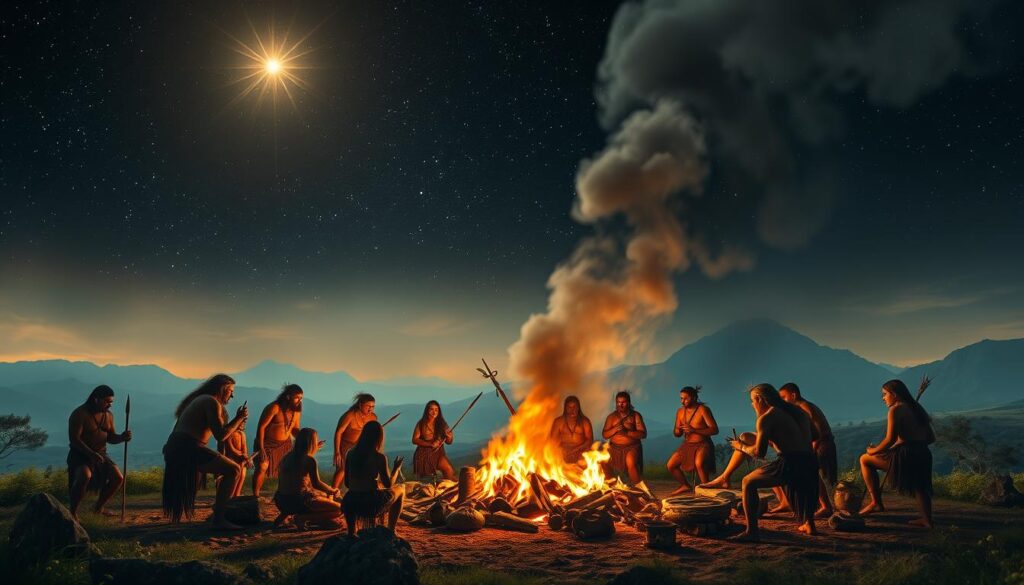
Fire has mesmerized humans for ages. It’s more than just light and warmth. Flames are spiritual tools that connect us to something greater1.
Sacred fire ceremonies exist worldwide. In Guatemala and other cultures, fire represents transformation. It’s a way to talk with supernatural forces1.
Smoke and flames are powerful symbols. They act as doorways between our world and the spirit realm. Ancient cultures used fire for special reasons1.
Fire ceremonies were carefully designed. They helped people find wisdom, healing, and growth. These rituals pushed people to their limits1.
Fire rituals mark important events. They bring communities together and keep traditions alive. Mayan practices show how humans connect with this element2.
Key Takeaways
- Fire ceremonies are ancient spiritual practices
- Flames represent transformation and communication
- Rituals encourage personal and collective growth
- Different cultures use fire for spiritual connections
- Smoke and combustion carry profound symbolic meanings
The Significance of Fire in Ancient Cultures
Fire has captivated humans since ancient times. It’s more than just heat and light. Fire became a profound spiritual symbol in many cultures3.
Spiritual Symbolism of Fire
Ancient cultures saw fire as spiritually complex. Greek philosophers viewed it as one of four fundamental elements3. It represented energy and transformation.
Fire symbolized various concepts:
- Divine intelligence
- Purification
- Passionate energy
- Destructive and creative power
Prometheus, a mythological figure, showed fire’s importance. He stole fire from gods for humans. This act symbolized human progress and independence4.
Ritualistic Practices
Cultures created complex fire rituals. Hinduism had havans, sacred fire ceremonies for deities5. Greek and Roman traditions linked fire with gods like Hephaestus4.
“Fire is the test of gold; adversity of strong men.” – Seneca
Ancient cultures respected fire’s spiritual side and its dangers. They knew fire could be unpredictable. This knowledge shaped their rituals.
Today, we still draw meaning from these old ideas. Fire remains a powerful symbol of change and renewal.
Various Fire Ceremonies Across the Globe
Fire has captivated humans for ages. It serves as a powerful medium for spiritual and cultural expression. Different cultures honor and celebrate fire’s connection to transformation and renewal.
People use fire ceremonies to mark important moments. These rituals connect communities and spiritual realms. Fire ceremonies show the deep meaning of fire across traditions6.
Native American Fire Practices
Native American cultures see fire as sacred. Their ceremonies often include smudging, a ritual of burning sage6. This practice cleanses spaces and people spiritually.
Smudging helps remove negative energies. It also invites positive changes. These rituals create a sense of renewal and harmony.
- Sage burning for spiritual purification
- Sacred fire dances connecting community
- Rituals marking seasonal changes
Ancient Roman Fire Traditions
Romans kept sacred fires as symbols. These flames represented national identity and religious devotion. Vestal Virgins tended the eternal flame.
This fire symbolized continuity and protection. It was a crucial part of Roman civilization and beliefs.
Hindu Agni Puja Ceremonies
In Hinduism, fire holds deep spiritual meaning. Agni, the fire god, is central in worship ceremonies called yajnas7. The Agnicayana ritual involves building complex fire altars7.
These practices show great respect for fire’s power. They highlight its role in Hindu spiritual life.
“Fire is the messenger between humans and divine realms” – Ancient Hindu Wisdom
Fire ceremonies connect people across cultures. They show our shared link to this powerful element. These rituals bridge cultural gaps through spiritual experiences.
Fire in Modern Cultural Celebrations
Fire captivates human imagination in modern celebrations worldwide. These festivals blend tradition with spectacle, creating unforgettable experiences. They connect people through the primal energy of flames8.
Modern fire celebrations showcase incredible diversity and emotional power. These performances represent living historical narratives. They range from massive international events to intimate community gatherings.
Bonfires and Their Origins
Bonfires have deep cultural roots, connecting communities through shared experiences. Some remarkable fire celebrations include:
- Up Helly Aa in Scotland, Europe’s largest fire festival, which has been celebrated since the 1880s8
- The Jeongwol Daeboreum Deulbul Festival in South Korea, where participants set hilltops ablaze to wish for health and harvest8
- Burning Man in the Black Rock Desert, attracting over 50,000 participants annually8
Festivals of Light
Light festivals around the world show humanity’s enduring connection to fire. Fire performances continue to evolve, transforming ancient practices into modern spectacles. These events celebrate cultural heritage and inspire awe.
Fire is not just a source of light, but a universal language of human connection.
Community Gatherings
Cultural burning practices reveal fire’s deeper significance beyond entertainment. Indigenous communities use controlled burns to manage landscapes. These practices preserve ecological balance and demonstrate fire’s role in environmental stewardship9.
Celebrations like Diwali in India and the Beltane Fire Festival in Edinburgh are powerful symbols. They remind us of fire’s role in transformation, renewal, and community spirit8.
How to Create Your Own Fire Ceremony
A personal fire ceremony can deeply connect you with ancient spiritual practices. Choose a meaningful and safe location that resonates with your intentions. This spot will be your sacred space for personal transformation.
Focus on intention and awareness when preparing your ritual10. Gather local, native wood like Oak or Hazel for their unique energetic properties. Carefully select materials and approach the fire’s sacred nature with respect.
You might want to explore traditional fire ceremony techniques that emphasize communal participation and mindful energy11. Invite others to join, creating a shared experience of healing and release.
Consider writing personal intentions on a pinecone and offering them to the flames11. Perform every action with focus and respect. Welcome the flames with mindful breath and careful tending10.
Your fire ceremony can be a powerful tool for introspection and growth. Approach the ritual with reverence and clear intentions. This will create a meaningful experience connecting you to ancient traditions.
FAQ
What is the spiritual significance of fire in ancient cultures?
Fire held sacred and magical status in many ancient cultures. Indo-European religions saw fire as both living and non-living. The Vedas honored Agni, the fire god.
Albanian tradition deified fire as a powerful force. It was believed to protect against darkness and evil.
How did different cultures perform fire ceremonies?
Fire ceremonies varied across cultures. Ancient Greeks tended Hestia’s living flame. Roman Vestal Virgins maintained a sacred fire.
The Aztecs held a New Fire ceremony every 52 years. Hinduism practiced fire rituals like Agnihotra and Agnistoma.
What is the importance of fire in Zoroastrian faith?
Zoroastrianism views fire as a symbol of purity and righteousness. It represents divine light and connects physical and spiritual worlds.
How can I create my own fire ceremony?
Choose a safe and meaningful location for your fire ceremony. Use candles, aromatic herbs, and flowers that match your intentions.
Respect cultural sensitivities and invite others to join. This creates a shared experience and fosters connection.
What are some modern fire celebrations?
Modern fire celebrations often stem from ancient traditions. Eternal flames worldwide commemorate significant events.
Albanian ritual fires mark cosmic cycles and agricultural rhythms. Guatemalan fire rituals use Mayan spirituality to create healing energy portals.
Why was fire considered magical in ancient times?
Ancient cultures saw fire as transformative and powerful. It provided warmth, light, and protection.
Fire cooked food, forged metals, and linked physical and spiritual realms. These qualities made it seem almost supernatural.
What is the significance of the Olympic Torch ceremony?
The Olympic Torch ceremony comes from Ancient Greek traditions. It symbolizes human spirit, athletic excellence, and cultural continuity.
Source Links
- Fire Ceremony ( Fuego Sagrado) Beauty Ritual in Guatemala with Tz’ules Sunun – Around The World Beauty – https://www.aroundtheworldbeauty.com/fire-ceremony-fuego-sagrado-beauty-ritual-in-guatemala-with-tzules-sunun/
- Fire in Mesoamerican ritual – https://www.mexicolore.co.uk/aztecs/home/fire-in-mesoamerican-ritual
- Fire (classical element) – https://en.wikipedia.org/wiki/Fire_(classical_element)
- Significance of Greek Mythology Fire – – https://www.theoi.com/articles/significance-of-greek-mythology-fire/
- The Cultural Significance of Fire: – https://vocal.media/education/the-cultural-significance-of-fire
- Ritual: Purification, Fire & Smoke – Ecstatic Trance: Ritual Body Postures – https://www.cuyamungueinstitute.com/articles-and-news/ritual-purification-fire-smoke/
- Fire worship – https://en.wikipedia.org/wiki/Fire_worship
- Burn It to the Ground: A Guide to the World’s Best Fire Festivals – https://www.atlasobscura.com/articles/burn-it-to-the-ground-a-guide-to-the-worlds-best-fire-festivals
- Cultural Burning Practices: The Importance of Good Fire – https://www.truenorthgear.com/news/cultural-burning-practices-the-importance-of-good-fire?srsltid=AfmBOorAT-XkUctQZuMCyz7TtKXlIiIjrdDhOyyGg2tkNZx0ndyNhHNi
- Ritual Welcoming of Fire – https://www.sacredhearthfrictionfire.com/ritual-welcoming-of-fire.html
- An Organic Fire Ritual – https://enchantedlivingmagazine.com/an-organic-fire-ritual/