Anne Frank was born on June 12, 1929, in Frankfurt, Germany1. Her family moved to Amsterdam, Netherlands, in 1933 because of growing hatred against Jews in Germany1. This move was a key part of her life during World War II1. The Holocaust, a sad event in history, is closely tied to Anne Frank’s life. Her experiences show the wide impact of Jewish persecution during World War II2.
Anne Frank’s life story is more than just her own tale. It shows how the Holocaust affected people and communities3. Her diary, translated into 70 languages and sold over 30 million copies worldwide2, offers a personal look at World War II.
Key Takeaways
- Anne Frank was born on June 12, 1929, in Frankfurt, Germany1.
- Her family moved to Amsterdam in 1933 due to rising antisemitism in Germany1.
- Anne Frank’s diary has been translated into 70 languages and sold over 30 million copies worldwide2.
- The diary provides a personal and relatable perspective on the events of World War II and the Holocaust3.
- Anne Frank’s story is a significant part of the history of the Holocaust and World War II2.
- The book is one of the best-selling books of the 20th century and continues to sell well in the 21st century3.
Early Life and Background
Anne Frank was born on June 12, 1929, in Frankfurt am Main, Germany. She came from a liberal Jewish family4. The Franks loved learning and culture, making a warm place for Anne to grow up.
Family and Heritage
The Frank family followed Jewish traditions but also lived a modern, open life5. This mix helped them fit into German society. But, as persecution grew, their sense of safety began to fade.
Childhood in Frankfurt
Anne went to the 6th Montessori School in Frankfurt. She did well in school and loved to write4. Her childhood was full of curiosity and creativity, setting the stage for her famous diary.
Move to Amsterdam
In 1934, the Frank family moved to Amsterdam for better chances and to escape anti-Semitism6. Anne started at the Montessori School again, learning Dutch and making friends. But, when the Nazis took over in May 1940, the Franks had to hide to stay safe4.
Life in Hiding
On July 6, 1942, the Frank family hid in the Secret Annex of Otto Frank’s office at Prinsengracht 263 in Amsterdam7. This hidden space was their safe haven for two scary years of World War II.
Life in the annex was a tightrope of routine and fear. Everyone had to be quiet during the day to avoid being caught. Meals were simple, and space was tight, leading to both teamwork and tension.
The Secret Annex
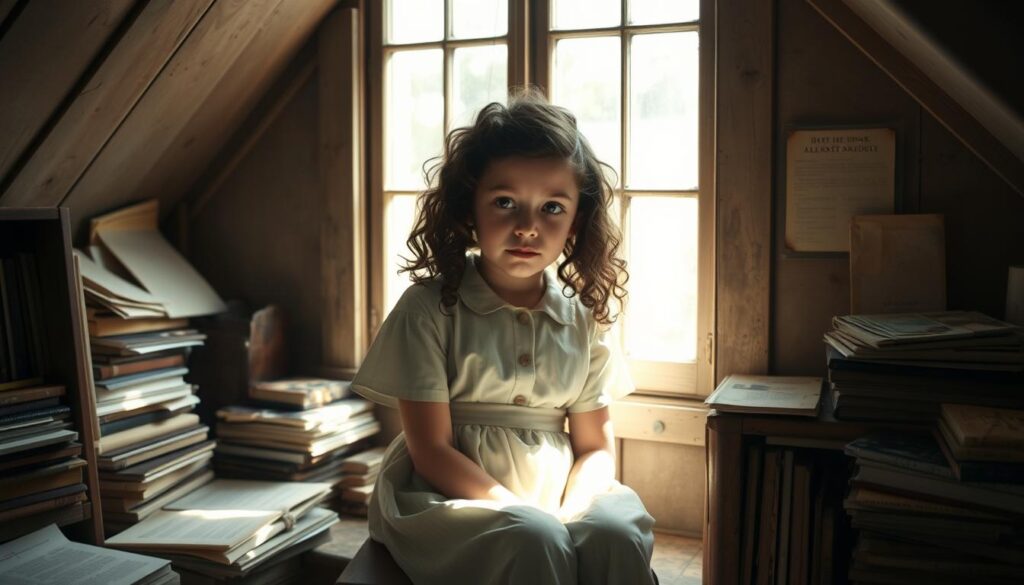
The Secret Annex was hidden behind a bookcase in Otto Frank’s office. It was a small space for eight people, including the Frank family and their helpers78.
Daily Life During the Hiding Period
Days were structured to keep a sense of normalcy. They had morning prayers, shared meals, and evenings for reading and writing. Anne’s Diary of a Young Girl was her safe space, where she wrote about her fears, hopes, and thoughts7.
“I can shake off everything as I write; my sorrows disappear, my courage is reborn.” – Anne Frank
Key Figures in the Annex
Many brave people helped those hiding. Miep Gies and her husband, among others, brought supplies and support. Their bravery kept the annex’s residents safe until the Gestapo found them on August 4, 19448.
Legacy and Impact
Anne Frank’s story has inspired millions worldwide. Her diary is a powerful reminder of human resilience.
Publication of The Diary
After the war, Otto Frank, the only Holocaust survivor from the Secret Annex, published Anne’s diary in 1947. It quickly became famous, with over 30 million copies sold by 19529. The diary has been translated into more than 70 languages, including an Ethiopian regional dialect10.
This ensures Anne’s voice reaches many different people.
Global Influence and Education
“The Diary of a Young Girl” is a key educational tool about the Holocaust and human rights. The Anne Frank Trust UK, founded in 1990, runs programs in tough communities10. These programs affect teenagers from places like India, Bangladesh, and South Africa10.
These efforts help people understand and fight against hatred.
Anne Frank in Contemporary Culture
Anne Frank’s legacy is seen in literature, film, and theater. It shows the sad results of discrimination. The Anne Frank House museum, opened in 1960, is a major landmark10.
It keeps her memory alive and teaches visitors. Anne’s message keeps inspiring talks on human rights and fighting against antisemitism and prejudice.
FAQ
Who was Anne Frank and why is she significant in Holocaust history?
Anne Frank was a Jewish girl who became famous through her diary, “The Diary of a Young Girl.” Her diary gives a personal look at the Jewish persecution during World War II. It shows her courage and the human spirit during Nazi rule.
What was Anne Frank’s early life like in Frankfurt?
Anne Frank was born in Frankfurt, Germany. She grew up in a loving Jewish family. This upbringing shaped her experiences and writings later on.
Why did the Frank family move to Amsterdam?
In 1934, the Franks moved to Amsterdam to escape Nazi threats. They sought a safer place for their family amidst growing Jewish persecution in Europe.
How did the Nazi occupation affect Anne Frank and her family?
The Nazi occupation brought dangers to Jewish families, including the Franks. They faced harsh restrictions and persecution. This led them to hide in the Secret Annex, starting a dangerous period for Anne.
What was the Secret Annex and who shared it with the Frank family?
The Secret Annex was a hidden space in Amsterdam. Anne Frank, her family, and four others hid there for two years. They shared it with another family and a dentist, all helped by brave helpers.
How did Anne Frank’s diary become a historical document?
During her hiding, Anne wrote a diary about her thoughts and hopes. After being discovered, her father, Otto Frank, published it. “The Diary of a Young Girl” is now a key account of life under Nazi rule.
What is the legacy of Anne Frank today?
Anne Frank’s diary has been translated into many languages. It’s a key tool for learning about the Holocaust. Her story has also influenced literature and film, and the Anne Frank House museum keeps her memory alive.
How did “The Diary of a Young Girl” impact global education on the Holocaust?
“The Diary of a Young Girl” has greatly helped teach about the Holocaust. Its stories make history come alive. It’s taught in schools worldwide, helping to understand and empathize with the Holocaust’s lessons.
What is the Anne Frank House and its significance?
The Anne Frank House in Amsterdam is where Anne and her family hid. It’s now a museum and memorial. It teaches visitors about Anne’s story and the Holocaust, fighting against prejudice.
How does Anne Frank’s story influence contemporary discussions on human rights?
Anne Frank’s story is important today for talks on human rights and tolerance. Her words inspire efforts to fight prejudice and promote equality. They show the power of individual voices for a better world.
Source Links
- Anne Frank – https://en.wikipedia.org/wiki/Anne_Frank
- About Anne Frank – Anne Frank Center – https://annefrank.com/about-afc/about-anne-frank/
- Anne Frank: The Diary of a Young Girl By Anne Frank – https://www.goodreads.com/book/show/127441416-anne-frank
- Anne Frank Biography: Who was Anne Frank? – https://encyclopedia.ushmm.org/content/en/article/anne-frank-biography
- Anne Frank | Biography, Age, Death, & Facts | Britannica – https://www.britannica.com/biography/Anne-Frank
- Anne Frank facts – National Geographic Kids – https://www.natgeokids.com/uk/discover/history/general-history/anne-frank-facts/
- Who was Anne Frank? – https://www.annefrank.org/en/anne-frank/who-was-anne-frank/
- Anne Frank ‑ Diary, Biography & Facts | HISTORY – https://www.history.com/topics/holocaust/anne-frank-1
- Who was Anne Frank? Why her legacy is still fought over today – https://www.nationalgeographic.com/history/article/who-was-anne-frank
- Anne Frank’s Legacy: How Her Story Changed the World – https://www.historyhit.com/anne-franks-legacy-how-her-story-changed-the-world/