
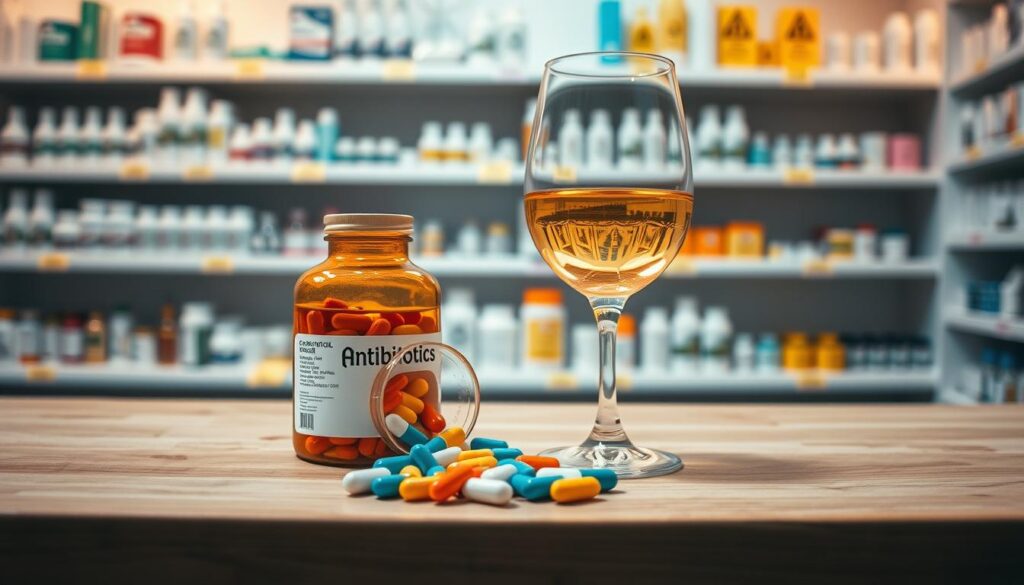
Understanding how antibiotics and alcohol interact is crucial for medication safety. Your recovery depends on using antibiotics responsibly. Mixing alcohol with antibiotics can harm your health and complicate treatment1.
Antibiotics react differently with alcohol. Some medications may slow absorption or cause unexpected side effects. Penicillins interact differently with alcohol compared to other antibiotic classes1.
Doctors advise caution when drinking during antibiotic treatment2. Alcohol can hinder antibiotic absorption, reducing their effectiveness. It may also weaken your immune system and cause dehydration1.
Key Takeaways
- Avoid mixing alcohol with specific antibiotics to prevent adverse reactions
- Some antibiotics have more severe interactions with alcohol than others
- Alcohol can reduce the effectiveness of your medication
- Consult your healthcare provider about alcohol use during antibiotic treatment
- Prioritize your recovery by making informed medication choices
Understanding Antibiotics and Alcohol Interactions
Combining antibiotics and alcohol can lead to serious health risks. Your body’s response to medication becomes unpredictable with alcohol. This mix can hinder your recovery process3.
Common Side Effects When Mixing
Mixing alcohol with antibiotics can cause uncomfortable and dangerous side effects. These may include nausea, vomiting, and severe headaches.
Other potential effects are rapid heartbeat, stomach cramps, flushing, and dizziness. Some antibiotics create more severe reactions than others.
- Nausea and vomiting
- Severe headaches
- Rapid heartbeat
- Stomach cramps
- Flushing
- Dizziness
It’s crucial to understand the specific risks of your prescription3.
Types of Antibiotics to Never Mix with Alcohol
Some antibiotics are especially dangerous when mixed with alcohol. The most critical ones to avoid include:
- Metronidazole
- Tinidazole
- Cefoperazone
- Isoniazid
- Linezolid
Prescription drug abuse can escalate when patients ignore medication warnings. Doctors prescribe about 270 million antibiotics yearly, making awareness vital4.
Safe Waiting Periods After Treatment
After finishing antibiotics, wait at least 24-72 hours before drinking alcohol. Some antibiotics, like doxycycline and erythromycin, may become less effective with alcohol34.
“Always consult your healthcare provider about alcohol interactions with your specific medication.”
Knowing antibiotic interactions protects your health and aids recovery. Stay informed and put your well-being first.
How Alcohol Affects Your Recovery Process
Battling bacterial infections requires a strong recovery process. Alcohol can seriously harm your body’s healing ability5. It creates big challenges for your immune system as it fights infections6.
Alcohol’s impact on antimicrobial resistance is crucial to understand. Alcohol metabolism disrupts natural healing, potentially extending infection recovery time5. This can happen through several key processes:
- Weakens immune system response
- Reduces medication effectiveness
- Increases inflammation
- Slows healing time
Antibiotics and alcohol can mix poorly. Some combinations may cause severe side effects, such as:
| Antibiotic Type | Potential Alcohol Interaction |
|---|---|
| Metronidazole | Severe nausea, vomiting |
| Sulfamethoxazole | Folic acid deficiency |
| Linezolid | Potential seizures |
“Your health is a priority. Avoiding alcohol during antibiotic treatment can significantly improve your recovery.”
Doctors suggest avoiding alcohol while taking antibiotics. Talk to your doctor about possible drug interactions. This helps ensure the best treatment plan6.
Learn more about alcohol and medication interactions to stay safe during treatment.
Conclusion
Your health is crucial when taking antibiotics. Mixing alcohol with these medications can harm your liver. Alcohol can weaken your immune system and make your treatment less effective.
Doctors advise against drinking while on antibiotics. Some antibiotics react badly with alcohol, causing serious side effects. These may include a fast heartbeat, nausea, and high blood pressure7.
Avoiding alcohol gives your body the best chance to heal. It also helps prevent possible complications8. Your recovery depends on making smart choices during treatment.
For more details on antibiotics and alcohol, read this guide on antibiotic safety. Your doctor can give you personalized advice about liver risks and drug interactions9.
Drink plenty of water and get enough rest. Follow your prescription instructions carefully. These healthy choices will support your recovery during antibiotic treatment.
FAQ
Can I drink alcohol while taking antibiotics?
Mixing alcohol and antibiotics is generally not recommended. It can increase side effects like stomach upset, dizziness, and drowsiness. Some antibiotics should never be combined with alcohol.
What specific antibiotics should I completely avoid mixing with alcohol?
Never mix alcohol with cefoperazone, cefotetan, metronidazole, tinidazole, ketoconazole, isoniazid, linezolid, and griseofulvin. These combinations can cause serious side effects.
Nausea, vomiting, flushing, headache, fast heartbeat, and stomach cramps are possible reactions. Always consult your doctor about potential interactions.
How does alcohol interfere with my recovery from an infection?
Alcohol can disrupt your healing process by affecting sleep patterns and nutrient absorption. It can increase blood sugar levels and reduce overall energy.
These factors may weaken your body’s ability to fight infections. As a result, your recovery time could be longer.
How long should I wait after finishing antibiotics before drinking alcohol?
For some antibiotics, avoid alcohol for up to three days after treatment. Always check medication labels for specific instructions.
Consult with your doctor or pharmacist about waiting periods for your prescription. They can provide personalized advice based on your medication.
Are there any non-alcoholic alternatives I can drink while on antibiotics?
Yes! Try flavored water, sparkling water, coffee, or herbal teas. Fruit juice, coconut water, and mocktails are also great options.
These drinks can support your hydration and recovery. They won’t interfere with your antibiotic treatment like alcohol might.
Can alcohol make my antibiotics less effective?
Yes, some antibiotics like doxycycline and erythromycin may become less effective when mixed with alcohol. This can slow down your recovery from the infection.
Do I need to worry about alcohol in other medications or products?
Be careful with alcohol in mouthwashes, cold medications, and other over-the-counter products. Always check ingredient labels carefully.
If you’re unsure about potential alcohol interactions, ask a healthcare professional. They can guide you on safe product use during treatment.
Source Links
- Can you drink on antibiotics? – https://www.bswhealth.com/blog/can-you-drink-alcohol-on-antibiotics-antibiotic-dos-and-donts
- Why You Should Avoid Alcohol on Antibiotics – https://health.clevelandclinic.org/can-you-drink-on-antibiotics
- Combining Antibiotics and Alcohol: Is It Safe? – https://www.healthline.com/health/antibiotics-alcohol
- Fact versus Fiction: a Review of the Evidence behind Alcohol and Antibiotic Interactions – https://pmc.ncbi.nlm.nih.gov/articles/PMC7038249/
- Can You Drink On Antibiotics? | Alcohol and Antibiotics Myth – https://www.therecoveryvillage.com/alcohol-abuse/does-alcohol-affect-antibiotics/
- Alcohol And Antibiotics – https://www.alcoholhelp.com/alcohol/drinking-drugs/antibiotics/
- No title found – https://www.lotusbh.org/post/antibiotics-and-alcohol
- Alcohol, Antibiotics, and Healing: What Happens? – https://www.verywellhealth.com/antibiotics-and-alcohol-7480803
- Antibiotics and Alcohol: What You Need to Know – https://www.urbanrecovery.com/blog/antibiotics-and-alcohol

