
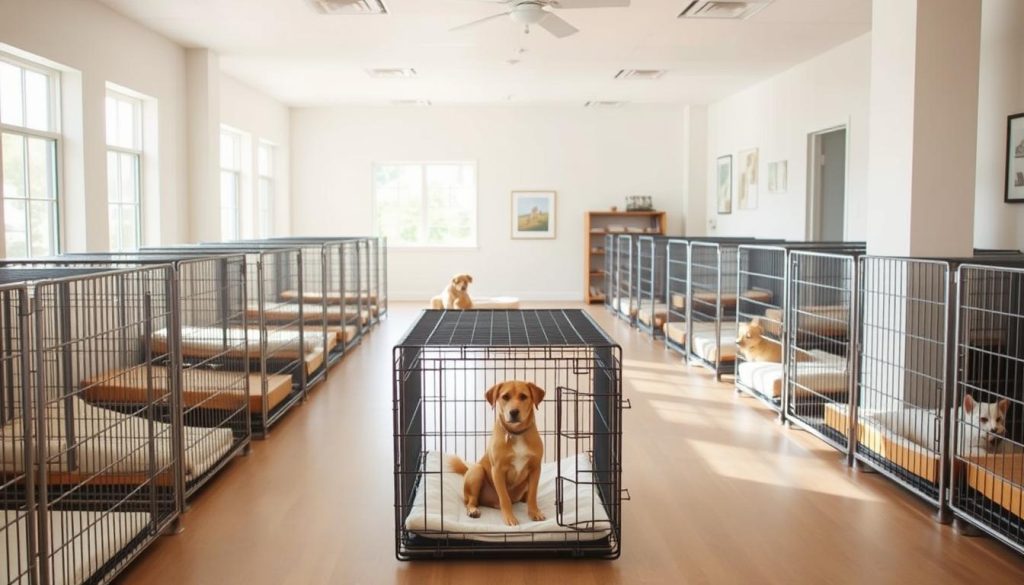
Dog owners often question the ethics of using kennels. Dogs have a natural instinct to seek small, secure spaces. When used correctly, kennels can be a positive environment for dogs1.
Well-known animal welfare groups support proper crate training. Kennels can offer a safe retreat for fearful or overstimulated dogs1. They also create a calm space in busy homes with young children.
Trainers recommend kennels as a valuable training tool. However, they stress important guidelines for their use1. Puppies under 6 months shouldn’t be crated for more than 3-4 hours at a time.
Adult dogs being house trained need careful crate management. This ensures their comfort and supports their learning process1.
Key Takeaways
- Kennels can be a safe space for dogs when used correctly
- Dogs have a natural instinct to seek secure, den-like environments
- Proper crate training is supported by major animal welfare organizations
- Crates should be appropriately sized and used with care
- Kennels can help with training and provide a sense of security
Understanding Dogs’ Natural Den Instincts and Kennel Benefits
Dogs have deep-rooted instincts from their wild ancestors. These behaviors explain why dogs feel at ease in enclosed spaces. Kennels, dog daycares, and pet hotels tap into this natural comfort zone2.
The denning instinct is a powerful survival mechanism. Wolves, the ancestors of dogs, seek small, protected areas for safety. This behavior has been passed down to our canine companions2.
Why Dogs Feel Safe in Enclosed Spaces
Canines are drawn to small, secure environments. These spaces offer protection and comfort. In the wild, wolf pups learn to keep their dens clean3.
This cleanliness instinct is about survival and safety. It’s why dog resorts and kennels appeal to our furry friends.
Physical and Mental Health Benefits of Kennels
- Reduces anxiety and stress4
- Provides a secure personal space2
- Helps with house training3
- Supports emotional well-being3
Crate training offers many advantages for dogs. It can decrease the chance of phobias and separation anxiety. Professional trainers see it as an effective way to develop good behaviors4.
Creating a Positive Association with Kennels
Introducing a kennel or crate needs patience and positive reinforcement. Experts suggest letting dogs enter and exit freely. Using toys and treats can make the space more inviting2.
Crate training is useful in many settings. It works at home, in dog daycares, and pet hotels. This tool gives dogs a sense of security in different situations34.
Kennels for Dogs: Best Practices and Common Mistakes
Choosing the right kennel for your dog is crucial. Animal shelters and pet sitting facilities follow specific rules. These guidelines ensure dogs stay comfortable and healthy.
Size is key when picking a kennel. Dogs should have enough room to stand, turn, and lie down easily.
Puppies need extra care. Those under 6 months shouldn’t be crated for over 3-4 hours straight5. Many owners suggest trial visits to help pets adjust5.
Vaccinations are vital in dog kennels. Most facilities require DAPP, rabies, leptospirosis, and Bordetella shots5.
Biosecurity is top priority in animal shelters. Experts advise using disinfecting mats and wearing protective gear6. They also recommend strategic quarantine procedures6.
Critical rule: Kennels should never be used as punishment. Positive associations help dogs feel safe. This reduces stress during their stay.
Conclusion
Kennels and doggy daycares can be great for pet owners when used wisely. They should add to, not replace, a dog’s main social and physical needs7. Dogs need regular exercise, mental tasks, and personal time to stay healthy and happy7.
When choosing a doggy daycare or boarding place, look for full care options. This means big living spaces, lots of exercise, and staff who know animal first aid8. Good kennels have set routines to help dogs feel calm and make friends7.
Think of kennels as short-term help, not long-term answers. They’re good, but can’t replace love and training at home. The best plan mixes kennel time with care at home7.
Every dog is different, so their needs are too. Not all dogs like kennels. It’s important to watch your pet and change plans if needed.
FAQ
Are kennels humane for dogs?
Kennels can be humane and beneficial for dogs when used correctly. They provide a safe space that taps into dogs’ natural denning instinct. Many animal welfare organizations support proper crate training when done with care.
How long can a dog stay in a kennel?
The duration depends on the dog’s age, health, and individual needs. Puppies shouldn’t be crated for more than 2-3 hours at a time. Adult dogs can typically handle 4-6 hours.
Regular breaks for exercise, bathroom needs, and social interaction are crucial. Never use a kennel as a long-term confinement solution.
Why do dogs feel safe in enclosed spaces?
Dogs have an instinct to seek small, enclosed spaces for security. This behavior stems from their wild ancestors’ survival strategies. A well-introduced kennel can become a dog’s personal sanctuary.
It offers a calm environment where they can rest and feel protected.
How do I make my dog comfortable in a kennel?
Create positive associations by making the kennel inviting and cozy. Use soft bedding and place favorite toys inside. Never use it as punishment.
Start with short, positive experiences using treats and praise. Gradually increase crate time to help your dog feel safe and happy.
Can kennels be used in dog daycare or pet hotels?
Yes, professional pet care services often use kennels as part of their management strategy. They provide a controlled environment for rest, separation, and individual care.
Reputable facilities balance kennel time with exercise, socialization, and mental stimulation.
What size kennel should I choose for my dog?
Choose a kennel that allows your dog to stand, turn, and lie down comfortably. The space shouldn’t be too large, as dogs prefer cozy environments.
For growing puppies, consider a crate with an adjustable divider panel. This ensures the right fit throughout different life stages.
Are there any risks associated with using kennels?
Potential risks include over-confinement, lack of exercise, and negative psychological impacts if used improperly. Limit kennel time and ensure regular exercise and social interaction.
Never use the kennel as punishment. Always monitor your dog’s comfort and well-being.
How do kennels differ in animal shelters versus home environments?
Shelter kennels are used for containment, health monitoring, and basic care. Home kennels focus on training, safety, and providing a personal space.
The approach and duration of use vary significantly between these environments.
Source Links
- Feeling Guilty About Crating Your Dog? Here’s Why You Shouldn’t – The Traveling Leash – https://travelingleash.com/feeling-guilty-crating-dog-heres-shouldnt/
- Stay. Good dog. – https://www.staygooddog.com/articles/the-psychology-of-denning-why-dogs-love-crates
- The Importance of Crate Training – Nom Nom – https://www.nomnomnow.com/learn/article/the-importance-of-crate-training?srsltid=AfmBOopuYxafVLQC8a3Tnmfjr6ABZTYj6x2iWzmhbKUUbBl876kNbNDU
- The Benefits of Crate Training – PAWSPAWS – https://www.paws.org/resources/the-benefits-of-crate-training/
- How to Prepare Your Dog for Boarding – https://www.zoetispetcare.com/blog/article/prepare-dog-boarding
- 5 Best Kennel Practices – https://www.revivalanimal.com/learning-center/5-best-kennel-practices?srsltid=AfmBOor8lx48a2dGCC6rZog5wwae5eNGMa5Q-9HmySLrTYhN9O-2pBpB
- Kennel Club Boarding – https://kennelclubboarding.ca/blogs/kennel-club-boarding-dog-boarding-articles/is-it-ok-to-put-your-dog-in-boarding-kennels?srsltid=AfmBOoouTDxcSojWIOUO06qm_Udb0xw2KirIMHJJCsErfh5fCg0bjasF
- Why Local Dog Kennels Are a Must for Pet Owners: Benefits and Considerations – Aquithie Boarding & Quarantine Kennels – https://www.aquithie.com/why-local-dog-kennels-are-a-must-for-pet-owners-benefits-and-considerations/

