
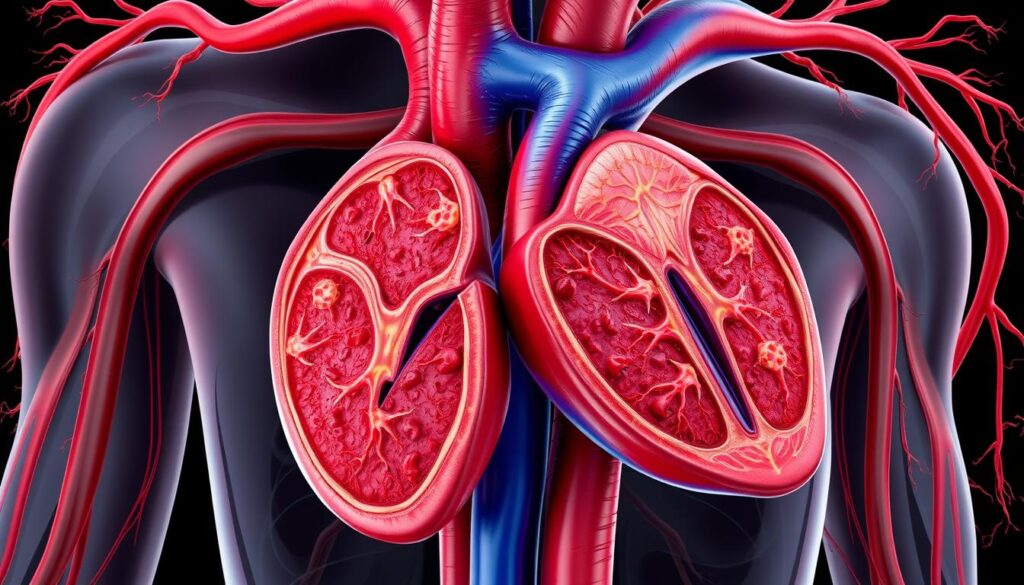
Plaque buildup in arteries affects your heart health silently. Your cholesterol levels are key in this process12. Recognizing how this happens is crucial for understanding cardiovascular disease.
Atherosclerosis narrows arteries due to plaque buildup. This can start in your teenage years3. As you age, the risk of serious arterial problems grows.
Many adults have arterial changes without knowing it. Your daily habits greatly affect these conditions1. Learning about risks and prevention can protect your heart health.
Key Takeaways
- Atherosclerosis can start developing early in life
- Cholesterol levels directly influence arterial health
- Most adults over 60 have some arterial changes
- Lifestyle modifications can significantly reduce risks
- Regular health screenings are crucial for early detection
Understanding Arteriosclerosis and Atherosclerosis
Heart health depends on understanding arterial conditions. Arteriosclerosis and atherosclerosis are distinct medical conditions affecting the cardiovascular system4.
Defining the Conditions
Arteriosclerosis describes the hardening and stiffening of artery walls. The aging process plays a significant role in this condition.
After age 55, artery stiffness increases significantly. This contributes to potential health risks5.
Key Differences Explained
Atherosclerosis involves a specific type of arterial damage. It occurs when fatty deposits and cholesterol build up in artery walls.
This buildup creates dangerous plaque. It can severely impact blood flow4.
Critical Risk Factors to Understand
- High blood pressure
- Elevated cholesterol levels
- Smoking
- Diabetes
- Obesity
- Lack of physical activity
Inflammation and oxidative stress fuel these conditions. Lifestyle choices greatly influence your risk.
Prevention is key to maintaining healthy arteries5.
Your heart health is largely determined by the choices you make every day.
Prevention Strategies
To combat these arterial conditions, experts recommend:
- Regular exercise (90-150 minutes per week)
- Maintaining a healthy diet
- Managing stress effectively
- Getting 7-9 hours of sleep nightly
Cardiovascular diseases remain a global health challenge. In 2017, they caused over 17 million deaths worldwide6.
Understanding these conditions empowers you. Take proactive steps toward heart health today.
Signs and Symptoms of Arteriosclerosis/Atherosclerosis
Recognizing arteriosclerosis warning signs is vital for early detection. Your body may send subtle signals about cardiovascular issues. Spotting these signs could potentially save your life.
Early Warning Signs to Watch For
Atherosclerosis often develops silently without immediate symptoms. It can start in childhood and progress gradually7.
By age 60, about 75% of people have some degree of arterial hardening7.
- Occasional chest pain
- Mild shortness of breath
- Intermittent numbness in extremities
- Slight weakness during physical activity
Severe Symptoms You Shouldn’t Ignore
Advanced atherosclerosis can cause serious symptoms needing immediate medical attention. These include sudden chest pain, breathing difficulties, and potential stroke symptoms8.
| Symptom Category | Specific Signs |
|---|---|
| Cardiovascular Symptoms | Severe chest pain, arm or jaw discomfort |
| Neurological Warning Signs | Sudden facial drooping, speech difficulties |
| Circulation-Related Issues | Extreme numbness, weakness in limbs |
“Early detection can be your greatest defense against serious cardiovascular complications.”
Tests like ankle-brachial index, blood tests, and imaging can help identify atherosclerosis progression7. If you notice these symptoms, quickly consult your healthcare provider.
Prevention Strategies for a Healthy Heart
Protecting your heart health requires action. Smart lifestyle changes can lower your risk of arteriosclerosis. They also help maintain good heart function through preventive care.
Lifestyle Changes to Embrace
Your heart health depends on smart daily choices. Regular exercise is key to preventing heart diseases9. Aim for 30 minutes of moderate exercise five days a week9.
- Maintain a healthy body mass index between 18.5 and 24.99
- Quit smoking to reduce heart attack risks9
- Manage stress through meditation and workouts9
- Get 7-9 hours of sleep nightly9
Dietary Tips for Prevention
A healthy diet guards against heart disease. Focus on foods that support heart wellness10.
| Dietary Recommendation | Heart Health Benefit |
|---|---|
| Low saturated fat intake | Reduces cholesterol levels |
| LDL cholesterol below 70 mg/dL | Minimizes cardiovascular risk9 |
| High fiber foods | Supports heart health |
Importance of Regular Checkups
Preventive care needs consistent monitoring. Schedule yearly checkups to track vital signs and detect heart risks early9.
Your healthcare provider can help manage:
- Blood pressure (aim for 120/80 mmHg)9
- Cholesterol levels
- Blood sugar management
Your heart health is a journey, not a destination. Small, consistent steps can make a significant difference.
Remember, prevention beats cure. These strategies can protect your heart and boost your life quality.
Treatment Options for Arteriosclerosis/Atherosclerosis
Your healthcare team will create a custom treatment plan for your arteriosclerosis. Medications often start the process by managing risk factors. Statins lower LDL cholesterol, reducing plaque in arteries11. Aspirin may be prescribed to prevent blood clots11.
Surgery may be needed if other methods fall short. Angioplasty and stent placement can open blocked arteries and restore blood flow11. Severe cases might require bypass surgery to create new blood routes12.
Extra therapies can boost your main treatment plan. Fish oil, garlic, and green tea may help manage cholesterol and blood pressure11. Lifestyle changes are key to your treatment.
Regular exercise, stress management, and a heart-healthy diet are crucial12. Always talk to your doctor about the best treatment for your needs.
FAQ
What is the difference between arteriosclerosis and atherosclerosis?
Arteriosclerosis refers to hardening and stiffening of arteries due to aging and calcium deposits. Atherosclerosis involves plaque buildup in artery walls. It’s a specific type of arteriosclerosis.
While related, these conditions are not exactly the same. Atherosclerosis includes fats and cholesterol in the plaque buildup.
What are the primary risk factors for arteriosclerosis and atherosclerosis?
Key risk factors include high blood pressure, high cholesterol, and smoking. Diabetes, obesity, and family history also contribute to these conditions.
Other factors are age, lack of physical activity, and poor diet. Inflammatory conditions can increase the risk too.
What are the early warning signs of these conditions?
Early signs can be subtle or even absent. As the condition progresses, you might experience chest pain or shortness of breath.
Numbness or weakness in limbs and difficulty speaking may occur. It’s important to consult a healthcare provider if you notice these symptoms.
When should I seek immediate medical attention?
Seek help immediately for sudden chest pain or arm and jaw pain. Difficulty breathing and severe headaches are also urgent signs.
Watch for vision problems or signs of stroke. These include facial drooping or sudden weakness on one side of the body.
How can I prevent arteriosclerosis and atherosclerosis?
Adopt a heart-healthy lifestyle with regular exercise and stress management. Maintain a healthy weight and eat a diet rich in fruits and vegetables.
Quit smoking and limit alcohol intake. Have regular check-ups to monitor blood pressure and cholesterol levels.
What treatment options are available?
Treatment depends on the condition’s severity. Medications like statins may be used to lower cholesterol.
Blood pressure control drugs or blood thinners might be prescribed. Severe cases may require procedures like angioplasty, stenting, or bypass surgery.
Lifestyle changes remain crucial in treating these conditions. They complement medical interventions for better outcomes.
Are there any complementary therapies that can help?
Some complementary therapies, like omega-3 supplements, may be helpful. Plant sterols can also be considered under medical supervision.
These should not replace traditional medical treatments. They can support the management of the condition when used properly.
How important are regular check-ups in managing these conditions?
Regular check-ups are crucial for monitoring cardiovascular health. They allow healthcare providers to track changes and adjust treatments as needed.
Early detection can significantly improve outcomes. It helps prevent serious complications associated with these conditions.
Source Links
- Arteriosclerosis / atherosclerosis – Symptoms and causes – https://www.mayoclinic.org/diseases-conditions/arteriosclerosis-atherosclerosis/symptoms-causes/syc-20350569
- Arteriosclerosis: What You Need to Know About Hardening of the Arteries – https://my.clevelandclinic.org/health/diseases/24870-arteriosclerosis
- Atherosclerosis – https://www.webmd.com/heart-disease/what-is-atherosclerosis
- What Is the Difference Between Atherosclerosis and Arteriosclerosis? – https://www.webmd.com/heart-disease/difference-between-atherosclerosis-arteriosclerosis
- Atherosclerosis Vs. Arteriosclerosis: What’s The Difference? – https://www.healthline.com/health/atherosclerosis-vs-arteriosclerosis
- Arteriosclerosis, atherosclerosis, arteriolosclerosis, and Monckeberg medial calcific sclerosis: what is the difference? – https://pmc.ncbi.nlm.nih.gov/articles/PMC8276643/
- Atherosclerosis Symptoms & Causes | Aurora Health Care – https://www.aurorahealthcare.org/services/heart-vascular/conditions/atherosclerosis
- Arteriosclerosis / atherosclerosis – https://www.beaconhealthsystem.org/library/diseases-and-conditions/arteriosclerosis-atherosclerosis?content_id=CON-20155124
- How Can I Prevent Heart Disease? – https://my.clevelandclinic.org/health/articles/17385-heart-disease-prevention-and-reversal
- Atherosclerosis – https://www.hopkinsmedicine.org/health/conditions-and-diseases/atherosclerosis
- Arteriosclerosis / atherosclerosis – Diagnosis and treatment – https://www.mayoclinic.org/diseases-conditions/arteriosclerosis-atherosclerosis/diagnosis-treatment/drc-20350575
- Arteriosclerosis: Symptoms & Treatment | Mass General Brigham – https://www.massgeneralbrigham.org/en/patient-care/services-and-specialties/heart/conditions/arteriosclerosis

