
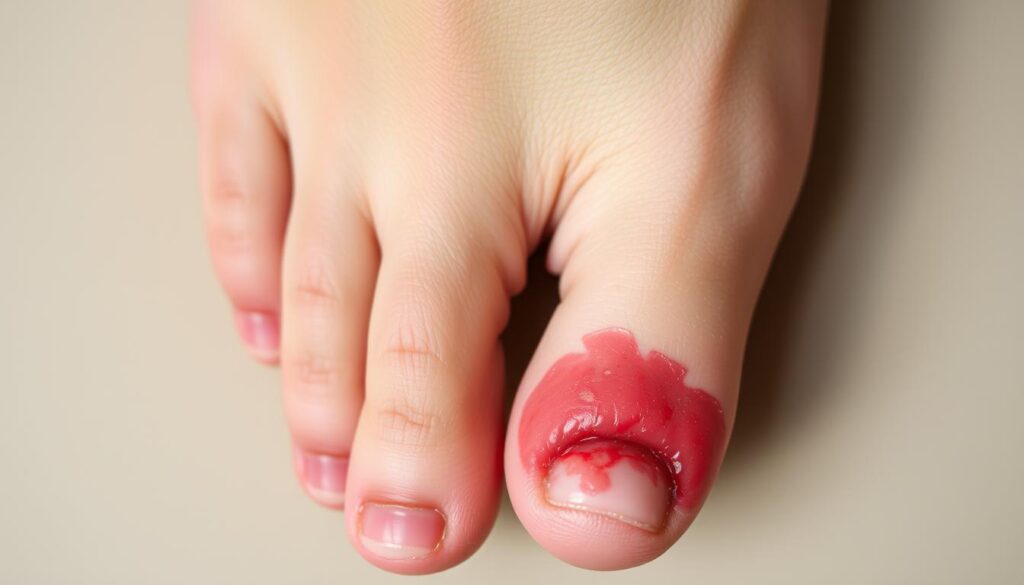
Athlete’s foot is a common fungal infection that can disrupt your daily life. This contagious skin condition typically starts between your toes. It can spread quickly if left untreated1.
The fungus responsible thrives in warm, moist environments like shoes. This makes it a persistent challenge for many people1. Understanding this infection is crucial for effective management.
About 70-90% of cases show itching, burning, and scaling skin1. While once more common among athletes, anyone can now develop this uncomfortable condition1.
Spotting early signs of athlete’s foot helps you act fast. The infection can spread to other foot areas and to other people. Public spaces like pools, showers, and locker rooms are prime breeding grounds for these fungi1.
Key Takeaways
- Athlete’s foot is a common, contagious fungal skin infection
- Warm, moist environments accelerate fungal growth
- Symptoms include itching, burning, and skin scaling
- Public spaces can increase infection risk
- Proper foot hygiene is crucial for prevention
Understanding Athlete’s Foot: What You Need to Know
Athlete’s foot is a common skin condition affecting people of all ages. This fungal infection targets the feet, causing discomfort. It’s a contagious skin condition that requires attention.
What is Athlete’s Foot?
Tinea pedis, or athlete’s foot, is a widespread fungal infection. It thrives in warm, moist environments. The infection usually starts between the toes and spreads quickly in damp conditions2.
People who often wear enclosed footwear or have sweaty feet are more susceptible. The fungus loves these conditions and can multiply rapidly.
Common Causes of Athlete’s Foot
- Walking barefoot in public areas like locker rooms2
- Sharing personal items with infected individuals
- Wearing tight, non-breathable shoes
- Excessive foot perspiration
Risk Factors You Should Be Aware Of
Certain conditions increase your chances of getting this contagious skin condition. Knowing these risk factors can help you prevent infection:
| Risk Factor | Impact on Infection |
|---|---|
| Enclosed Footwear | Creates warm, moist environment for fungus |
| Public Spaces | Higher exposure to fungal spores2 |
| Compromised Immune System | Increased susceptibility to infections |
“Prevention is always better than cure when it comes to athlete’s foot.”
Most mild cases clear up within 2 weeks with proper treatment3. Good foot hygiene and proactive steps can reduce your risk significantly2.
Recognizing Symptoms of Athlete’s Foot
Athlete’s foot is a common fungal infection that causes discomfort. Knowing its signs helps catch it early. Let’s look at the main symptoms of this annoying foot problem.
Itchy and Burning Sensations
The main sign of athlete’s foot is intense itching between toes and on soles. It creates a burning feeling that gets worse after taking off shoes.
People with sweaty feet or those wearing tight shoes often have worse itching. This discomfort can be very frustrating for those affected.
Redness and Scaling
As the fungal infection progresses, you might notice:
- Red, inflamed skin between your toes
- Scaly patches that appear dry and flaky
- Skin that looks irritated and feels rough to the touch4
Blisters and Cracking
In more advanced stages of the fungal infection, you might experience:
- Fluid-filled blisters on the soles or sides of your feet
- Skin that begins to crack or split
- Potential spread to toenails, causing a secondary fungal nail infection4
Remember, proper foot hygiene can help prevent and manage athlete’s foot symptoms.
If symptoms don’t improve with over-the-counter treatments, see a doctor5. Quick action can stop the infection from spreading.
Treatment Options for Athlete’s Foot
Athlete’s foot is a common fungal infection with many effective treatment options. You can find relief using over-the-counter treatments or home remedies. Let’s explore ways to get your feet healthy again.
Over-the-Counter Antifungal Treatments
Your first defense against athlete’s foot includes various over-the-counter remedies. Antifungal treatments like terbinafine and clotrimazole work well in treating fungal infections.
These products come in different forms for easy use. You can find them as creams, sprays, foot powders, or ointments.
- Creams
- Sprays
- Foot Powder
- Ointments
Powerful Home Remedies
Natural remedies can boost your antifungal treatments. Here are some options to try:
- Tea tree oil has potent antifungal properties6
- Sea salt foot soak can help combat fungal growth6
- Hydrogen peroxide effectively kills surface fungus6
Keep your feet dry and clean to prevent fungal spread!
When Professional Help is Necessary
Most cases clear up with over-the-counter remedies. However, some situations need medical attention. Seek help if:
- Symptoms persist beyond two weeks
- You have diabetes
- You notice signs of bacterial infection
- The rash spreads or becomes increasingly painful7
Proper treatment helps manage athlete’s foot and prevents future infections. Keep your feet clean and wear breathable shoes for healthy feet7.
Preventing Athlete’s Foot in Your Daily Life
Protect your feet from fungal infections with good foot hygiene. Learn strategies to avoid athlete’s foot discomfort and keep feet healthy. Natural fabrics like cotton and silk socks are breathable and reduce athlete’s foot risk8.
Your daily foot care routine is vital for prevention. Keep feet dry with antifungal foot powder to stop Trichophyton fungus growth8. Choose breathable shoes that allow air circulation, avoiding plastic materials that trap moisture8.
Remove shoes after exercising and clean feet with antibacterial soap. This helps prevent potential infections8. Public spaces like pools and gyms can spread fungal infections.
Wear waterproof sandals in these areas and avoid going barefoot8. Alternate between different shoe pairs to ensure they dry completely. This reduces fungal growth risk.
Change socks daily and choose moisture-wicking materials. This keeps your feet clean and dry9. Be extra careful if you have a weak immune system or other risk factors.
Men and those over 60 are more likely to get athlete’s foot9. Following these steps can help you avoid this uncomfortable condition. You’ll maintain better foot health overall.
FAQ
What exactly is athlete’s foot?
Athlete’s foot is a common fungal skin infection. It usually starts between your toes. The same fungi that cause ringworm and jock itch are responsible for this condition.
It thrives in warm, moist places and spreads easily. You can catch it from infected surfaces or people.
How can I tell if I have athlete’s foot?
Look for itchy white patches between your toes. You might see sore, flaky skin or feel intense itching after removing shoes.
Other signs include a burning sensation and red or scaly patches. Blisters, cracked, or peeling skin may also appear.
The infection can affect your soles and sides of feet. If untreated, it may spread to your toenails.
How do I treat athlete’s foot at home?
Use over-the-counter antifungal treatments like Lamisil AT or Lotrimin AF. Apply these twice daily for 2-4 weeks. Keep your feet clean and dry.
Use antifungal powders and avoid scratching the affected area. If symptoms last over two weeks, see a doctor.
What increases my risk of getting athlete’s foot?
Tight, enclosed shoes and sweaty feet raise your risk. Walking barefoot in public areas like locker rooms is also risky.
Sharing personal items with infected people can spread the fungus. Those who sweat heavily or have weak immune systems are more vulnerable.
How can I prevent athlete’s foot?
Keep good foot hygiene. Wash your feet daily with warm, soapy water. Dry thoroughly between your toes.
Wear moisture-wicking socks and change them daily. Alternate your shoes to let them dry completely. Use antifungal powders regularly.
Wear sandals in public wet areas. Avoid sharing personal items like towels or shoes.
Can athlete’s foot spread to other parts of my body?
Yes, the fungus can spread to other body parts. It may cause jock itch in the groin area or fungal nail infections.
Untreated athlete’s foot can lead to secondary bacterial infections. Treat the condition promptly to avoid these issues.
When should I see a doctor about athlete’s foot?
See a doctor if symptoms don’t improve after two weeks of self-treatment. Consult immediately if you have diabetes.
Seek medical help if you notice increased swelling, pus, or fever. Also, see a doctor if the infection spreads to other body parts.
Source Links
- Athlete’s Foot – https://www.apma.org/patients-and-the-public/conditions-affecting-the-foot-and-ankle/athletes-foot/
- The Basics of Athlete’s Foot – https://www.webmd.com/skin-problems-and-treatments/understanding-athletes-foot-basics
- Athlete’s Foot (for Teens) – https://kidshealth.org/en/teens/athletes-foot.html
- Athlete’s foot – https://www.nhs.uk/conditions/athletes-foot/
- Athlete’s foot – Symptoms and causes – https://www.mayoclinic.org/diseases-conditions/athletes-foot/symptoms-causes/syc-20353841
- Home Remedies for Athlete’s Foot – https://www.healthline.com/health/home-remedies-for-athletes-foot
- Athlete’s Foot – North Memorial Health – https://northmemorial.com/condition/athletes-foot/
- 9 Tips for Preventing Athlete’s Foot This Summer | City Podiatry – https://citypodiatry.com/9-tips-for-preventing-athletes-foot-this-summer/
- How to Prevent and Treat Athlete’s Foot – FASA – https://fasafw.com/blog/how-to-prevent-and-treat-athletes-foot/

