
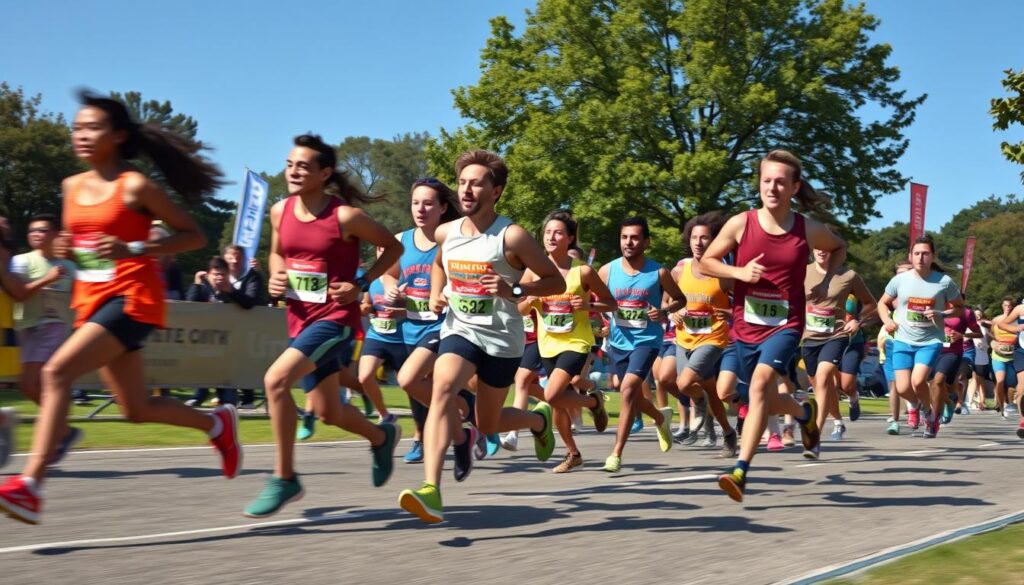
A 5K race challenges athletes of all levels. Knowing your potential Average 5K Time helps set realistic goals and improve performance1. Many runners finish in 30 to 40 minutes, while walkers take 45 to 60 minutes1.
Your 5K Running Times depend on age, fitness, and training. Beginners should aim for a 9 to 13-minute mile1. Everyday runners can target a 28 to 37-minute 5K with consistent practice1.
To achieve your Fastest 5K Pace, develop a structured training plan. Set realistic goals that challenge your running abilities. Focus on targeted workouts and regular practice.
Key Takeaways
- Average 5K times range from 30 to 40 minutes for runners
- Beginners should focus on running a mile in 9 to 13 minutes
- Your running time depends on age, fitness, and training
- Consistent practice is crucial for improving 5K performance
- Set realistic, progressive goals for your running journey
Understanding Average 5K Time By Age and Experience Level
Running a 5K is a popular fitness goal. Your performance can vary based on age, experience, and training strategies. These factors help set realistic expectations and track progress2.
Performance Levels in Running
Runners are grouped into different performance levels. These levels reflect experience and speed. They help you understand where you stand in 5K race results2.
- Beginner: Faster than 5% of runners, typically running for a month
- Novice: Faster than 20% of runners, running regularly for six months
- Intermediate: Faster than 50% of runners, running for two years
- Advanced: Faster than 80% of runners, running for over five years
- Elite: Faster than 95% of runners, highly competitive athletes
Average 5K Times Across Ages
Age plays a big role in 5K performance. Here’s a breakdown of average times3:
| Age Group | Men’s Average Time | Women’s Average Time |
|---|---|---|
| 18-39 | 22:31 | 26:07 |
| 40-44 | 25:40 | 29:15 |
| 45-49 | 26:55 | 30:45 |
Beginner vs. Experienced Runner Times
As you improve, your 5K times will decrease. Beginners typically run between 28-37 minutes. Experienced runners can achieve sub-25 minute times4.
“Your running journey is personal. Focus on improving your own time, not comparing yourself to others.”
Consistent training is key to improving 5K speed. Set realistic goals to track your progress over time4.
Training Strategies to Improve Your Running Speed
Boosting your 5K performance requires a smart training plan. Focus on speed, endurance, and mental toughness through targeted workouts. Gradually challenge yourself while staying injury-free5.
- Interval Training: Mix short, fast runs with recovery periods6. Begin with 30-second to 1-minute intervals once or twice weekly7.
- Strength Development: Do squats and deadlifts to build running strength5.
- Tempo Runs: Maintain a challenging pace to boost your lactate threshold6.
“The secret to improving your 5K time is consistent, purposeful training.”
Follow this structured training plan6:
- 8-10 weeks out: 10-12 x 400-meter repeats at goal pace
- 6-8 weeks out: 8 x 600-meter repeats
- 4-6 weeks before race: 6 x 800-meter repeats
Fuel up with a light meal 2-3 hours before running. Stay hydrated throughout your training5.
Mental prep matters too. Keep a positive mindset and visualize success during training and races5.
Improving your 5K time takes time. Stay consistent and patient to build speed and endurance7.
Conclusion
Improving your 5K speed is a personal journey. It requires dedication, consistent training, and pushing your limits8. Understanding your body and embracing gradual progress can enhance your performance according to expert running analyses.
Faster 5K times aren’t just about speed. They’re about strategic preparation. Interval training, strength conditioning, and targeted workouts can boost your pace8.
Advanced runners can maintain speeds around 8 minutes per mile. This shows how consistent practice leads to performance gains8.
Your running potential is unique. Age, gender, and training approach all play a role. Biological differences affect running speeds9, but your commitment determines success.
Stay patient and track your progress. Don’t get discouraged by initial challenges. Every run brings you closer to your personal best.
Enjoy your 5K running journey and focus on improvement. Join local running groups and participate in community races. Stay open to learning new techniques.
Your dedication will transform your running strategy. It will help you achieve remarkable personal milestones. Keep pushing forward and celebrating your progress.
FAQ
What is a typical 5K time for beginners?
Beginners usually finish a 5K in 28 to 37 minutes. This equals a 9 to 12-minute mile pace. Your first 5K is about finishing and building confidence.
How can I improve my 5K running time?
To get faster, focus on interval training and endurance building. Add speed workouts like 1-minute and 2-minute intervals to your routine. Include tempo runs and weekly long runs in your training plan.
Practice form drills such as high knees and controlled sprints. These will help boost your overall running efficiency. Don’t forget about proper nutrition too.
Do 5K times vary by age and gender?
Yes, average 5K times differ across age groups and genders. Men aged 20-24 typically run a 5K in about 29:27. Women in the same age group average 36:22.
Your age and fitness level greatly impact your running performance. Keep this in mind when setting goals.
What’s a good 5K time for an experienced runner?
Experienced runners often finish a 5K in under 25 minutes. They usually maintain an 8-minute mile pace or faster. This shows significant skill and consistent training.
How long does it take to walk a 5K?
Walkers typically complete a 5K in 45 to 60 minutes. This means keeping a 15 to 20-minute mile pace. Walking is great for beginners or those who prefer less intense exercise.
How often should I train to improve my 5K time?
Aim to run 3-4 times per week to boost your 5K performance. Mix interval training, tempo runs, and long, easy-effort runs. Balance running with low-impact exercises like swimming and cycling.
This approach will help prevent injury and improve overall fitness. Consistency is key to seeing results.
What’s the best way to prepare for a 5K race?
Follow a structured plan that builds your endurance and speed. Include proper warm-ups, dynamic stretches, and short accelerations in your training. On race day, focus on keeping a steady pace.
Learn to embrace the discomfort of higher-intensity running. This will help you perform better during the race.
Source Links
- Average 5K Time: By Age, Sex, and Tips to Get Faster – https://www.healthline.com/health/exercise-fitness/average-5k-time
- 5k Run Times By Age And Ability – https://runninglevel.com/running-times/5k-times
- What’s A Good 5K Time? Average 5K Times By Age, Sex + Fitness Level – https://marathonhandbook.com/whats-a-good-5k-time/
- The Average 5K Time by Level, Age and Gender – https://vitesserunning.com/5k-average-time/
- How to Improve Your 5k Time – https://www.marathontrainingacademy.com/how-to-improve-your-5k-time
- The Best 5K Workout | McMillan Running – https://www.mcmillanrunning.com/best-5k-workout/
- The Slow Runner’s Guide To A Fast(er) 5K – https://www.womensrunning.com/training/road/guide-faster-5k/
- The Average 5K Time — and How to Improve Yours | Livestrong.com – https://www.livestrong.com/article/13722561-average-5k-time/
- Average 5K Times, Good 5K Times, and Tips to Get Faster! – https://www.snackinginsneakers.com/average-5k-time/

