
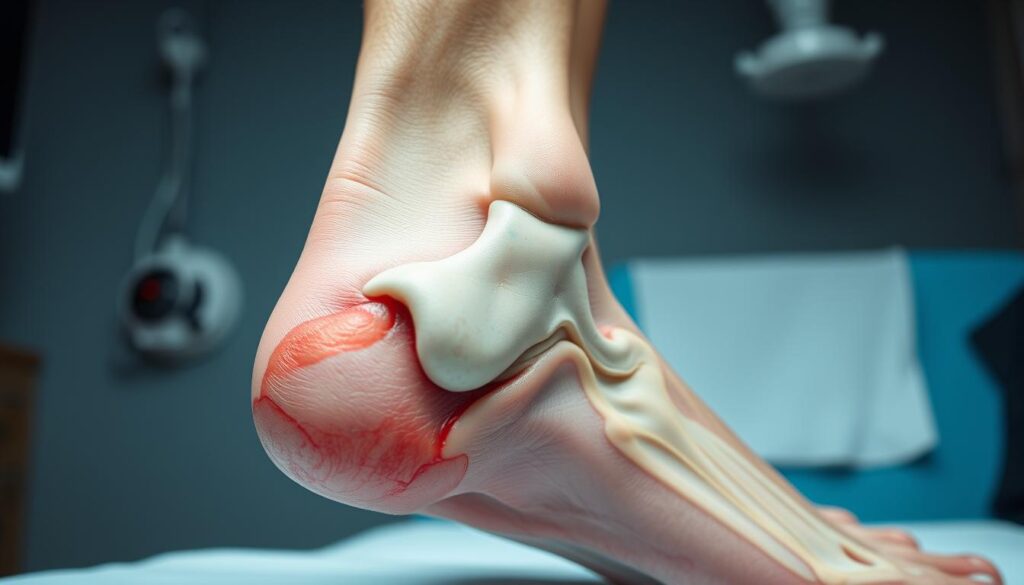
Avulsion fractures are unique bone injuries that can be tough to handle. They happen when a quick move pulls a small bone piece away from the main bone1. This type of injury often affects athletes and active people1.
These fractures usually occur near joints, like the hip, ankle, and knee2. Dancers, young athletes, and growing teens are more likely to get them1. Sudden twists or high-impact activities can cause these painful injuries12.
Knowing the signs is key for proper care. You might feel sharp pain, see swelling, and have trouble moving the joint1. Bruising is also common in the affected area.
Recovery time depends on how bad the injury is. Most fractures take a few weeks to several months to heal fully1. Getting the right diagnosis and treatment is crucial for a complete recovery.
Key Takeaways
- Avulsion fractures involve a small bone fragment being pulled away by a tendon or ligament
- Common in young athletes and active individuals
- Symptoms include pain, swelling, and limited joint movement
- Healing time ranges from weeks to months
- Proper diagnosis and treatment are essential for full recovery
Understanding Avulsion Fracture: Signs and Risk Factors
An avulsion fracture happens when a tendon or ligament pulls a small bone piece away. This unique injury needs quick recognition for effective treatment. Knowing the signs and risks can help you address it better.
Young athletes and active people often face avulsion fractures. These injuries can occur suddenly during sports or physical activities. They create unexpected challenges for recovery and rehab3.
Common Symptoms to Watch For
Spotting an avulsion fracture early is vital for proper care. Look out for these key symptoms:
- Intense, sudden pain at the injury site
- Audible popping sound during injury
- Rapid swelling and bruising
- Difficulty moving the affected joint
- Localized tenderness
Who’s Most at Risk
Some groups are more likely to get avulsion fractures. Your risk goes up if you fit these categories:
- Are a child or adolescent with developing bones4
- Participate in high-impact sports
- Experience rapid growth spurts
Certain sports carry a higher risk of avulsion fractures. Here’s a breakdown:
| Sport Category | Risk Level |
|---|---|
| Soccer | High |
| Gymnastics | Very High |
| Basketball | High |
| Tennis | Moderate |
Preventing avulsion fractures is crucial. Proper warm-ups, strength training, and good technique can lower your risk. These steps are key to staying safe during sports3.
Early detection and appropriate rehabilitation can make a substantial difference in recovery outcomes.
Remember, understanding your body’s limitations and practicing safe sports techniques are crucial in preventing avulsion fractures.
Treatment Options and Healing Timeline
Avulsion fracture recovery depends on the injury’s location and severity. Treatment plans focus on healing, pain management, and restoring joint functionality. Your doctor will recommend the best approach for your specific case.
- Rest and protection of the injured area
- Ice application to reduce swelling
- Over-the-counter pain medication
- Potential use of crutches or mobility aids
Immobilization is often key to recovery. Your healthcare provider might suggest using a supportive device for protection.
- A supportive cast
- Specialized brace
- Protective splint
“Proper treatment and patience are essential for complete healing” – Sports Medicine Specialist
Healing time varies based on injury complexity. Most avulsion fractures need about eight weeks to heal. Severe cases may take longer.
Young athletes might need more time to recover. Their developing bones can affect the healing process5.
| Injury Location | Typical Treatment | Estimated Healing Time |
|---|---|---|
| Ankle | Cast/Boot + Physical Therapy | 6-8 weeks |
| Hip | Rest, Crutches, Potential Surgery | 8-12 weeks |
| Finger | Splint Stabilization | 4-6 weeks |
Rehabilitation exercises play a critical role in your recovery journey. Your physical therapist will create a custom program to help you regain strength and flexibility.
In complex cases, surgery might be needed. This can reposition bone fragments or stabilize the injury5.
Remember, each avulsion fracture is unique. Always follow your doctor’s advice for the best healing and return to activity.
Conclusion
Avulsion fractures require careful attention and a smart healing approach. Understanding risk factors and prevention strategies can shield you from sports-related injuries6. Athletes should focus on gradual training, proper warm-ups, and consistent rehab exercises7.
Quick medical help is key for the best recovery. Research shows minor avulsion injuries often respond well to conservative treatment6. Your healing plan may include rest, therapy, and a careful return to activities.
A thorough approach can help you grasp the complex healing process and regain your physical abilities7. Preventing injuries is always better than treating them. Build muscle strength and stay flexible.
Pay attention to your body’s signals. If pain persists or you suspect an injury, see a doctor right away. With the right methods and expert guidance, you can beat avulsion fractures.
FAQ
What exactly is an avulsion fracture?
An avulsion fracture happens when a tendon pulls a bone fragment away. It often occurs near joints like fingers, hips, feet, and ankles. Young athletes are most likely to experience this during sports with sudden movements.
Who is most likely to experience an avulsion fracture?
Young athletes face the highest risk, especially females aged 13-14 and males aged 15-17. High-impact sports like soccer, football, gymnastics, and basketball increase vulnerability. Sudden directional changes and intense movements contribute to the risk.
What are the typical symptoms of an avulsion fracture?
Symptoms include intense pain, a popping sound, and significant swelling. Bruising and difficulty moving the affected bone or joint are also common. Seek medical help if you experience these signs after sudden movement or impact.
How is an avulsion fracture treated?
Treatment varies based on injury severity. Conservative approaches include rest, ice, and over-the-counter pain medication. Some cases need immobilization with a cast or brace.
Severe fractures might require surgery, followed by physical therapy. This helps restore strength and mobility.
How long does it take to recover from an avulsion fracture?
Recovery time typically ranges from a few weeks to 12 weeks. The timeline depends on fracture location, severity, and your body’s healing capacity. Following your doctor’s treatment plan is crucial for optimal recovery.
Can avulsion fractures be prevented?
You can reduce risk by doing proper warm-ups and gradually increasing training intensity. Focus on strength and flexibility training to minimize injury risks. Using appropriate protective gear and maintaining good physical condition also helps.
Are children more susceptible to avulsion fractures?
Yes, children are more vulnerable due to their weaker growth plates. These cartilage areas are prone to injury during growth spurts. High-impact sports and activities with sudden movements increase the risk.
When should I see a doctor about a potential avulsion fracture?
Seek medical help if you have sudden, intense pain after sports or movement. Look out for swelling, bruising, or difficulty moving a joint. Early diagnosis prevents complications and ensures proper healing.
Source Links
- Avulsion fracture: Treatment, types, recovery time, and causes – https://www.medicalnewstoday.com/articles/319471-2
- Learning About Avulsion Fractures – https://myhealth.alberta.ca/Health/aftercareinformation/pages/conditions.aspx?hwid=abs0078
- What to Know About Avulsion Fractures – https://www.webmd.com/a-to-z-guides/what-to-know-avulsion-fracture
- Avulsion Fracture – https://www.health.com/avulsion-fracture-7096335
- Avulsion Fracture: Treatments, Recovery, and More – https://www.healthline.com/health/avulsion-fracture
- Avulsion injuries: an update on radiologic findings – https://pmc.ncbi.nlm.nih.gov/articles/PMC8688780/
- Surgical treatment of avulsion fracture around joints of extremities using hook plate fixation – BMC Musculoskeletal Disorders – https://bmcmusculoskeletdisord.biomedcentral.com/articles/10.1186/s12891-019-2585-1

