Discover the vibrant world of Basque Country, a unique region bridging Spain and France. Euskal Herria boasts a rich heritage and distinctive identity. Its fascinating tapestry of traditions has survived for centuries1.
Immerse yourself in Basque culture through rhythmic songs and energetic rural sports. This experience is truly one-of-a-kind1.
Euskara, the Basque language, is a linguistic marvel with ancient roots. It’s older than most European languages2. The Basque community passionately preserves its identity through various cultural expressions1.
Explore 16 officially recognized Basque sports that showcase incredible human strength. These include log cutting, rock dragging, and traditional archery1. About 50 secular choirs keep traditional Euskara songs alive1.
Key Takeaways
- Euskara is the oldest language in Europe with a unique cultural significance
- Basque traditions encompass 16 distinct sports and numerous cultural practices
- Music and dance play a crucial role in preserving Basque identity
- The Basque Country spans regions in Spain and France
- Cultural preservation is a key focus of Basque communities
Introduction to Basque Culture
The Basque Country spans regions in Spain and France, known as Euskal Herria. It’s nestled between the Pyrenees Mountains and Bay of Biscay. This unique region boasts a rich heritage that sets it apart from surrounding areas3.
Geographical and Demographic Overview
About 3 million people call the Basque Country home. Cities like Bilbao and San Sebastián serve as cultural hubs3. The region includes several provinces:
- Álava
- Guipúzcoa
- Vizcaya (Biscay)
- Navarra
The Linguistic Treasure
Euskara, the Basque language, is central to Basque identity. It’s Europe’s oldest living language, unrelated to Romance languages3. Franco’s regime suppressed the language, causing a decline in speakers3.
Cultural Resilience
Basque culture thrives despite past challenges. Pamplona and Bayonne showcase the region’s rich traditions. The folklore features mythical figures like jentillak giants and laminak sprites3.
“Language is the road map of a culture. It tells you where its people come from and where they are going.” – Rita Mae Brown
Religious and Social Traditions
| Aspect | Characteristic |
|---|---|
| Religious Orientation | Predominantly Roman Catholic |
| Family Structure | Extended family in rural areas, nuclear family in urban settings |
| Key Holidays | St. Joseph’s Day, St. John of Compostela Day |
Basque people maintain a strong identity through language, traditions, and community spirit. They continue to preserve their unique cultural heritage. Their culture remains vibrant in the modern world4.
Unique Basque Festivals
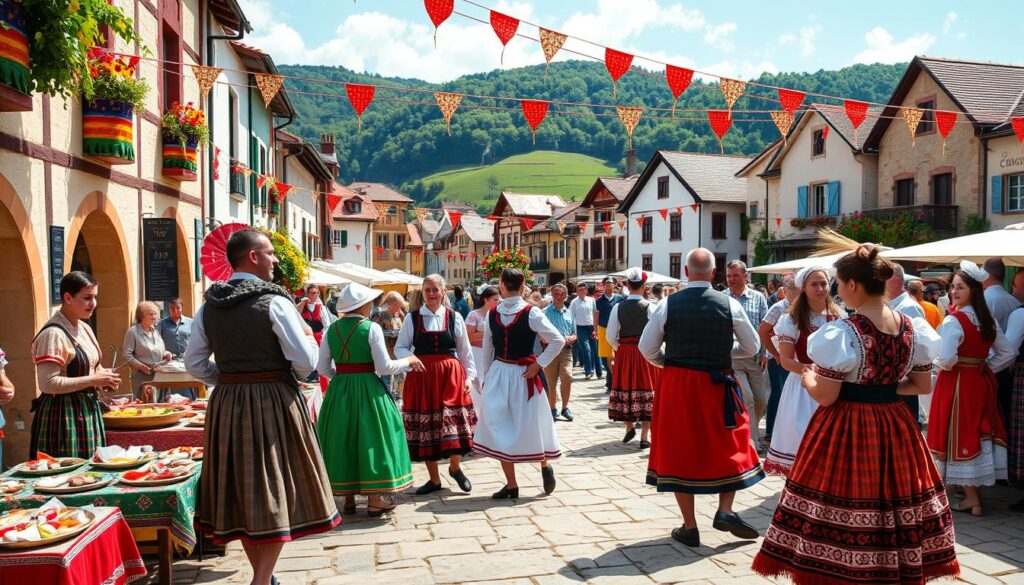
Basque festivals blend tradition and celebration spectacularly. These events express Basque identity rooted in local heritage. From drumming to food, they offer a glimpse into rich Basque culture5.
La Tamborrada: San Sebastián’s Drumming Extravaganza
Picture 24 hours of non-stop drumming in San Sebastián. La Tamborrada turns the city into a rhythmic paradise. Participants wear traditional costumes, creating a thunderous symphony through the streets6.
Aste Nagusia: Bilbao’s Festive Heartbeat
Aste Nagusia, or Semana Grande, brings Bilbao to life. This 10-day festival features nightly music, vibrant performances, and spectacular fireworks. Street celebrations unite communities, showcasing true Basque culture5.
San Sebastián Day: A Culinary and Cultural Celebration
San Sebastián Day blends gastronomy and tradition uniquely. The city becomes a cultural canvas, highlighting local cuisine and music. Time-honored customs take center stage during this special event7.
- Traditional music performances
- Local food showcases
- Folk dancing displays
- Community gatherings
Basque festivals showcase the region’s rich cultural tapestry. These celebrations offer authentic experiences in San Sebastián, Bilbao, and smaller towns. You’ll be captivated by the vibrant Basque culture on display6.
Basque Cuisine and Culinary Practices
Basque cuisine captures local ingredients and passionate cooking. The region boasts over 1,500 txokos societies for preserving their unique gastronomic heritage8. These culinary clubs are the heart of Basque food culture, blending tradition with innovation.
The Bay of Biscay provides incredible seafood like hake, cod, tuna, and anchovies8. Zero-kilometer ingredients ensure authentic flavors and support local producers8. Basque cuisine showcases diverse produce from fertile valleys and mountain terrains8.
Iconic dishes define Basque culinary traditions. Grilled meats like chuleta and spiced sausages such as txistorra highlight bold, local flavors8. Cheese lovers will appreciate Idiazabal, Roncal, and Etorki varieties, crafted using time-honored methods8.
Basque cuisine has influenced cooking across Spain and France9. Pintxos bars, a staple of Basque social life, offer small, flavorful bites9. These bars provide a cultural experience that brings people together.
Pair your meal with local Txakoli wine or Basque cider. You’ll understand why this region’s cuisine is celebrated worldwide.
FAQ
What is the Basque Country (Euskal Herria)?
The Basque Country is a unique cross-border region in Spain and France. It’s known for its distinctive language, Euskara, and strong cultural identity. The area spans the Pyrenees foothills and Atlantic coast, boasting a heritage older than many surrounding cultures.
What makes the Basque language (Euskara) so special?
Euskara is Western Europe’s oldest living language with no known linguistic relatives. It’s vital to Basque identity and actively preserved through education systems. The Ikastola Federation plays a key role in maintaining this minority language.
What are some iconic Basque festivals?
La Tamborrada in San Sebastián is a 24-hour drumming celebration. Aste Nagusia in Bilbao features music and fireworks. Korrika is a language promotion relay race.
These events showcase the vibrant traditions of the Basque people. They highlight the region’s rich cultural heritage and community spirit.
What are some traditional Basque dishes?
Basque cuisine is famous for marmitako (tuna and potato stew) and piperade (pepper-based dish). Pintxos, similar to tapas, are popular snacks. The region also produces txakoli wine and Basque cider.
Txokos are unique culinary institutions in Basque culture. These gastronomic societies are where members gather to cook and socialize.
What are some important symbols of Basque culture?
Key Basque symbols include the Ikurriña (flag), Lauburu (cross), and Zazpiak Bat (coat of arms). The oak tree is also significant. Traditional music, dance, and rural sports play crucial roles in Basque identity.
How do Basques preserve their cultural heritage?
Basques maintain their heritage through language education and celebrating traditional festivals. They practice unique sports, dances, and preserve culinary traditions. Oral traditions of storytelling and poetry are passed down through generations.
Their strong sense of cultural identity helps keep these traditions alive. This commitment ensures the continuity of Basque culture.
What religious traditions are important in the Basque Country?
Basque religious traditions blend Catholic practices with ancestral pagan beliefs. Important saints include Miguel, Mary, John, and Peter. The region’s spiritual practices reflect a mix of historical influences and cultural traditions.
What architectural styles are unique to the Basque Country?
The Basque Country features neo-Basque villas and traditional labourdine houses. These styles reflect the region’s rich cultural heritage. They show how architecture adapts to local geographical and historical contexts.
Source Links
- Discover Basque culture: cultural heritage, Basque traditions – https://www.berrua.com/en/activities-in-the-basque-country/basque-culture/
- Spain Private Guides – Festivals in the Basque Country – https://www.spainprivateguides.com/en/2021/04/popular-festivals-in-the-basque-country-calendar/
- Introduction, Location, Language, Folklore, Religion, Major holidays, Rites of passage – https://www.everyculture.com/wc/Rwanda-to-Syria/Basques.html
- Basque | Definition, History, Region, & Facts | Britannica – https://www.britannica.com/topic/Basque
- 27 Top Summer Festivals in the Basque Country – https://euskalkazeta.com/summer-festivals-in-the-basque-country/
- The traditions of the Basque Country – https://www.purefrance.com/en/blog/the-traditions-of-the-basque-country
- What to see/do in the Basque Country | Holidays and festivities in the Basque Country – https://www.camping-corniche.com/en/activities-basque-country/
- Exploring the Impressive Basque Cuisine and its Rich History – https://amazingfoodanddrink.com/culinary-traditions-basque-cuisine/
- Basque cuisine – https://en.wikipedia.org/wiki/Basque_cuisine