
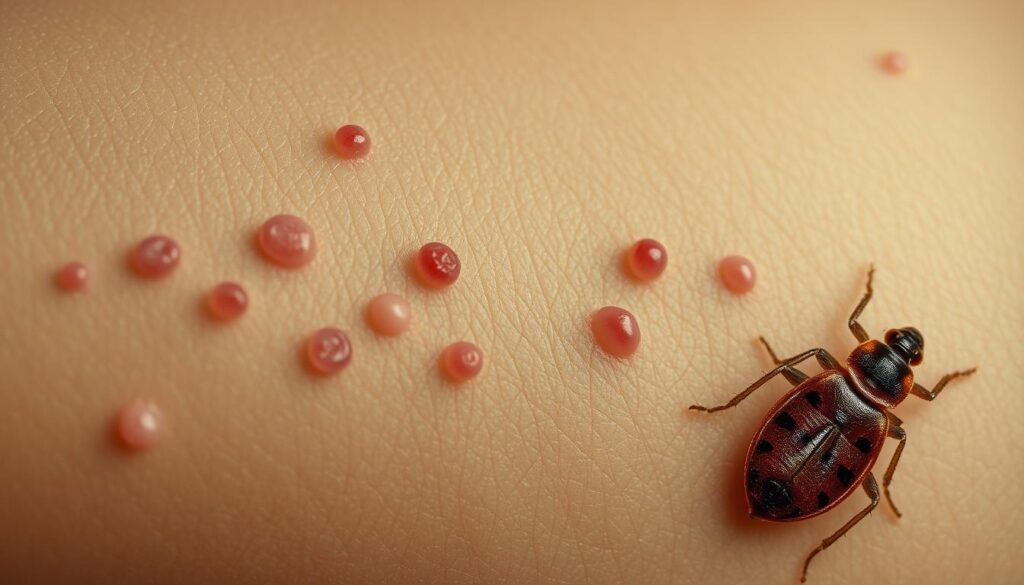
Bed bug bites can be a real headache for homeowners. These tiny parasites feed at night, causing discomfort. One in five Americans has dealt with bed bugs or knows someone who has1.
While bed bugs don’t spread diseases, knowing their signs is vital. Bites can take up to 14 days to show up1. They often look like small, red, itchy welts in a line or cluster.
Interestingly, 30 to 60% of people might not react to these bites at all2. This makes spotting an infestation even harder.
Adult bed bugs are tiny but visible. They’re 5-7 millimeters long with three body parts and short yellow hairs1. These pests hide in bedrooms and feed on blood at night1.
Key Takeaways
- Bed bug bites can take up to two weeks to appear
- Not everyone reacts to bed bug bites
- Bites typically appear in lines or clusters
- Bed bugs can infest clean and dirty environments
- Professional help is often necessary for complete elimination
Understanding Bed Bugs and Their Behavior
Bed bugs are tiny, sneaky pests that can quickly become a homeowner’s nightmare. They’ve mastered survival in human spaces, making prevention crucial. Protect your home from these elusive creatures.
Bed bugs are small, flat insects that feed on human blood. They’re most active at night but can feed during the day. These pests have unique traits that make them hard to spot and eliminate.
What Are Bed Bugs?
These insects are brown or reddish-brown, about the size of an apple seed. They have impressive survival skills. Bed bugs use heat and carbon dioxide to find food sources3.
They can survive long periods without feeding3. Warm surfaces like wood, cloth, and cardboard are their preferred hiding spots3.
- Rely on heat and carbon dioxide to locate food sources3
- Can survive without feeding for extended periods3
- Prefer warm surfaces like wood, cloth, and cardboard3
Where Do Bed Bugs Hide?
Spotting bed bug signs early is key. These insects are hiding experts, usually within eight feet of sleeping areas. They often lurk in mattress seams, bed frames, and furniture joints.
- Mattress seams
- Bed frames
- Furniture joints
- Wall crevices
How Do Bed Bugs Spread?
Bed bugs are skilled travelers, spreading through various means. They’re expert hitchhikers, moving easily between places. They can travel via luggage, clothing, used furniture, and public transport.
- Luggage
- Clothing
- Used furniture
- Public transportation
Their ability to spread quickly makes treating bed bug bites and preventing infestations a top priority for homeowners.
Remember, early detection and professional intervention are key to managing these persistent pests.
Bed Bug Bites: Symptoms and Identification
Spotting bed bug bites can be challenging. Knowing their unique features helps recognize these pesky insect attacks. Bed bug bite pictures show distinct patterns, unlike other insect bites4.
These tiny invaders often leave marks on exposed skin. Look for bites on your face, neck, arms, and hands4.
Here’s how to identify bed bug bites:
- Small, red or pink bumps on light skin
- Potential purple markings on darker skin
- Bites appearing in lines or clusters
- Inflamed spots with darker centers4
Bed bug bite symptoms vary widely between people. Some have no reaction, while others may develop severe allergic responses4. Possible symptoms include:
- Burning sensations
- Raised itchy bumps
- Zigzag pattern of red marks
- Occasional blisters or hives4
Pro tip: Bed bug bites can take up to 14 days to appear, so don’t panic if you don’t see immediate signs.
Knowing these bite traits helps tell bed bug attacks from other insect encounters. Bites are more likely in busy places like hotels, dorms, and apartment buildings4.
Remember, prevention is key in avoiding these unwelcome visitors!
Treatment Options and Relief Measures
Bed bug bites can be uncomfortable. There are effective strategies for treatment and relief. Let’s explore how to manage symptoms and prevent complications.
Immediate Care for Bites
First, clean the affected area. Use mild soap and cool water to prevent infection. Gentle cleansing techniques are best.
Bed bug bites are small, red welts. They’re usually less than ¼” in size. These bites can be flat or slightly raised5.
- Clean the bite area thoroughly
- Avoid scratching to prevent skin damage
- Apply a cool compress to reduce swelling
Medical Treatments
Several medical options can provide relief. Dermatologists often recommend topical creams with hydrocortisone to reduce itching5. Over-the-counter anti-itch lotions with pramoxine can be effective6.
| Treatment Type | Purpose | Recommended For |
|---|---|---|
| Hydrocortisone Cream | Reduce Itching | Mild to Moderate Reactions |
| Oral Antihistamines | Control Allergic Response | Persistent Itching |
| Antibiotics | Prevent Infection | Broken Skin or Signs of Infection |
Home Remedies
You can manage bed bug bites at home. Try these natural approaches to soothe your skin:
- Apply a baking soda paste to reduce itching
- Use calamine lotion for additional relief
- Take cool baths with colloidal oatmeal
Note: Most bed bug bites heal within three to six weeks. Persistent symptoms or signs of infection need medical attention6. About 20-30% of people might not experience itching5.
Remember, preventing scratching is crucial to avoid potential scarring and secondary infections.
Conclusion
Bed bug prevention demands constant vigilance. Recognizing infestation signs helps safeguard your living spaces from these stubborn pests7. Effective treatment strategies can lessen their impact on your daily life.
Professional help is vital for bed bug problems. Most cases require thorough removal methods combining chemical and physical approaches7. Careful inspection is key for detection.
Specialized tools like bed bug-sniffing dogs can spot even single insects accurately7. These pests can cause significant mental stress, potentially triggering anxiety and sleep issues7.
Despite discomfort, bed bug bites usually don’t spread diseases8. Quick action and staying informed help manage infestations effectively. Early detection and prompt treatment are your best defenses.
Regular checks, travel precautions, and understanding bed bug habits maintain a pest-free home. Professional pest control support is crucial for long-term success.
FAQ
What do bed bug bites look like?
Bed bug bites appear as small, red or pink bumps on light skin. On darker skin, they may look purple. These bites often form lines or clusters on exposed areas.
You might see raised itchy bumps with clear centers. Sometimes, small red bumps in a zigzag pattern or blisters may occur.
How can I tell if I have bed bugs?
Look for signs like a sweet, musty odor and bloodstains on bedding. Check for visible bugs or exoskeletons, about the size of an apple seed.
Bed bugs are brown or reddish-brown and hide within 8 feet of sleeping areas. Inspect mattress seams, bed frames, and furniture joints for these tiny insects.
How do I treat bed bug bites?
Clean the bites with soap and water to prevent infection. Use over-the-counter treatments like hydrocortisone creams and anti-itch lotions to reduce discomfort.
Apply cold compresses, baking soda paste, or calamine lotion to soothe the bites. Avoid scratching to prevent secondary infections.
How do bed bugs spread?
Bed bugs spread through luggage, clothing, and used furniture. They can easily travel between rooms in multi-unit buildings like apartments or hotels.
These insects can live 6-24 months and survive several months without feeding. This makes them particularly challenging to eliminate.
Are bed bug bites dangerous?
Bed bug bites are uncomfortable but typically don’t transmit diseases. They can cause psychological distress, sleep deprivation, and potential skin infections if scratched.
Some people may have more severe reactions to bites. Others might not react to them at all.
How can I prevent bed bug infestations?
Carefully inspect secondhand furniture and use protective covers on mattresses and box springs. Be cautious when traveling and use luggage racks in hotels.
Inspect hotel rooms for signs of bed bugs. If you suspect an infestation, contact professional pest control for thorough treatment.
How long do bed bug bites take to appear?
Bed bug bite symptoms can take a few days to two weeks to become noticeable. Some people may not react immediately.
Increased sensitivity can occur with repeated exposure. Bite marks typically heal within one to two weeks without complications.
When should I see a doctor about bed bug bites?
Consult a healthcare professional if you experience severe allergic reactions or extensive swelling. Seek help if you notice signs of infection, like increased pain or redness.
For babies and children, it’s best to consult a pediatrician before applying any treatments. See a doctor if you develop blisters or hives.
Source Links
- Bed bug bites: Pictures, treatment, and prevention – https://www.medicalnewstoday.com/articles/318083
- Everything You Need to Know About Bed Bug Bites – https://www.healthline.com/health/bed-bug-bites
- Bed Bug Behavior – Boston Bed Bug Authority – https://bostonbedbugauthority.org/about-bed-bugs/bed-bug-behavior/
- Bedbugs – Symptoms and causes – https://www.mayoclinic.org/diseases-conditions/bedbugs/symptoms-causes/syc-20370001
- Bed Bug Bites | Causes and Treatment | Brentwood Dermatology – https://www.brentwoodderm.com/conditions/bed-bug-bites
- Patient education: Bedbugs (Beyond the Basics) – https://www.uptodate.com/contents/bedbugs-beyond-the-basics/print
- The Rise in Bed Bugs: Prevention, Management, and Treatment – https://www.uspharmacist.com/article/the-rise-in-bed-bugs-prevention-management-and-treatment
- Are Bed Bug Bites Dangerous? — An Entomologist Explains – https://mandmpestcontrol.com/are-bed-bug-bites-dangerous-an-entomologist-explains/

