
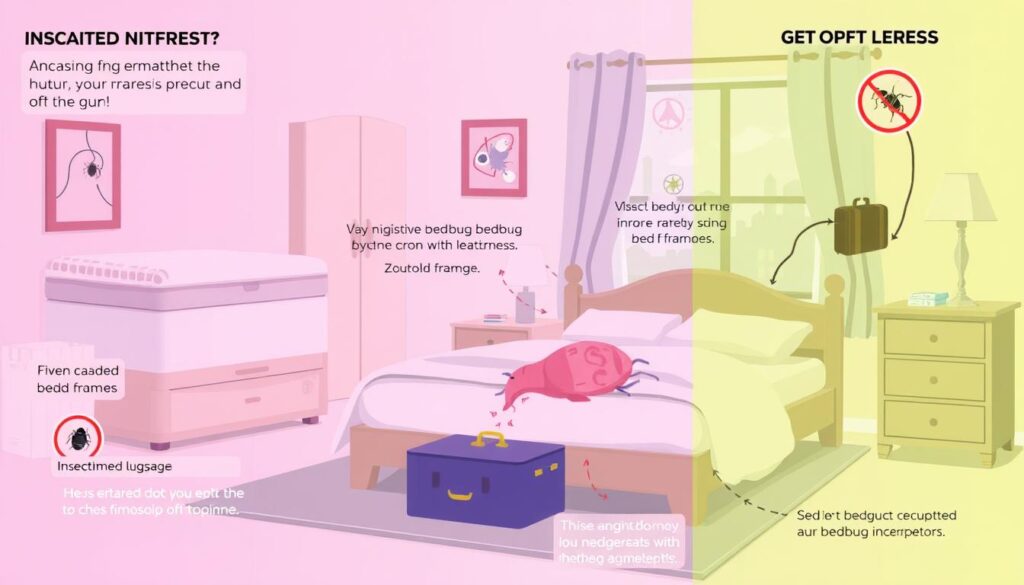
Bedbugs can turn your home into a nightmare. These tiny parasites have plagued humans for centuries. They quietly invade homes, causing discomfort and stress1.
Bedbugs are small, flat, and wingless insects. They have a reddish-brown color and can spread quickly through various environments1. These pests are about one-quarter inch long before feeding.
Bedbugs can travel surprisingly fast across surfaces1. They’re global hitchhikers, found in North America, Europe, and Asia2.
Bed bug infestations aren’t linked to poor hygiene. They can invade even the cleanest spaces. These insects often hitch rides on luggage, clothing, and furniture1.
Bedbugs don’t spread diseases. However, their bites can cause skin irritation. They can also lead to psychological distress in affected individuals.
Key Takeaways
- Bedbugs are persistent insects with a long historical presence
- They can survive in various environments, clean or dirty
- Chinches spread quickly through personal belongings
- Bedbug bites can cause skin irritation and discomfort
- Professional pest control is often necessary for effective treatment
Understanding Bedbugs (Chinches): Identification and Behavior
Bedbugs are tiny insects that can quickly become a homeowner’s nightmare. These persistent pests have unique traits and habits. Knowing these details is key for effective bedbug control.
Physical Characteristics and Appearance
Bedbugs are small, oval-shaped insects with distinct features. They typically range from 1 to 7 mm3 in size. Adult bedbugs have a reddish-brown color and look flat, like an apple seed.
Newly hatched nymphs are see-through and lighter in color3. These young bugs are harder to spot due to their small size.
- Color: Reddish-brown
- Size: 1-7 mm
- Shape: Oval and flat
Feeding Habits and Life Cycle
Bedbugs feed on blood and have an interesting breeding cycle. A female can lay up to 7 eggs daily. She might produce up to 113 eggs in her lifetime4.
The total growth from egg to adult takes about 37 days in ideal temperatures4. This quick life cycle allows bedbugs to spread rapidly.
| Life Stage | Key Characteristics |
|---|---|
| Egg Stage | 97% hatch rate under optimal conditions |
| Nymph Stage | Translucent, lighter color |
| Adult Stage | Lifespan up to one year |
Common Hiding Places
To get rid of bedbugs, you must know where they hide. These pests are usually found within 8 feet of sleeping areas5. They’re experts at hiding in tight spots.
- Mattress seams
- Bed frames
- Furniture cracks
- Electrical outlets
- Luggage
Pro tip: Regular inspection of sleeping areas can help detect bedbugs early and prevent widespread infestation.
Bedbugs can survive up to 300 days without food3. This ability makes getting rid of them tough. Spotting them early is crucial for successful bedbug removal.
Signs of Bedbug Infestation and Bites
Spotting bedbugs early can save you from discomfort and property damage. These tiny pests are experts at hiding. Many homeowners find it hard to identify them6.
Bedbug bites often look like small, red, itchy welts on exposed skin. They usually form lines or zigzag patterns. This sets them apart from other insect bites.
Not everyone reacts to bedbug bites. About 30 to 60% of people may not show any visible skin reaction6.
Key Indicators of Bedbug Presence
- Small blood spots on sheets or mattresses
- Tiny pale yellow eggs or eggshells
- Dark droppings resembling black dots
- Shed skin around sleeping areas
- A distinctive sweet, musty odor
Some lifestyle factors increase your risk of meeting bedbugs. Frequent travelers and those in shared spaces face higher risks. This includes people in dorms and apartment complexes7.
About 1 in 5 Americans has dealt with these pests or knows someone who has7.
“Bedbugs are expert hitchhikers, often traveling on luggage, clothing, and furniture without detection.”
If you suspect bedbugs, experts suggest a thorough inspection. These bugs are most active from midnight to dawn. During the day, they hide in dark, tight spaces6.
Quick detection is key for effective bedbug control. Don’t wait to take action if you spot any signs.
Effective Treatment and Prevention Methods
Bedbugs require a comprehensive approach for effective control. Professional expertise and strategic home care are essential. Understanding treatment methods is key to preventing infestations8.
Multiple strategies can help you combat these persistent pests. These methods work for current infestations and future protection.
Professional Extermination Options
Professional bedbug removal is best for severe infestations. Certified experts use targeted treatments that reach deep hiding spots8. They employ advanced techniques for effective elimination.
- Heat treatments targeting bug habitats
- EPA-approved chemical treatments
- Comprehensive inspection and elimination strategies
Professional pest controllers outperform home remedies. Public insecticides often lack potency for full-scale infestations8.
DIY Control Methods
For minor infestations, try DIY approaches. Wash infested items in 120°F water to kill bedbugs9. Other effective methods include:
- Vacuuming thoroughly to remove visible bugs
- Using mattress encasements
- Placing items in direct sunlight above 120°F9
Prevention Strategies for Home and Travel
Bedbug prevention requires vigilance, especially when traveling. Early detection is crucial for effective control8. Key prevention tips include:
- Inspect hotel rooms carefully
- Keep luggage off floor and bed
- Wash clothes in hot water after traveling8
- Inspect secondhand furniture before bringing it home
“Prevention is always better than cure when it comes to bedbug management.”
Bed bugs can survive without feeding for 20 to 400 days10. This makes persistent prevention crucial in your battle against these resilient insects.
Conclusion
Bed bug control requires a strategic approach. These pests have troubled humans for millennia, making them tough to beat. Understanding their behavior and taking action can lower your risk significantly.
Stay alert to prevent bed bug infestations. Regular home checks help spot issues early. Be careful when traveling or buying used furniture. The complex history of bed bugs shows they adapt and spread fast11.
Professional pest control is best for severe cases. Remember, bed bug control is possible with the right methods. Stay informed and act quickly when needed.
With careful prevention and swift action, your home can stay bed bug-free. Don’t hesitate to get expert help if you suspect an infestation.
FAQ
What do bedbugs look like?
Adult bedbugs are reddish-brown, flat, and oval-shaped. They’re about the size of an apple seed, measuring 5-7 millimeters long. Nymphs are smaller and can appear translucent or yellowish.
Bedbugs have flat bodies that let them hide in tiny cracks. They often lurk near sleeping areas, making them hard to spot.
Where are bedbugs commonly found?
Bedbugs can infest apartments, hotels, shelters, and even public transport. They hide in small cracks near beds, like mattress seams and bed frames. You might find them in headboards, electrical outlets, or under peeling paint.
How can I identify a bedbug infestation?
Look for small, itchy bites on exposed skin, often in clusters or lines. Blood spots on sheets are another telltale sign. You might also see tiny pale yellow eggs or eggshells.
Other clues include black droppings, shed skin, and a sweet, musty odor. Some people may not react to bites, while others might have severe reactions.
Do bedbugs spread diseases?
No, bedbugs don’t spread diseases. However, their bites can cause itching and discomfort. In some cases, they may trigger allergic reactions.
While not a health risk, bedbugs can cause significant stress and emotional distress.
How do I treat a bedbug infestation?
Treatment often requires a mix of methods. Professional pest control services use heat treatments and EPA-approved pesticides. DIY methods include washing and drying infested items at high temperatures.
Thorough vacuuming and using mattress encasements can help. Sealing cracks in walls and furniture is also effective.
How can I prevent bedbugs when traveling?
Keep luggage off the floor and inspect hotel rooms carefully. Use protective covers on mattresses and box springs. After your trip, wash and dry clothes on high heat.
Carefully check your luggage before bringing it into your home. These steps can help prevent unwanted hitchhikers.
How long can bedbugs survive without feeding?
Bedbugs can survive for several months without a meal. Adult bedbugs typically live for about 10 months to a year. They can go dormant when they can’t access blood meals.
This ability to survive without food makes bedbugs particularly hard to eliminate.
Are bedbugs a sign of poor cleanliness?
No, bedbugs aren’t linked to dirtiness. They can be found in both clean and messy places. These pests are excellent hitchhikers, spreading easily through luggage and clothing.
Even second-hand furniture can harbor bedbugs, regardless of how clean a space may be.
Source Links
- Bed Bugs – What They Are and How to Control Them – https://www.health.ny.gov/environmental/pests/bedbugs.htm
- About Bed Bugs – https://www.cdc.gov/bed-bugs/about/index.html
- Bed bug – https://en.wikipedia.org/wiki/Bed_bug
- Layout 1 – https://www.vdacs.virginia.gov/pdf/bb-biology1.pdf
- Bed Bugs – https://www.cdph.ca.gov/Programs/CID/DCDC/pages/bedbugs.aspx
- Everything You Need to Know About Bed Bug Bites – https://www.healthline.com/health/bed-bug-bites
- Bed Bugs: Bites, Identification, Prevention – https://my.clevelandclinic.org/health/diseases/17847-bedbugs
- How to get rid of bedbugs: Natural, chemicals, and pest control – https://www.medicalnewstoday.com/articles/298185
- Bedbugs – Diagnosis and treatment – https://www.mayoclinic.org/diseases-conditions/bedbugs/diagnosis-treatment/drc-20370005
- Bed Bug Management Guidelines–UC IPM – https://ipm.ucanr.edu/PMG/PESTNOTES/pn7454.html
- The History of Bed Bug Management — With Lessons from the Past – https://agresearch.montana.edu/wtarc/producerinfo/entomology-insect-ecology/BedBugs/BedbugsMangement.pdf

