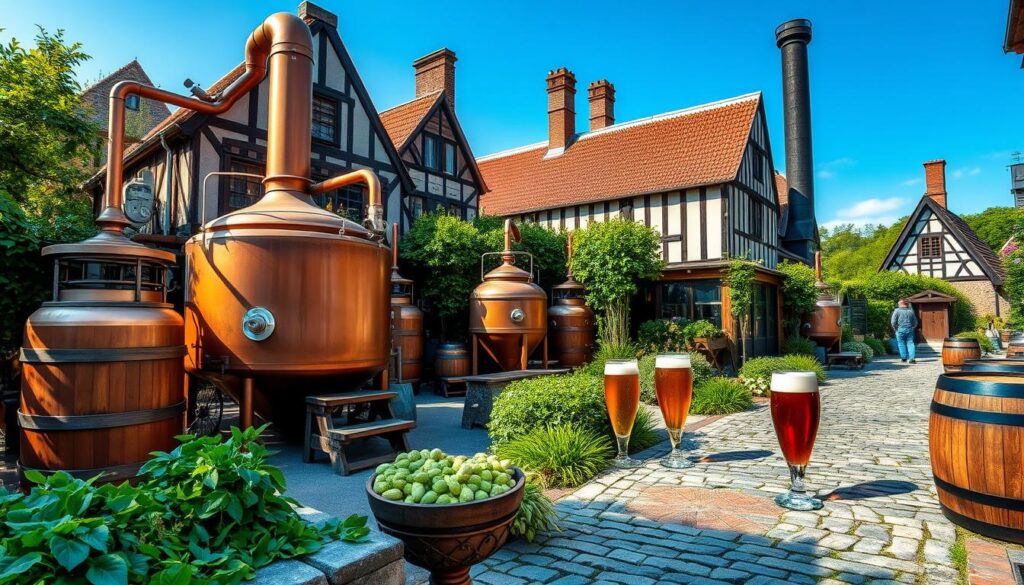
Belgian beer brewing is a global cultural treasure. This small European nation boasts an incredible diversity of craft beer. With 120 varieties and 580 brands, Belgium is a true beer-making paradise1.
Belgian brewing blends centuries-old tradition with innovative techniques. The country’s brewers have mastered unique fermentation methods for extraordinary flavors. From local cafés to famous breweries, Belgium offers an unmatched beer experience1.
Belgian beer stands out for its wide range of styles and strengths. While American beers are 4-6% alcohol, Belgian ales can reach 7-12%1. This diversity showcases the country’s rich brewing heritage.
Belgian beer includes ales, lagers, lambics, and Trappist beers1. Each brew tells a unique story of craftsmanship. The attention to detail extends to specially designed glassware for each beer1.
Key Takeaways
- Belgium produces over 580 unique beer brands
- Belgian beers offer extraordinary alcohol content variations
- Brewing techniques include multiple fermentation methods
- Each beer style has a dedicated serving glass
- The brewing culture is recognized as UNESCO Intangible Heritage
The Rich History of Belgian Brewing
Belgian brewing is a journey through centuries of innovation. It spans from ancient monasteries to modern microbreweries. The story of Belgian beer showcases craftsmanship and tradition2.
Belgian brewing began long before Belgium became a nation. Brewers were perfecting their craft before the First Crusade. They developed techniques that would shape beer production for generations2.
Origins of Belgian Beer
Belgian brewers transformed beer production with innovative methods. They used unique herb mixtures called gruit for flavoring. The 14th century brought hops, marking a major shift in brewing.
- Earliest brewing methods relied on local ingredients
- Hops transformed flavor profiles dramatically
- Yeast selection became crucial for distinctive tastes
Evolution through the Ages
Belgium’s brewing scene has changed greatly over time. Before World War I, about 3,000 breweries existed across the country. After World War II, this number dropped to around 1,000 due to war’s impact3.
Influence of Monastic Brewing
Monasteries were key in developing Belgium’s brewing traditions. Only ten facilities worldwide qualify as authentic Trappist breweries. Six of these are in Belgium3.
Monks didn’t just brew beer. They created a legacy of exceptional craftsmanship2.
“Beer is proof that God loves us and wants us to be happy.” – Benjamin Franklin
Belgium now has about 235 breweries. They produce thousands of unique beer varieties. This rich brewing tradition continues to captivate beer enthusiasts worldwide4.
Types of Belgian Beers You Should Know
Belgian brewing showcases diverse beer styles that capture craft beer traditions. Each beer tells a unique story of fermentation and brewing expertise. Beer lovers can explore complex flavors and time-honored techniques.
Belgium’s beer styles show the country’s brewing mastery. These beers range from light and refreshing to strong and complex. They represent generations of brewing craftsmanship.
Witbier: The Refreshing White Beer
Witbier, or white beer, offers a light and zesty drinking experience. Pierre Celis helped revive this traditional beer in the 20th century5.
This unfiltered beer is brewed with wheat, giving it a cloudy look. It typically has 4.5 to 5.5% alcohol by volume6.
Dubbel and Tripel: Strong and Flavorful Options
Belgian brewing shines with dubbel and tripel styles. Here’s a breakdown of their traits:
- Dubbel: Dark, rich beer with alcohol content between 6-9%6
- Tripel: Stronger pale ale with alcohol levels ranging from 7-10%5
- Quadrupel: Intense dark ale reaching up to 12% alcohol content5
Lambic: The Unique Wild Fermentation
Lambic stands out among Belgian brewing techniques. It uses spontaneous fermentation, creating a distinctive sour flavor. Lambic typically has 4.5 to 6% alcohol content6.
“Belgian beer is not just a drink, it’s a cultural experience.” – Belgian Brewing Tradition
Belgium has over 304 breweries across the country7. It remains a global leader in innovative and traditional beer making. Each style tells a story of Belgium’s rich brewing heritage.
Brewing Techniques Unique to Belgium
Belgian brewing showcases centuries of craftsmanship and innovation. The country’s beer-making traditions create a rich tapestry of unique brewing techniques. These Belgian brewing methods inspire brewers worldwide.
Specialty Malts and Mashing Innovations
Belgian brewers excel at creating unique flavor profiles through innovative malting approaches. They often use specialty malts for distinctive beer characteristics.
Key techniques include using low-color Pilsner malt for white beers. Brewers also experiment with various grain combinations in the brewhouse.
- Utilizing low-color Pilsner malt for white beers
- Experimenting with various grain combinations in the brewhouse
- Carefully controlling mashing temperatures to extract optimal flavors8
Fermentation: A Dance of Complexity
Fermentation is where Belgian brewing truly shines. Different yeast strains play a crucial role in creating unique beer characteristics9.
| Brewery | Yeast Pitching Temperature | Unique Characteristic |
|---|---|---|
| Westmalle | 64°F | Precise yeast control |
| Brasserie Caracole | 77°F | Seasonal temperature variations |
The magic of Belgian brewing lies in its ability to transform simple ingredients into complex flavor experiences.
The Art of Blending Beers
Blending is a cornerstone of Belgian brewing tradition. Lambic and Flemish red styles showcase mixing different aged beers for unique flavors10.
This technique allows brewers to balance complex notes and create depth. It helps develop unique taste experiences that captivate beer enthusiasts.
- Balance complex flavor notes
- Create depth and complexity
- Develop unique taste experiences
Belgian brewers masterfully balance tradition and innovation. Their use of hops, yeast, and mashing techniques continues to fascinate beer lovers globally.
Exploring Belgium’s Iconic Breweries
Belgium’s craft beer scene is a treasure trove of brewing excellence. Monasteries and microbreweries create some of the world’s most exceptional brews. This beer culture showcases traditional techniques and passionate craftmanship that has captured global attention.
Trappist breweries are true gems in Belgium’s beer world. Six legendary brewhouses produce renowned Trappist beers across the country. These monasteries are split between Wallonia and Flanders, maintaining strict quality standards11.
Visitors can enjoy unique experiences at these breweries. They can sample special craft beer selections and artisan products directly from the source11.
Some monasteries have become pilgrimage sites for beer enthusiasts. Sint-Sixtusabdij in Westvleteren and Abbaye Notre-Dame de Saint-Remy in Rochefort are prime examples. These breweries offer more than just exceptional beer11.
They provide a glimpse into centuries-old brewing traditions. These traditions continue to inspire craft beer lovers worldwide. With only 11 Trappist breweries globally, Belgium remains central to this exclusive brewing community11.
Belgium’s iconic breweries promise an unforgettable exploration of flavor and tradition. Each sip tells a story of dedication and skill. The remarkable brewing heritage makes Belgian beer truly extraordinary.
FAQ
What makes Belgian beer so unique?
Belgian beer stands out due to its incredible diversity and unique fermentation methods. Four distinct techniques are used: spontaneous, warm, mixed, and cool fermentation. This variety creates an extraordinary range of flavors, from sour lambics to strong Trappist ales.
How many breweries are currently operating in Belgium?
As of 2018, Belgium has 304 breweries, including international companies and traditional Trappist monasteries. This number has changed over time. In 1900, there were 3,223 breweries, but by 1993, only 106 remained.
What are Trappist beers, and how are they different?
Trappist beers are brewed by monks in monasteries under strict conditions. Only ten monasteries worldwide qualify for authentic Trappist certification. These beers are made within monastery walls, with proceeds supporting the monastic community.
Trappist beers like Rochefort, Westvleteren, and Chimay represent a centuries-old brewing tradition. They’re known for their exceptional quality and limited production.
How much beer do Belgians actually drink?
Belgians currently consume an average of 68 liters of beer annually. This is much lower than the 200 liters per person in 1900. Beer remains deeply ingrained in Belgian culture.
Most Belgian beers are served in unique, branded glasses. These special glasses enhance the drinking experience.
What is the oldest brewing tradition in Belgium?
Belgian beer production dates back to the Roman era. Archaeologists found evidence of a brewery from the 3rd and 4th centuries AD in Ronchinne. Early beers were flavored with gruit, a herbal mixture.
Hops were introduced in the 14th century. Brewing techniques have evolved from medieval monastery practices to today’s sophisticated methods.
What brewing techniques are unique to Belgian breweries?
Belgian breweries use distinctive techniques like spontaneous fermentation for lambic beers. They often use unique yeast strains and add traditional spices and herbs. Many blend different beer styles and use specialty malts.
Belgian brewers balance time-honored traditions with modern brewing technologies. This approach creates their signature flavors and styles.
Is Belgian beer recognized internationally?
Yes, Belgian beer culture is globally recognized. In 2016, it was added to UNESCO’s list of intangible cultural heritage. Beers like Westvleteren are considered some of the world’s best.
Belgian brewing techniques have influenced craft brewers around the world. This shows the global impact of Belgian beer.
What are some classic Belgian beer styles I should try?
Explore Belgian pale ales, lambics, Flemish red ales, and sour brown ales. Strong ales and stouts are also worth trying. Each style offers a unique flavor profile.
Look for white beers (witbier), abbey beers, and Belgian strong ales. These showcase the incredible brewing craftsmanship of this beer-loving nation.
Source Links
- Belgian Beer Basics – https://www.ricksteves.com/watch-read-listen/read/articles/belgian-beer-basics
- A Brief History Of Belgian Beer – https://theculturetrip.com/europe/belgium/articles/a-brief-history-of-belgian-beer
- The Interesting History of Belgian Beer – https://thegrowlerguys.com/history-of-belgian-beer/
- Belgian Beer: History, Trips, and Sips – https://smithsonianassociates.org/ticketing/programs/belgian-beer-history-trips-and-sips
- A Beginner’s Guide to Belgian Beer Styles – https://www.seriouseats.com/guide-to-belgian-beer-styles-what-is-dubbel-quad-saison-wit-lambic-gueuze
- A beginner’s guide to Belgian beer styles – https://beercrush.eu/en/blogs/articles/guide-pour-les-styles-de-biere-belge?srsltid=AfmBOooFFua2ZYa0FeWGGrVtjc9mDBmEZ0Lm6oIay0TXOIpWBBM6maeV
- Beer in Belgium – https://en.wikipedia.org/wiki/Beer_in_Belgium
- The Spirit of Belgium: Belgian Brewing Roundtable – Brew Your Own – https://byo.com/article/the-spirit-of-belgium-belgian-brewing-roundtable/
- Fermenting Belgian-Style Beers – Brew Your Own – https://byo.com/article/fermenting-belgian-style-beers/
- Simeon Joffe | Beerology: Exploring the unique beer culture of Belgium – https://www.berkshireeagle.com/stories/simeon-joffe-beerology-exploring-the-unique-beer-culture-of-belgium,539962/
- Visiting Belgium’s Trappist Breweries – https://ourtastytravels.com/blog/visiting-belgiums-trappist-breweries/