
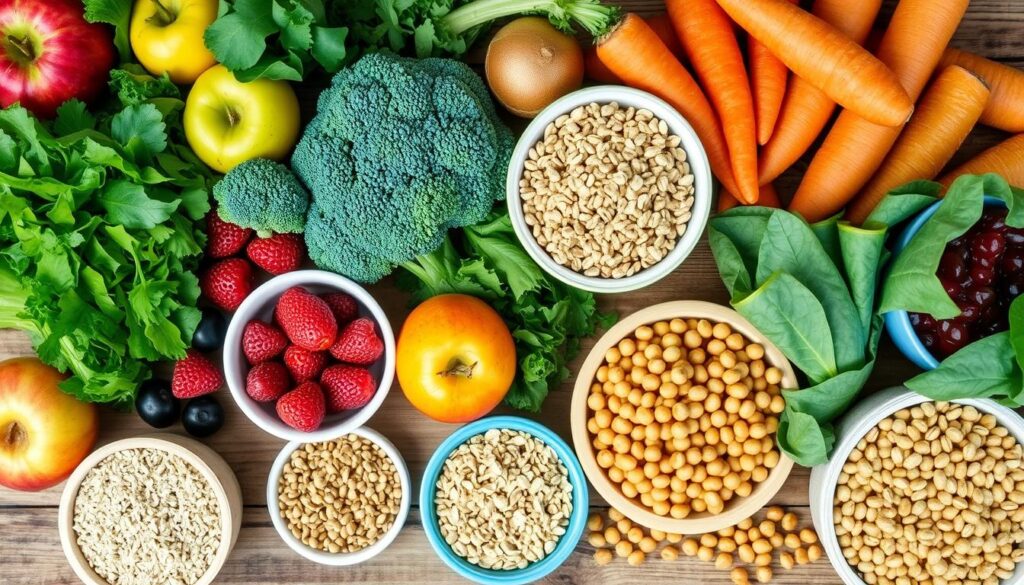
High-fiber foods can revolutionize your digestive health. Fiber is key to optimal wellness, yet most Americans fall short. The average person consumes only 15 grams daily, far below recommendations1.
Smart dietary choices hinge on understanding fiber’s importance. The Academy of Nutrition and Dietetics suggests 14 grams per 1,000 calories consumed daily1. This guideline supports overall health and digestion2.
Fiber comes in soluble and insoluble forms. It’s found in fruits, vegetables, and whole grains1. Kidney beans and quinoa are tasty ways to boost your fiber intake1.
Key Takeaways
- Fiber is essential for maintaining optimal digestive health
- Most people consume less than the recommended daily fiber intake
- High-fiber foods include beans, fruits, vegetables, and whole grains
- Fiber helps support overall nutritional wellness
- Gradually increasing fiber intake can improve your diet
Why High-Fiber Foods Are Important for Your Health
Fiber is vital for a healthy diet and overall well-being. It comes in different types, each with unique benefits. Knowing these can help you make better food choices.
Most people don’t eat enough fiber daily. Only 5% of men and 9% of women meet the recommended intake3. The National Academy of Medicine suggests specific fiber amounts based on age and gender4:
- Women 50 or younger: 25 grams per day
- Women over 50: 21 grams per day
- Men 50 or younger: 38 grams per day
- Men over 50: 30 grams per day
Benefits of a High-Fiber Diet
A high-fiber diet offers many health perks. Soluble fiber and insoluble fiber work together to support your body in various ways:
| Fiber Type | Primary Benefits | Food Sources |
|---|---|---|
| Soluble Fiber | Lowers cholesterol, regulates blood sugar | Oats, beans, flaxseed |
| Insoluble Fiber | Improves digestive health, prevents constipation | Whole grains, vegetables |
How Fiber Affects Digestive Health
Your digestive health can greatly improve with enough fiber. It helps regulate bowel movements and eases various digestive issues5. Slowly adding more fiber can prevent problems like gas and bloating5.
“Fiber is your digestive system’s best friend, supporting smooth and efficient processing of food.”
Impact on Heart Health
Fiber isn’t just good for digestion. It can lower cholesterol absorption and may reduce heart disease risk4. For people with type 2 diabetes, fiber might help control blood sugar levels4.
Understanding fiber’s power lets you make smart food choices. These choices can boost your overall health and well-being.
Top High-Fiber Foods to Include in Your Meals
High-fiber foods can boost your health and transform your diet. Fiber supports digestion, maintains a healthy weight, and offers many wellness benefits.
Legumes: Powerhouse of Nutrition
Legumes are nutritional champions packed with fiber and essential nutrients. Their fiber content is truly impressive.
- Lentils deliver an impressive 18 grams of fiber per cup when boiled6
- Black beans provide about 15 grams of fiber per cup6
- Chickpeas offer 12 grams of fiber per cooked cup6
Whole Grains: Fiber-Rich Alternatives
Whole grains are key to increasing your daily fiber intake. Try adding these options to your meals:
- Quinoa provides 5 grams of fiber per cooked cup6
- Barley contains 6 grams of fiber per cooked cup6
- Whole-wheat pasta offers 7 grams of fiber per cooked cup6
Nuts and Seeds: Small but Mighty
Nuts and seeds pack a powerful fiber punch. Even a small serving provides big nutritional benefits.
- Chia seeds pack 10 grams of fiber per two tablespoons6
- Almonds deliver 6 grams of fiber per 23 nuts6
“Incorporating these high-fiber foods can dramatically improve your overall nutrition and well-being.”
Smart food choices can lead to a healthier diet. Adding these fiber-rich options supports digestive health.
You’ll feel more energized throughout the day. Start your journey to better nutrition today.
Creative Ways to Incorporate Fiber into Your Diet
Boosting your fiber intake can be easy and delicious. With smart planning, you can transform your diet into a high-fiber powerhouse. This supports your overall health and wellness.
Let’s explore tasty ways to increase your daily fiber consumption. We’ll look at creative recipes and healthy snacks that are high in fiber.
Breakfast: Start Your Day with Fiber
Begin your morning with fiber-rich breakfast options. These choices are both nutritious and satisfying.
Here are some ideas to try:
- Overnight oats topped with raspberries and chia seeds7
- Whole grain toast with mashed avocado7
- Smoothies blended with sweet potatoes or pumpkin seeds7
Snack Smart with High-Fiber Options
Snacking can boost your fiber intake. Try these nutrient-dense options:
- Air-popped popcorn with 4 grams of fiber per ounce8
- Almonds offering nearly 4 grams of fiber per ounce8
- Berries like raspberries with 8 grams of fiber per cup87
Lunch and Dinner: Fiber-Packed Meals
Make your main meals fiber-rich experiences. Here are some suggestions:
- Add roasted Brussels sprouts with 6 grams of fiber per cup7
- Incorporate chickpeas into salads and main dishes7
- Use whole grain bread for sandwiches
Women should aim for 25 grams of fiber daily. Men should target 38 grams8. These strategies will help you meet your daily fiber needs.
Pro tip: Increase your fiber intake gradually. Drink plenty of water to help your body adjust7.
Tips for Increasing Your Fiber Intake Gradually
Boosting fiber intake needs a smart approach for good digestive health. Eating too much fiber too fast can cause bloating and gas9. Most Americans only eat 16 grams of fiber daily, far below the recommended amount10.
Slowly add high-fiber foods to your meals. Try adding half a cup of beans for 7-8 grams of fiber10. Fiber supplements can help, but check with your doctor first11. Watch how your body reacts to these changes.
Drink lots of water when eating more fiber. This helps move fiber through your body. Be careful about mixing fiber supplements with medicines11. Your aim is to add fiber safely and comfortably for better health9.
Understanding Your Fiber Needs
Different ages need different amounts of fiber. Women under 50 should eat 25 grams daily. Men under 50 need about 38 grams11. Listen to your body and adjust as needed.
Eat a variety of fiber-rich foods. Whole grains, beans, fruits, and veggies give the best nutrition9.
FAQ
How much fiber should I consume daily?
Daily fiber intake ranges from 21-38 grams, based on age and gender. Most Americans only consume about 15 grams per day. Gradually increase your fiber intake to meet the recommended amount.
What’s the difference between soluble and insoluble fiber?
Soluble fiber, found in oats and barley, lowers cholesterol and regulates blood sugar. Insoluble fiber, in whole grains and vegetables, aids digestion and prevents constipation. Both types are crucial for overall health.
What are the best high-fiber foods I can easily add to my diet?
Excellent high-fiber foods include raspberries (8g/cup), pears (5.5g/medium), and green peas (9g/cup). Lentils (15.5g/cup), black beans (15g/cup), and whole grains like quinoa are also great choices.
These foods can be easily added to meals and snacks throughout the day.
Can increasing fiber help with weight management?
Yes! A high-fiber diet can help with weight management by keeping you full longer. Fiber-rich foods are nutrient-dense and can help you feel satisfied with fewer calories.
How can I increase my fiber intake without digestive discomfort?
Increase your fiber intake gradually over several weeks. Add small amounts of high-fiber foods to your diet. Drink plenty of water (at least 8 glasses daily).
This helps your digestive system adjust and prevents bloating or gas.
Are fiber supplements a good alternative to natural high-fiber foods?
It’s best to get fiber from whole foods, which provide additional nutrients. Fiber supplements can help, but natural sources offer more health benefits. Consult a healthcare provider before starting any supplement regimen.
How does fiber benefit heart health?
Fiber can help lower cholesterol absorption and reduce the risk of heart disease. Soluble fiber is especially effective in lowering cholesterol levels. It supports overall cardiovascular health.
What are some easy ways to add more fiber to my breakfast?
Try oatmeal topped with berries and chia seeds. Whole grain toast with avocado is another great option. A smoothie with high-fiber fruits and added flaxseeds can boost your morning fiber intake.
Source Links
- 22 High Fiber Foods You Should Eat – https://www.healthline.com/nutrition/22-high-fiber-foods
- How much fiber is found in common foods? – https://www.mayoclinic.org/healthy-lifestyle/nutrition-and-healthy-eating/in-depth/high-fiber-foods/art-20050948
- Less Than 10% of Us Eat Enough Fiber — Here Are 7 Reasons to Fix That – https://www.houstonmethodist.org/blog/articles/2022/sep/7-benefits-of-fiber-that-should-convince-you-to-eat-enough-of-it/
- How to add more fiber to your diet – https://www.mayoclinic.org/healthy-lifestyle/nutrition-and-healthy-eating/in-depth/fiber/art-20043983
- Pros and Cons of a High-Fiber Diet for Digestive Health – https://tristategastro.net/pros-and-cons-of-a-high-fiber-diet-for-digestive-health/
- 31 High-Fiber Foods You Should Be Eating – https://health.clevelandclinic.org/high-fiber-foods
- We’ve heard we need more fiber in our diets. Here are 8 easy tips for getting there – https://www.npr.org/2023/09/19/1196977677/easy-ways-to-add-more-fiber-to-your-diet
- 16 Easy Ways to Eat More Fiber – https://www.healthline.com/nutrition/16-ways-to-eat-more-fiber
- Rough Up Your Diet – https://newsinhealth.nih.gov/2019/07/rough-up-your-diet
- Increasing Fiber Intake – https://www.ucsfhealth.org/education/increasing-fiber-intake
- PDF – https://med.virginia.edu/ginutrition/wp-content/uploads/sites/199/2021/07/Increasing-Your-Fiber-7-2021.pdf

