
Black eyes can be painful and worrying. Proper first aid is key for quick recovery and avoiding complications. Knowing how to treat a black eye at home can speed up healing1.
A black eye’s initial look can be scary. Blood pools under the skin, causing a red, bruised appearance1. In the first two days, the skin turns bluish purple-black. Swelling also increases during this time1.
The healing process involves color changes. From days 2 to 10, the black eye becomes yellow-greenish. Old blood clears and swelling goes down1.
By days 10 to 14, the bruise usually looks yellowish or light brown1. This marks the final stage of healing.
Key Takeaways
- Black eye first aid requires immediate and proper treatment
- Most black eyes heal within two weeks
- Cold compresses are essential in the first 24-48 hours
- Monitor color changes during the healing process
- Seek medical attention if symptoms persist beyond two weeks
Understanding Black Eye Injuries and Their Causes
A black eye is more than a simple bruise. It’s a complex injury that needs careful attention. Understanding its causes and risks is key for proper care and healing.
Black eyes often come from facial injuries. They happen when blood vessels under the skin break. This creates the distinctive discoloration we see2.
Several things can cause black eyes:
- Blunt force impact during sports or accidents
- Facial surgery complications
- Underlying medical conditions
- Accidental injuries
What Causes a Black Eye
Eye contusions can come from many sources. Blunt trauma is the most common cause. It makes blood pool under the thin eyelid skin3.
Some potential triggers include:
- Physical altercations
- Sports-related injuries
- Surgical procedures
- Medical conditions like autoimmune disorders
Signs and Symptoms to Watch For
It’s vital to spot vision problems and injury severity. Common symptoms include:
- Discoloration around the eye
- Noticeable swelling
- Persistent pain
- Potential changes in visual perception
The appearance of a black eye can evolve from black and blue to purple, green, and yellow over several days3.
When to Seek Medical Consultation
Most black eyes heal on their own. But some symptoms need immediate medical care4:
- Persistent vision changes
- Severe, unrelenting pain
- Bruising around both eyes
- Unexplained bleeding
- Signs of potential skull fracture
Remember, your eye health is paramount. When in doubt, always consult a healthcare professional to ensure proper diagnosis and treatment.
Black Eye First Aid: Essential Treatment Steps
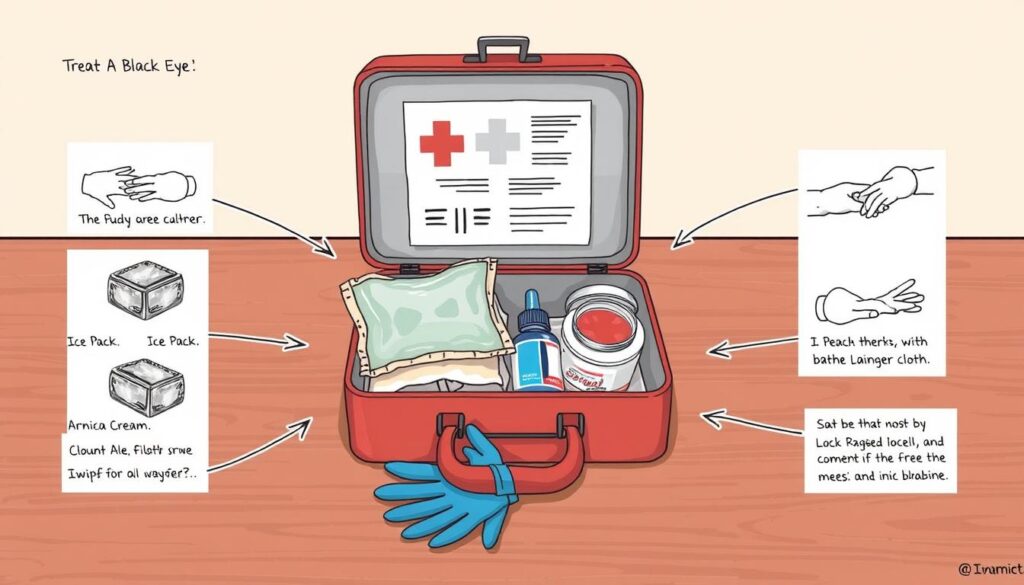
Quick treatment can make a big difference in healing a black eye. A cold compress helps reduce swelling and pain. Apply an ice pack for 15-20 minutes every hour to minimize inflammation.
This can help after experiencing a black eye injury. Remember to wrap ice in a clean cloth to protect your skin5.
- Wrap ice in a clean cloth to protect your skin
- Apply cold compress within the first 48 hours
- Keep the compress gentle and avoid direct skin contact
Natural remedies like arnica cream and comfrey cream might help in recovery. These creams may reduce bruising and support healing. However, scientific evidence for their effectiveness is limited6.
Pro tip: Elevation is key! Keep your head raised to prevent fluid accumulation under the eyes.
After 48 hours, switch to warm compresses to boost blood flow. This can speed up healing5. Once swelling goes down, try gentle massage around the eye area.
| Treatment Stage | Recommended Approach | Duration |
|---|---|---|
| First 48 Hours | Cold Compress | 15-20 minutes per hour |
| After 48 Hours | Warm Compress | 15-20 minutes, 2-3 times daily |
If your black eye lasts more than three weeks, see a doctor. Also, seek help if you notice signs of serious injury5.
Conclusion
Black eye recovery requires patience and attention to healing signals. Most black eyes heal within 2-3 weeks without permanent damage7. Monitor the injury and practice diligent home treatment to support your recovery8.
Be proactive about eye protection. Wear safety glasses during sports or risky activities to reduce eye injury chances7. Consult a healthcare professional for persistent symptoms like vision changes or prolonged swelling8.
Find more eye injury info at comprehensive eye care resources. Follow-up care is crucial for black eye recovery. Bruising may spread before improving7.
Track your healing progress carefully. Seek medical help if symptoms worsen or don’t improve over time8. Proper recovery steps can prevent long-term complications and protect your precious vision.
FAQ
How long does a typical black eye take to heal?
Most black eyes heal within two weeks. The bruise changes colors from reddish to bluish-purple, then yellow-green, and finally light brown. Use cold and warm compresses to reduce swelling and promote healing.
What’s the best first aid treatment for a black eye?
Apply a cold compress within 24-48 hours of injury. Use ice cubes in a plastic bag wrapped in a clean towel for 10-20 minutes several times daily.
After swelling subsides, switch to warm compresses to promote healing. Be gentle and avoid putting direct pressure on the eye area.
When should I see a doctor about a black eye?
Seek medical help if you have vision changes, severe pain, or bruising around both eyes. Also, get help for bleeding from the eye or nose, cheek numbness, or teeth numbness.
Other serious symptoms include dizziness, loss of consciousness, vomiting, or constant headaches. These could signal a more serious injury.
Can I use home remedies to treat a black eye?
Some use arnica or comfrey creams for their anti-inflammatory properties. Vitamin C cream may also help healing. Be careful when applying products near the eyes.
Avoid using raw meat as it can cause infection. Scientific evidence for these remedies is limited.
How can I prevent black eye injuries?
Wear protective eye gear during sports or dangerous activities. Be aware of your surroundings to avoid facial trauma. Use appropriate safety equipment for contact sports or high-risk activities.
What causes a black eye?
Black eyes result from trauma to the face or head. They occur when blood pools under the skin around the eye. Common causes include sports injuries, accidents, fights, or facial surgery.
How should I care for my eye during the healing process?
Elevate your head when resting to reduce swelling. Avoid putting pressure on the eye area. Use cold compresses initially, then switch to warm ones for healing.
Be gentle and watch for any signs of worsening symptoms. Monitor the injury closely throughout the healing process.
Source Links
- Home Remedies for Black Eyes, Plus How Long They Take to Heal – https://www.healthline.com/health/home-remedies-for-black-eye
- Black Eye: Understanding the Basics – https://www.webmd.com/eye-health/understanding-black-eye-basics
- Eye emergencies: MedlinePlus Medical Encyclopedia – https://medlineplus.gov/ency/article/000054.htm
- What You Should Know About Black Eye – https://www.healthline.com/health/black-eye
- How to get rid of a black eye: Remedies and treatments – https://www.medicalnewstoday.com/articles/how-to-get-rid-of-a-black-eye
- First Aid for Eye Injuries – https://www.optometrists.org/general-practice-optometry/guide-to-eye-exams/eye-emergencies/first-aid-for-eye-injuries/
- Black eye: Causes, effects, treatment, and prevention – https://www.medicalnewstoday.com/articles/249231
- Black eye – https://www.healthdirect.gov.au/black-eye

