
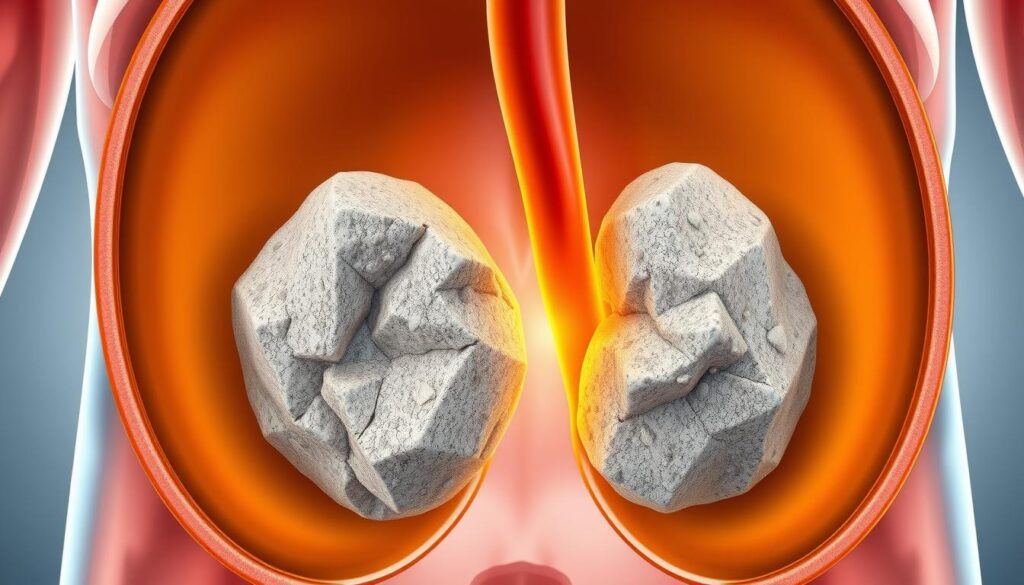
Bladder stones are hard mineral deposits that form in your urinary bladder. They occur when urine can’t fully empty from the bladder. These stones can cause discomfort and health issues related to urolithiasis1.
Men over 50 face a higher risk of developing bladder stones1. Understanding these stones is key to maintaining urinary tract health. They often stem from conditions that prevent complete bladder emptying.
An enlarged prostate is a common cause of bladder stones12. Nerve damage from stroke, diabetes, or spinal cord injuries can also increase your risk1.
Your diet and lifestyle greatly influence bladder stone formation. High-fat, sugary, and salty foods can raise your chances of developing these deposits2. Medical devices like catheters might also trigger crystal formation2.
Key Takeaways
- Bladder stones are mineral formations in the urinary tract
- Men over 50 have higher risk of developing bladder stones
- Underlying medical conditions can contribute to stone formation
- Proper hydration may help prevent bladder stones
- Diet and lifestyle impact stone development
Understanding Bladder Stones and Their Formation
Bladder stones are mineral deposits that form in the bladder. They develop when urine becomes stagnant or concentrated. These stones can greatly affect your health and cause complications.
Men are most likely to get bladder stones. Almost all cases occur in male patients. Knowing how they form helps manage these urological problems better.
What Are Bladder Stones
Bladder stones are hard mineral buildups in the bladder. They form when urine doesn’t empty completely. Their size and texture can vary widely.
These stones may cause discomfort and urinary issues. They can range from small to large and smooth to rough.
Risk Factors for Stone Development
- Male gender (over 50 years old)
- Enlarged prostate conditions
- Neurogenic bladder disorders
- Chronic urinary tract infections (cystitis)
Common Causes of Stone Formation
Several conditions can lead to bladder stones:
- Urine retention due to prostate enlargement3
- Nerve damage from neurological conditions
- Chronic urinary tract infections
- Bladder inflammation
Preventing bladder stones requires maintaining proper hydration and addressing underlying urinary tract conditions promptly4.
| Risk Factor | Impact on Stone Formation |
|---|---|
| Prostate Enlargement | High risk of urine retention |
| Neurogenic Bladder | Disrupts normal urine flow |
| Chronic Infections | Increases mineral crystallization |
Early detection and treatment are critical to preventing potential permanent damage to your bladder or kidneys4.
Symptoms and Treatment Methods for Bladder Stones
Bladder stones can cause major discomfort and upset your daily routine. Spotting symptoms early is key for successful treatment. Here are some signs that might point to bladder stones5:
- Lower abdominal and back pain
- Painful urination
- Frequent urge to urinate
- Blood in urine (hematuria)
- Difficulty urinating
- Urinary incontinence
Doctors use various methods to diagnose bladder stones. They may suggest thorough tests to confirm if stones are present6. Low-dose CT scans are 82% effective in finding urinary tract stones7.
Surgery is the main treatment for bladder stones. Lithotripsy is a common method for removing stones. Here are the most used techniques:
- Shock wave lithotripsy
- Transurethral lithotripsy
- Intracorporeal lithotripsy
- Open cystostomy
Treatment success rates are encouraging. About 87% of bladder stone cases in adults and kids have good outcomes7. Percutaneous suprapubic cystolithotripsy works well for 65% of large bladder calculi cases7.
Prevention is always better than cure. Managing underlying conditions and maintaining proper hydration can significantly reduce your risk of developing bladder stones.
Some people have a higher risk of bladder stones. These include those with enlarged prostates or neurogenic bladders. People using long-term urinary catheters should also be careful5.
Talk to a doctor about creating a plan to prevent and treat bladder stones. They can help you find the best approach for your needs.
Conclusion
Bladder stones affect over 4% of people worldwide. They’re a major health issue that needs attention. Preventing kidney stones and urinary infections is key to better health89.
To manage bladder stones, use a multi-faceted approach. Drink more fluids daily and eat a balanced diet. Regular check-ups with your doctor can greatly lower your risk8.
The University of North Carolina Urology Department suggests early treatment and custom care plans. These steps can help avoid serious problems.
Changing your lifestyle is crucial to stop stones from coming back. Men face a higher risk of bladder stones. Know your risk factors and take steps to prevent them98.
FAQ
What exactly are bladder stones?
Bladder stones are hard mineral deposits that form in your bladder. They develop when urine can’t fully empty and becomes concentrated. These stones can be smooth or jagged and vary in size.
Who is most at risk of developing bladder stones?
Men over 50 and those with urine flow issues face higher risks. People with enlarged prostates or neurological conditions are more susceptible. Chronic bladder inflammation also increases the likelihood of stone formation.
What are the common symptoms of bladder stones?
Lower abdominal pain and discomfort during urination are typical signs. You might also experience frequent urination and see blood in your urine. Cloudy or dark-colored urine can indicate bladder stones.
In children, bedwetting may signal the presence of stones.
How are bladder stones diagnosed?
Doctors use urine and blood tests to diagnose bladder stones. Imaging studies like X-rays and ultrasounds help confirm their presence. Sometimes, a cystoscopy is needed for a closer look.
What is the primary treatment for bladder stones?
Cystolitholapaxy is the main treatment for bladder stones. This procedure uses a cystoscope to find and break up the stones. Surgeons may use lasers or other tools to fragment stones before removal.
Treating underlying conditions is crucial to prevent stones from coming back.
Can bladder stones be prevented?
You can lower your risk by drinking 2-3 liters of fluid daily. Empty your bladder completely and regularly. Practice double voiding and avoid constipation. These steps are especially important if you’ve had stones before.
What complications can occur if bladder stones are left untreated?
Untreated bladder stones can cause ongoing urinary tract infections. They may damage your bladder and kidneys over time. Chronic discomfort and serious urological problems can develop without proper treatment.
Are bladder stones different from kidney stones?
Bladder stones form in the bladder, while kidney stones form in the kidneys. Kidney stones can sometimes travel to the bladder. Both are mineral deposits but have different origins and treatments.
Source Links
- Bladder stones-Bladder stones – Symptoms & causes – Mayo Clinic – https://www.mayoclinic.org/diseases-conditions/bladder-stones/symptoms-causes/syc-20354339
- What Are Bladder Stones? – https://www.webmd.com/kidney-stones/what-are-bladder-stones
- Understanding Urinary Bladder Stones | United Urology – https://www.unitedurology.com/conditions-treatments/general-urology/understanding-urinary-bladder-stones/
- Bladder stones – https://www.mountsinai.org/health-library/diseases-conditions/bladder-stones
- Bladder Stones: What You Need to Know – https://www.verywellhealth.com/bladder-stones-7553140
- Bladder Stones: Practice Essentials, Anatomy, Pathophysiology – https://emedicine.medscape.com/article/2120102-overview
- Approach Considerations, Pharmacologic Stone Dissolution, Surgical Fragmentation and Removal – https://emedicine.medscape.com/article/2120102-treatment
- What Causes Bladder Stones and How Are They Treated? | Advanced Urology Institute – https://www.advancedurologyinstitute.com/what-causes-bladder-stones-and-how-are-they-treated/
- EAU Guidelines on Urolithiasis – Uroweb – https://uroweb.org/guidelines/urolithiasis/chapter/bladder-stones

