
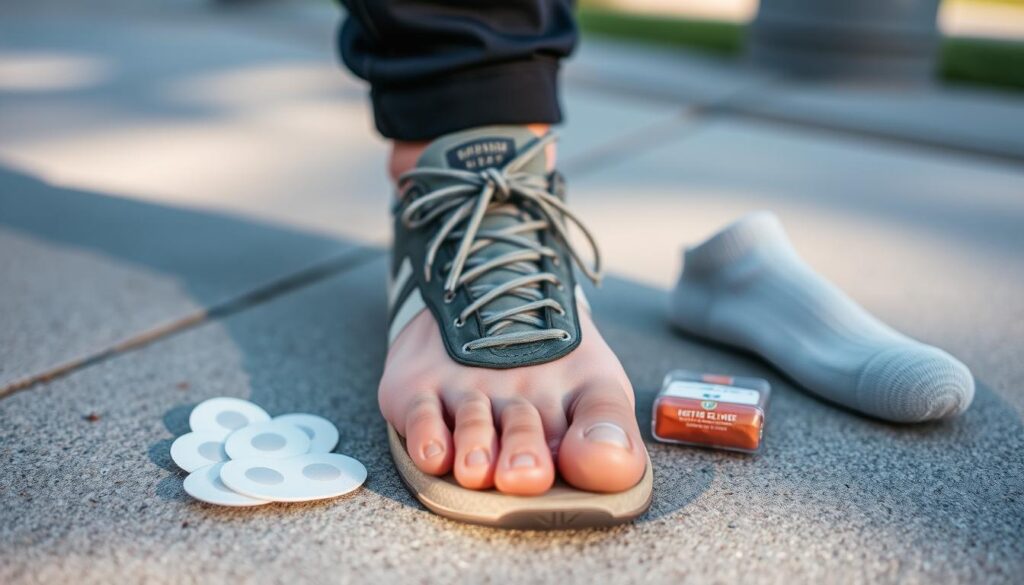
Foot blisters can ruin a good walk. They’re a common problem for walkers and athletes. Knowing how to prevent and treat blisters is key for healthy, comfy feet12.
Blisters often form from constant rubbing on your feet. New shoes are famous for causing these painful bumps2. The right steps can save you from pain and foot troubles1.
Good-fitting shoes are your best defense against blisters. Leave a finger’s width between your toes and the shoe’s end2. This space helps cut down on friction and blister risks.
Well-fitted footwear can vastly improve your walking or running1. It’s worth investing in shoes that fit you just right.
Key Takeaways
- Understand the root causes of foot blisters
- Choose shoes with proper fit and support
- Use moisture-wicking socks
- Protect potential blister-prone areas
- Practice preventive foot care techniques
Understanding Blisters: What You Need to Know
Blisters are common skin issues that can cause discomfort and pain. They’re fluid-filled bumps that form on your skin. Learning about blisters can help you prevent and manage them better3.
What Are Blisters?
Blisters are small, protective bubbles on your skin. They appear as circular, raised areas filled with clear fluid3. Various causes like friction, pressure, and skin irritation can lead to blisters.
Common Causes of Blisters
Several factors can trigger blister formation:
- Friction from shoes or tight clothing3
- Sunburn exposure3
- Heat and moisture4
- Allergic reactions3
- Infections like chickenpox3
Blister causes range from simple physical activities to complex medical conditions4. Athletes often get blisters due to repetitive movements and friction4.
When to See a Doctor
Most blisters heal on their own. However, seek medical help if you notice these signs:
- Expanding rash
- Fever
- Increased warmth around the blister
- Persistent pain or swelling3
Remember: Never pop a blister, as this can increase infection risk3.
Proper care and prevention are key to managing blisters effectively.
Preventing Blisters: Tips for Healthy Feet
Foot care is key to avoiding painful blisters. Smart strategies can keep you comfy during activities. Let’s explore how to prevent and manage blister-prone conditions.
Choosing the Right Footwear
Good shoes are vital for blister prevention. Ill-fitting footwear can irritate your skin5. Keep these factors in mind when picking shoes:
- Ensure proper fit with enough room for foot expansion
- Select shoes designed for specific activities like hiking or running6
- Gradually break in new shoes to reduce friction
Importance of Moisture Management
Controlling moisture is crucial for healthy feet. Sweaty feet raise your blister risk5. Choose socks that wick sweat away from your skin6.
- Use synthetic socks instead of all-cotton options5
- Apply talcum powder to absorb excess moisture6
- Change socks regularly during extended activities6
Techniques for Foot Care
Try these proactive foot care strategies:
- Lubricate feet with petroleum jelly to reduce friction6
- Consider double-layer socks for extra protection6
- Cover blister-prone areas with protective patches
Pro tip: People with diabetes need extra care due to potential circulation issues5.
“Prevention is always better than treatment when it comes to foot blisters.”
Treating Blisters: Best Practices for Recovery
Blisters need gentle care to heal properly. Your main goal is to prevent infection and promote healing. Most blisters heal within 3 to 7 days if cared for correctly7.
Intact blisters act as a shield against infections8. Keep the area clean and protected at home. Use hydrocolloid dressings to reduce discomfort and support healing7.
For pain relief, apply an ice pack for 10 to 30 minutes7. Proper care includes cleaning with mild soap and water. Then, apply an antibiotic ointment8.
Seek medical help if your blister shows signs of infection. Also, get help if it covers a large area or keeps coming back8. Athletes should pay extra attention to blister care.
Blisters can greatly affect sports performance9. Don’t try to drain blisters at home. Ask for expert advice when needed for better blister management8.
FAQ
What exactly are blisters?
Blisters are raised, fluid-filled bumps on your skin. They’re usually caused by friction, heat, pressure, or burns. These protective bubbles help your skin heal and shield the damaged area.
Why do I keep getting blisters on my feet?
Foot blisters often result from ill-fitting shoes or excessive moisture. Repetitive activities and friction can also trigger their formation. New shoes, long walks, or running can increase your risk.
Wearing inappropriate socks or poorly fitting shoes makes blisters more likely.
How can I prevent blisters when walking or exercising?
Choose well-fitting shoes with proper support. Wear moisture-wicking socks and apply anti-friction lubricants like petroleum jelly. Use powder to reduce moisture and gradually break in new footwear.
Consider using moleskin on friction-prone areas. Keep your feet dry during activities.
Should I pop a blister or leave it intact?
It’s best to leave blisters unbroken if possible. The skin acts as a natural barrier against infection. If a blister is large or painful, you can carefully drain it.
Use a sterilized needle and clean the area thoroughly. Apply antibiotic ointment afterward.
When should I see a doctor about a blister?
Seek medical help if you notice signs of infection. These include expanding redness, increased pain, pus formation, or warm skin around the blister.
People with diabetes, poor circulation, or compromised immune systems should be extra cautious about blister care.
What are some effective home remedies for blisters?
Apply aloe vera for soothing relief. Use green tea bags to reduce inflammation. Keep the area clean and dry. Use over-the-counter pain relievers if needed.
Cover the blister with a breathable bandage to protect it from friction and infection.
How long do blisters typically take to heal?
Most blisters heal within 3-7 days, depending on their size and cause. Keep the area clean and protected. Avoid further friction to speed up healing.
If a blister doesn’t improve or shows signs of infection, consult a healthcare professional.
Are some people more prone to getting blisters?
Yes, certain factors can increase blister susceptibility. These include sensitive skin, high-friction activities, improper footwear, and sweaty feet. Repetitive motions that create consistent skin rubbing also play a role.
Athletes and hikers are often more likely to develop blisters.
Source Links
- How to Prevent Blisters on Your Feet – https://www.verywellfit.com/blisters-begone-seven-strategies-to-prevent-blisters-3432491
- 7 Tips to Help Prevent Blisters – https://www.gwapodiatry.com/blog/strategies-for-preventing-blisters.cfm
- Blisters – https://www.hopkinsmedicine.org/health/conditions-and-diseases/blisters
- Blisters: First aid – https://www.mayoclinic.org/first-aid/first-aid-blisters/basics/art-20056691
- 5 Ways To Avoid Blisters (and the Best Way To Treat Them) – https://health.clevelandclinic.org/5-ways-to-avoid-blisters-and-the-best-ways-treat-them
- Tips to Prevent and Treat Blisters – https://intermountainhealthcare.org/blogs/tips-to-prevent-and-treat-blisters
- Blisters – https://www.nhsinform.scot/illnesses-and-conditions/injuries/skin-injuries/blisters/
- Blisters: Symptoms and Treatment | Dermatology Affiliates – https://www.dermatologyaffiliates.com/conditions/blisters
- The Runner’s Guide To Preventing And Treating Blisters – https://www.racingtheplanet.com/the-runner-s-guide-to-preventing-and-treating-blisters

