
Your body is a complex machine that relies on proper fluid consumption. Water plays a crucial role in maintaining your overall health. It makes up a significant portion of your body weight1.
Experts suggest specific guidelines for optimal hydration. Men typically need about 15.5 cups of fluids daily. Women should aim for around 11.5 cups1.
Your daily water intake isn’t just about drinking plain water. About 20% comes from the foods you eat1.
Your body constantly needs water to support critical functions. These include temperature regulation, waste removal, and protecting sensitive tissues. Staying hydrated can boost your energy levels and brain function.
The classic advice of drinking 8 glasses of water a day is still valid. It remains a solid goal for most healthy individuals1.
Key Takeaways
- Water comprises 50-70% of your body weight
- Daily fluid needs differ between men and women
- Food contributes to your total fluid intake
- Hydration supports multiple bodily functions
- 8 glasses of water is a reasonable daily goal
The Importance of Staying Hydrated
Water is vital for your body’s health and wellness. Knowing your water needs and preventing dehydration can greatly improve your well-being.
Your body needs water for many key functions. It regulates temperature and supports cell processes. Shockingly, 75% of Americans are chronically dehydrated2.
How Water Impacts Your Body
Water performs multiple crucial roles in your body:
- Eliminates waste through perspiration and urination
- Maintains normal body temperature
- Lubricates joints
- Protects sensitive tissues
Consequences of Dehydration
Dehydration can cause serious health issues. Symptoms may include:
- Dizziness
- Fatigue
- Dark-colored urine
- Dry skin
Some groups face higher dehydration risks. Up to 28% of adults over 60 experience dehydration2. Athletes and those with certain medical conditions need extra water3.
FAQs About Hydration
“Thirst is not a reliable indicator of hydration. Your urine color provides a more accurate assessment of your body’s water needs.”
| Hydration Factor | Impact |
|---|---|
| Daily Water Intake | Can reduce calorie consumption |
| Water Before Meals | Supports weight management |
| Kidney Health | Helps prevent kidney stones |
Good hydration helps your body detox and stay healthy2. Drinking water isn’t just about quenching thirst. It’s about keeping your body in balance.
Simple Ways to Increase Your Water Intake
Boosting your daily water intake is vital for Thirst Management. Your body needs proper hydration. With smart strategies, you can make Healthy Beverage Choices a sustainable lifestyle.
Knowing your hydration needs is key. The CDC reports adults drink about 44 ounces of water daily. This is less than recommended.
The Adequate Intake (AI) levels suggest 11.5 cups daily for women. For men, it’s 15.5 cups per day4.
Carry a Reusable Water Bottle
Get a quality reusable water bottle to change your hydration habits. This simple tool can help you in many ways.
- Track your daily water intake
- Remind you to drink regularly
- Reduce plastic waste
- Keep water cool and accessible
Set Daily Water Goals
Create personal water intake goals to make hydration easier. Aim for 70 to 100 ounces per day. Remember, about 20% of fluid comes from water-rich foods5.
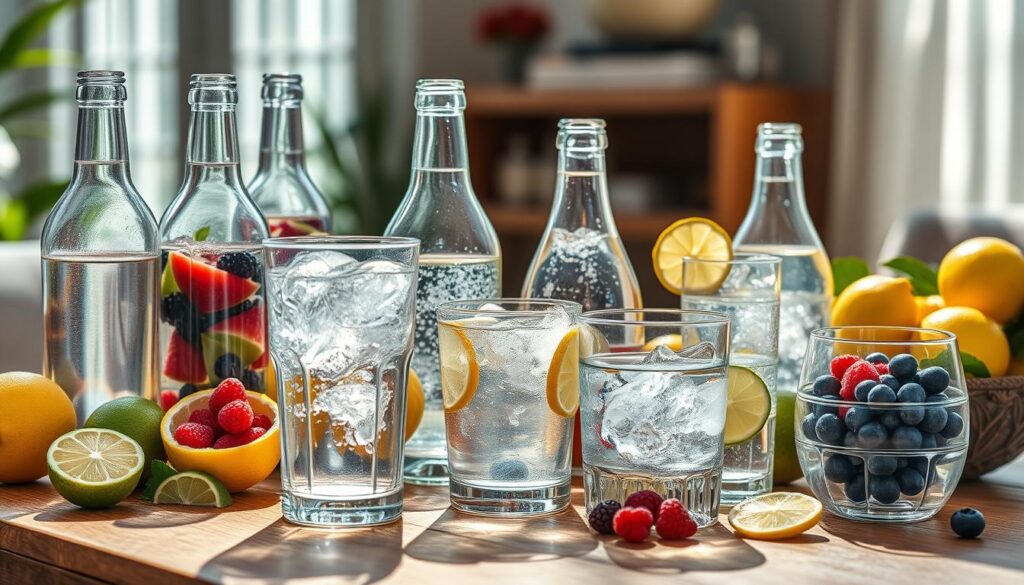
Add Flavor with Fruits and Herbs
“Water doesn’t have to be boring. Experiment with natural flavors!” – Hydration Expert
Make water more appealing by adding natural flavors. Try these tasty options:
- Cucumber slices
- Lemon wedges
- Fresh mint leaves
- Berries
Drinking more water can improve your diet. A study found increasing water intake by 1% daily reduced calorie consumption. It also lowered sugar and sodium intake5.
Tips for Making Hydration a Habit
Staying hydrated can boost your health and well-being. It’s more than just drinking water now and then. You need a plan to meet your Daily Water Needs.
Learn to read your body’s signals. This will help you know when to drink more water.
Establish a Consistent Routine
Know how much water your body needs. Women usually need nine cups daily, while men need 13.
Try these tips to drink more water:
- Drink a glass of water immediately after waking up
- Set specific times for water intake throughout the day
- Pair water consumption with regular activities
Use Technology to Stay Motivated
Smartphone apps can track your water intake. They can also send reminders to drink more.
From 2015 to 2018, U.S. adults drank only 44 ounces of plain water daily6. This shows we need to be more mindful about drinking water.
Monitor Your Progress
Check your urine color to see if you’re drinking enough. Pale yellow or clear urine usually means you’re well-hydrated.
Listen to your body. Drink water when you feel thirsty.
“Hydration is not just about drinking water, it’s about creating a sustainable lifestyle habit.”
| Hydration Indicator | What It Means |
|---|---|
| Colorless/Pale Yellow | Well Hydrated |
| Dark Yellow | Potential Dehydration |
| Amber/Honey Color | Significant Hydration Needed |
Drink water regularly to stay healthy. Simple daily habits can keep you hydrated and energized.
Hydration Beyond Water
Staying hydrated isn’t just about drinking water. Many foods and drinks can help meet your daily fluid needs. Zucchini noodles and lettuce greens are great options, containing at least 94% water7.
Your body gets 80% of its water from fluids. The remaining 20% comes from foods7. This means your diet plays a crucial role in hydration.
Hydrating Foods to Include
Fruits and veggies are hydration powerhouses. Watermelon is a tasty choice with 92% water content8. Cucumbers and celery offer even more, with about 95% water9.
Chia seeds are another smart addition to your diet. These tiny seeds can absorb 10 times their weight in liquid8. This makes them great for boosting hydration.
Other Fluids That Count
Coffee, tea, and milk all contribute to your daily fluid intake8. Sports drinks can be helpful during intense workouts or in hot weather9. They contain electrolytes like sodium and potassium.
For caffeine-free hydration, try herbal teas like chamomile9. These options can add variety to your hydration routine.
When to Consider Supplements
A balanced diet usually provides enough electrolytes. However, some situations might require extra support. Intense exercise or extreme temperatures could call for electrolyte supplements.
Always check with a healthcare professional about your hydration needs7. They can help you create a plan that’s right for you.
FAQ
How much water should I drink daily?
Men should aim for about 15.5 cups (3.7 liters) of fluids daily. Women need about 11.5 cups (2.7 liters). This includes water, other drinks, and food.
About 20% of your daily fluid intake typically comes from food. Pay attention to your body’s needs and adjust your intake accordingly.
What are the signs of dehydration?
Common signs of dehydration include thirst, dark urine, fatigue, dizziness, and dry skin. Even mild dehydration can lower your energy levels and affect your well-being.
If you notice these symptoms, drink more fluids. Listen to your body’s signals to stay properly hydrated.
Can other beverages count towards my daily water intake?
Yes, many drinks contribute to your daily fluid intake. These include milk, juice, herbal teas, and even caffeinated beverages like coffee.
However, limit sugary drinks due to their high calorie content. Water-rich fruits and veggies, like watermelon and spinach, also help with hydration.
How can I make drinking water more appealing?
Add natural flavors to your water by infusing it with fruits, herbs, or cucumber slices. Carry a reusable water bottle and set daily goals.
Drink water with meals and between them. Use smartphone apps or set reminders to establish a consistent hydration routine.
How do I know if I’m properly hydrated?
Check your urine color – pale yellow or colorless urine usually means good hydration. For most healthy adults, thirst is a reliable indicator.
Drink water whenever you feel thirsty. This is especially important during exercise, hot weather, or at high altitudes.
Are electrolyte supplements necessary?
Most people get enough electrolytes from a balanced diet. Supplements might help during intense exercise, extreme heat, or certain medical conditions.
Always talk to a healthcare professional before starting any supplement regimen. They can advise if it’s right for you.
Does water help with bodily functions?
Yes! Water is vital for every cell, tissue, and organ in your body. It helps remove waste and maintains normal body temperature.
Water also lubricates joints and protects sensitive tissues. Staying hydrated is key for optimal physical functioning and overall health.
Source Links
- How much water do you need to stay healthy? – https://www.mayoclinic.org/healthy-lifestyle/nutrition-and-healthy-eating/in-depth/water/art-20044256
- Why Should Older Adults Stay Hydrated? – https://www.ncoa.org/article/10-reasons-why-hydration-is-important/
- Staying Hydrated, Staying Healthy – https://www.heart.org/en/healthy-living/fitness/fitness-basics/staying-hydrated-staying-healthy
- 9 Hacks To Drink More Water Every Day9 Hacks To Drink More Water Every Day – Splenda® – https://www.splenda.com/blog/9-hacks-to-drink-more-water-every-day/
- 14 easy ways to drink more water, according to a registered dietitian – https://www.today.com/health/diet-fitness/how-to-drink-more-water-rcna32824
- 5 Simple Tips to Help Grow Hydration Habits – https://news.cuanschutz.edu/medicine/tips-to-help-grow-hydration-habits
- No title found – https://www.medexpress.com/blog/better-health/7-ways-to-stay-hydrated-that-dont-involve-drinking-water.html
- 7 Easy Ways to Stay Hydrated Beyond Drinking Water | Aloha Integrative Health – https://alohaintegrativehealth.com/7-easy-ways-to-stay-hydrated-beyond-drinking-water/
- 7 Effective Ways to Hydrate (That Go Beyond Drinking Water) – https://www.marthastewart.com/8215933/hydrating-beverages-beyond-water

