
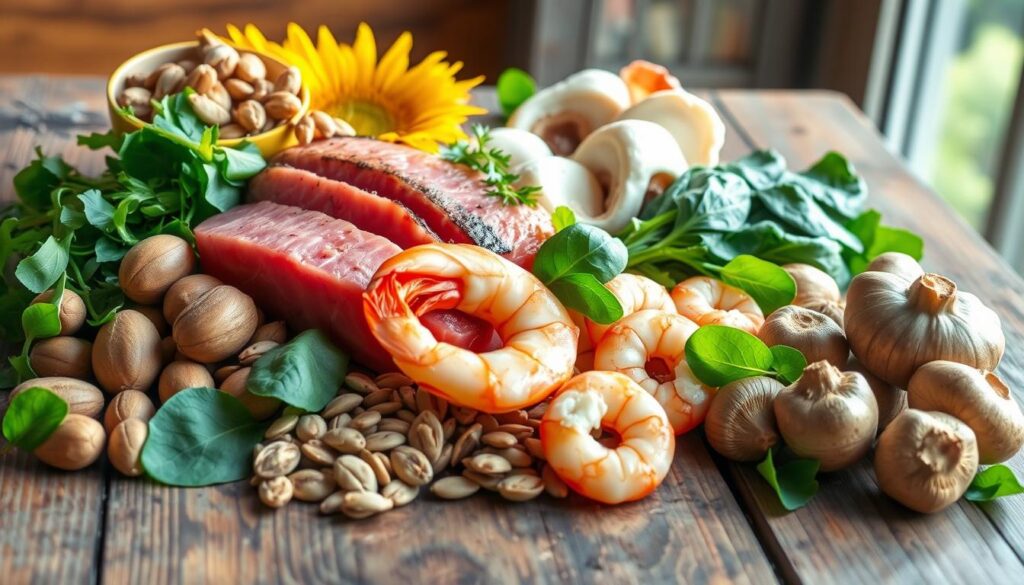
Selenium is a powerful mineral vital for your overall health. It supports key biological functions and protects against health challenges. Selenium-rich foods can be your secret weapon for wellness1.
Many foods can easily fit into your daily diet. Brazil nuts are nutritional powerhouses. Just one ounce contains 544 mcg of selenium2.
Yellowfin tuna offers about 92 mcg per serving. Eggs provide approximately 15 mcg2. These options help diversify your selenium intake.
Selenium benefits go beyond basic nutrition. Proper levels may reduce cancer risk and support immune function1. Including selenium-rich foods can be a smart wellness strategy.
Key Takeaways
- Selenium is essential for immune system support
- Brazil nuts are an exceptional source of selenium
- Multiple food sources can help meet daily selenium requirements
- Selenium plays a crucial role in preventing certain health conditions
- Adult recommended daily intake is 55 micrograms1
Understanding Selenium’s Role in Your Health
Selenium is a powerful trace mineral vital for your health. It supports many bodily functions and benefits your immune system. This essential nutrient also aids your metabolic processes3.
Essential Functions in the Human Body
Your body needs selenium for several key functions. It acts as a strong antioxidant, shielding cells from damage. Selenium also supports various body processes.
Here are key roles selenium plays:
- Supports thyroid metabolism3
- Boosts immune system response3
- Helps reduce inflammation3
- Promotes DNA synthesis
Daily Selenium Intake Guidelines
Knowing how much selenium you need daily is important. Adults usually require about 55 micrograms each day4. Different groups have varying selenium needs.
| Population Group | Daily Selenium Requirement |
|---|---|
| Adult Men and Women | 55 micrograms4 |
| Pregnant Women | 60 micrograms4 |
| Lactating Women | 70 micrograms4 |
Selenium deficiency is uncommon in North America. However, some people might be at risk4. Signs of low selenium can include tiredness and weak immune function.
“Selenium is an essential mineral that must be obtained through diet and plays a crucial role in maintaining optimal health.” – Nutrition Experts
If you’re worried about selenium intake, selenium supplements are an option. Most people can get enough selenium from a balanced diet5.
Top Selenium Foods for Optimal Nutrition
Selenium is crucial for your health. Certain foods provide high amounts of this essential mineral. Let’s explore the best selenium sources to boost your diet6.
Here are the top selenium-rich foods to power up your meals:
- Brazil Nuts: The selenium champion. One ounce gives 544 mcg, almost 989% of your daily value6!
- Seafood Superstars:
- Yellowfin tuna (92 mcg per 3 oz)
- Sardines (45 mcg per 3 oz)
- Shrimp (42 mcg per 3 oz)
- Protein Powerhouses:
- Turkey (31 mcg per 3 oz)
- Chicken (22 mcg per 3 oz)
- Beef liver (28 mcg per 3 oz)
Vegans can get selenium from brown rice, sunflower seeds, and mushrooms7. Just two Brazil nuts daily can meet your entire selenium need7.
“Selenium is your body’s nutritional ninja, protecting you from cellular damage and supporting critical functions.” – Nutrition Experts
Mix different selenium sources to keep your diet interesting. Selenium-rich foods come from various food groups6.
Watch your portions. Too much selenium can cause bad breath and skin problems6. Balance is key for optimal health benefits.
Conclusion
Embracing selenium-rich foods is a smart move for your health. It’s more than just eating right; it’s about nurturing your body. Selenium offers numerous benefits that can change your view on nutrition8.
Most adults need about 55 micrograms of selenium daily. You can easily get this from a balanced diet with various food sources8.
Adding selenium to your meals is simple. Try Brazil nuts, yellowfin tuna, or eggs to boost your intake89. These foods provide selenium and other nutrients that support your immune system and thyroid9.
Experts suggest getting selenium from whole foods, not supplements8. Be careful with your intake. Too little selenium can harm your health, but so can too much8.
Choose a variety of selenium-rich foods for a balanced approach. This will help meet your body’s nutritional needs effectively.
FAQ
What is selenium and why is it important?
Selenium is a vital mineral for many body functions. It’s a powerful antioxidant that supports thyroid health and DNA synthesis. Selenium also boosts immune function and protects against oxidative damage.
How much selenium should I consume daily?
Adults generally need 55 mcg of selenium per day. Pregnant or breastfeeding women may require up to 70 mcg daily. Most people get enough selenium from a balanced diet.
What are the best food sources of selenium?
Brazil nuts are the richest source, with one ounce containing about 544 mcg. Seafood like tuna, sardines, and shrimp are also excellent sources. Lean meats, eggs, brown rice, and mushrooms provide good amounts too.
What happens if I have a selenium deficiency?
Selenium deficiency can cause fatigue, brain fog, and a weak immune system. It may also lead to infertility and hair loss. In severe cases, it can contribute to heart conditions or arthritis.
Can you consume too much selenium?
Yes, excessive selenium intake can be harmful to your health. Eat selenium-rich foods like Brazil nuts only a few times a week. Maintain a balanced diet to avoid overconsumption.
Who is at risk of selenium deficiency?
Selenium deficiency is rare in the U.S. but more common elsewhere. People with certain health conditions may have trouble absorbing selenium. Those undergoing dialysis or with HIV or hypothyroidism are at higher risk.
Do I need selenium supplements?
Most people can get enough selenium from a varied diet. Whole foods are generally the best source of selenium. Always check with a doctor before starting any supplement regimen.
How does selenium support thyroid function?
Selenium works with iodine to keep your thyroid healthy. It helps produce and regulate thyroid hormones. These hormones are crucial for metabolism, energy production, and overall cell function.
Source Links
- Selenium: What It Is and Why You Need It – https://health.clevelandclinic.org/selenium-benefits
- Selenium Foods: 20 Selenium-Rich Foods for Every Diet – https://www.healthline.com/health/selenium-foods
- 7 Science-Based Health Benefits of Selenium – https://www.healthline.com/nutrition/selenium-benefits
- Selenium – https://nutritionsource.hsph.harvard.edu/selenium/
- Office of Dietary Supplements – Selenium – https://ods.od.nih.gov/factsheets/Selenium-HealthProfessional/
- 15 high selenium foods: Why we need them, and more – https://www.medicalnewstoday.com/articles/foods-with-selenium
- What is selenium? – https://www.bbcgoodfood.com/health/nutrition/what-selenium
- Selenium: Health benefits, sources, and potential risks – https://www.medicalnewstoday.com/articles/287842
- 15 Selenium-Rich Foods for a Balanced Diet – https://nyumi.com/blogs/news/15-selenium-rich-foods-for-a-balanced-diet?srsltid=AfmBOoqcBozLh70RSF8aycXT-GV5tKPTszrlEfCNL7B9esmoIHlFxU8W

