
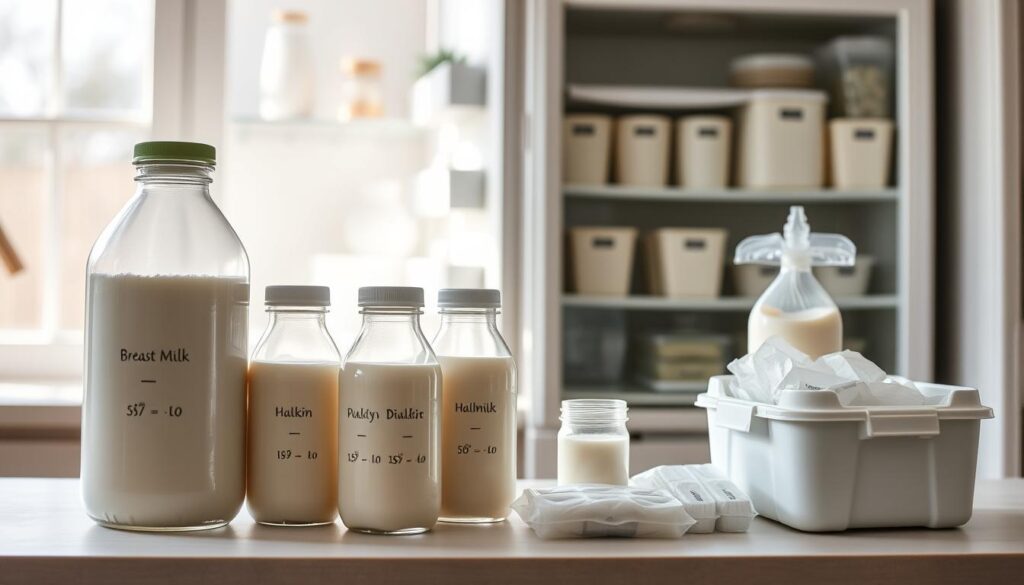
Storing breast milk can be tricky for new parents. Proper handling keeps your baby’s food nutritious and safe. Learning the right storage methods preserves milk’s amazing health benefits.
Use clean, food-grade containers for breast milk storage. BPA-free plastic, glass, or silicone bags work well1. Storage times vary by temperature.
At room temperature, milk lasts 4 hours. In the fridge, it’s good for 4 days. Freezer storage extends to 4-6 months2.
Fresh breast milk has the most anti-infective properties. Use it first when possible1. Store milk in 2-4 ounce portions to avoid waste.
Always label containers with expression dates. This helps you track freshness and use older milk first.
Key Takeaways
- Store breast milk in clean, food-grade containers
- Keep track of storage times and temperatures
- Preserve milk’s nutritional value through proper handling
- Use fresh milk first, followed by refrigerated and then frozen milk
- Always wash hands before expressing or handling breast milk
Understanding Breast Milk Storage Guidelines
Storing breast milk safely keeps its nutritional value and protects your baby’s health. Learn the best practices to ensure your little one gets top-quality nutrition. Proper storage involves careful attention to temperature and timing.
Freshly expressed breast milk can be safely kept at different temperatures. Your immediate needs will determine the best storage method34.
Ideal Temperatures for Storing Breast Milk
- Room Temperature: Up to 4-6 hours at 77°F or cooler34
- Insulated Cooler: Up to 24 hours with ice packs34
- Refrigerator: Up to 4 days (optimal within 3 days)34
Recommended Storage Durations
Freezing breast milk offers several options for long-term storage:
Remember, breast milk changes to meet your baby’s nutritional needs, so storage guidelines may vary for special circumstances3.
Safe Thawing Methods
Follow these crucial steps for breast milk refrigeration and thawing:
- Thaw frozen milk in the refrigerator overnight
- Use warm water to gently warm the milk
- Never use a microwave to heat breast milk
- Use thawed milk within 24 hours4
Store breast milk in small 2-4 ounce portions to minimize waste. This makes thawing easier4. Leave an inch of space when freezing, as breast milk expands.
Best Practices for Storing Breast Milk
Proper breast milk storage keeps its nutrients and protects your baby’s health. Learning the right techniques helps preserve nutrients and prevent contamination. Breast Milk Pumping and storage are key skills for new mothers.
Selecting the Right Breast Milk Containers
Safe storage starts with choosing the right containers. Use food-grade glass or hard plastic containers that are BPA-free. Special breast milk storage bags work well too5.
- Use clean, sterilized containers
- Avoid disposable bottle liners
- Store milk in small 2-4 ounce portions
Breast Milk Labeling Essentials
Labeling helps you track your breast milk effectively. Always mark containers with the expression date and your baby’s name. This system ensures you use the oldest milk first6.
| Storage Location | Maximum Storage Time |
|---|---|
| Room Temperature | 4-6 hours |
| Refrigerator | 4 days |
| Freezer | 6-12 months |
Hygiene and Safety Precautions
Strict hygiene is vital during Breast Milk Pumping and storage. Wash your hands before handling milk or pump equipment. Clean pump parts after each use to reduce contamination risks7.
Remember: Your baby’s health depends on careful milk handling and storage practices.
Follow these guidelines to keep breast milk safe and nutritious. Your little one will thank you for your careful attention to detail.
Frequently Asked Questions About Breast Milk Storage
Storing breast milk can be tricky for new parents. Knowing how to handle it keeps your baby’s milk safe and nutritious. Proper storage helps maintain milk quality and protects your infant’s health.
Can You Refreeze Thawed Breast Milk?
No, you shouldn’t refreeze thawed breast milk. Use thawed milk within 24 hours. Refreezing can increase bacteria growth and reduce nutritional value.
Keep track of storage times to ensure milk stays fresh. This helps maintain the best quality for your baby.
How to Tell if Breast Milk is Spoiled
Watch for signs that breast milk has gone bad. Sour smells or chunky texture that doesn’t mix when swirled are red flags.
Don’t worry about slight color or odor changes in refrigerated or frozen milk. These changes are normal and don’t mean the milk is spoiled.
Tips for Traveling with Breast Milk
Use insulated coolers with ice packs when traveling. This keeps milk safe for up to 24 hours. For air travel, breast milk doesn’t count as a liquid.
Tell TSA officers about your breast milk. Ask for separate screening to keep your baby’s food safe and easy to access8.
FAQ
How long can freshly expressed breast milk be stored at room temperature?
Fresh breast milk lasts 4-6 hours at room temperature (77°F or cooler). An insulated cooler with ice packs extends storage to 24 hours.
What are the best containers for storing breast milk?
Use clean, food-grade glass or BPA-free hard plastic containers. Special milk storage bags work well too. Avoid disposable bottle liners or regular plastic bags.
How should I store breast milk in the refrigerator?
Keep breast milk in the back of the fridge. It stays fresh for up to 4 days at 39°F or cooler. The best time frame is 3 days.
Can I freeze breast milk?
Yes, you can freeze breast milk. It lasts 2 weeks in a standard freezer compartment. Deep freezers keep milk good for 6-12 months. Six months is the recommended storage time.
What’s the correct way to thaw frozen breast milk?
Thaw milk in the fridge overnight or use warm water. Never microwave breast milk. Use thawed milk within 24 hours. Don’t refreeze it.
Can I add freshly expressed milk to already stored milk?
Cool fresh milk before mixing with stored milk. Make sure both are the same temperature. This keeps the milk’s quality intact.
How can I tell if breast milk has gone bad?
Check for a sour smell or taste. Look for separation that doesn’t mix when swirled. If you notice these signs, throw the milk out.
What are the rules for traveling with breast milk?
Use an insulated cooler with ice packs for up to 24 hours. Breast milk is exempt from TSA’s 3-1-1 liquids rule. Tell TSA you’re carrying breast milk for separate screening.
Can I refreeze thawed breast milk?
Never refreeze thawed breast milk. It increases bacterial growth risk. This can harm the milk’s nutrition and safety.
How should I label my stored breast milk?
Label containers with expression date and baby’s name. Store in 2-4 ounce portions to avoid waste. This makes thawing easier too.
Source Links
- Storage Milk Tips & Guidelines | Spectra Baby USA – https://www.spectrababyusa.com/storage-milk-tips-guidelines/
- How to Store, Warm & Cook with Breast Milk – Solid Starts – https://solidstarts.com/how-to-store-warm-cook-breast-milk/
- Tips for storing breast milk – https://www.mayoclinic.org/healthy-lifestyle/infant-and-toddler-health/in-depth/breast-milk-storage/art-20046350
- Storage and Preparation of Breast Milk – https://www.cdc.gov/breastfeeding/pdf/preparation-of-breast-milk_h.pdf
- Storing & Handling Your Breast Milk | Nest Collaborative – https://nestcollaborative.com/blog/breastmilk-storage-handling-best-practices/
- What is the Pitcher Method for storing breastmilk? – https://infantrisk.com/content/what-pitcher-method-storing-breastmilk
- Tips for Freezing & Refrigerating Breast Milk – https://www.healthychildren.org/English/ages-stages/baby/breastfeeding/Pages/Storing-and-Preparing-Expressed-Breast-Milk.aspx
- Breastfeeding FAQs: Safely Storing Breast Milk (for Parents) – https://kidshealth.org/en/parents/breastfeed-storing.html

