
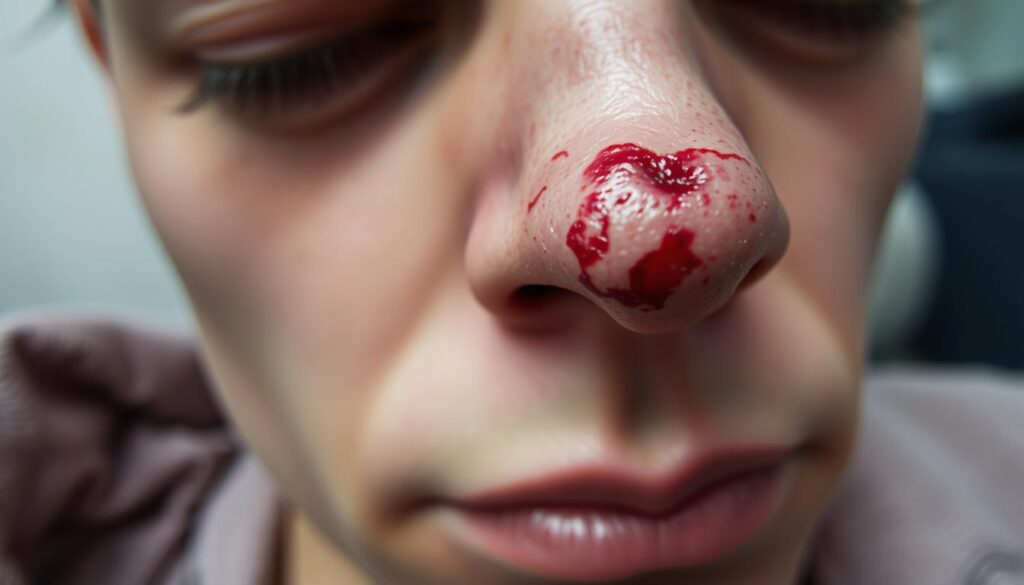
Nasal fractures can be painful and disruptive facial injuries. They often result from sports, accidents, or unexpected trauma. Understanding treatment and recovery is vital for proper healing1.
Broken noses are more common than you might think. Contact sports and physical activities significantly increase your risk1. Children and athletes in high-impact sports are especially vulnerable to nose fractures1.
About 40% of all facial fractures involve the nose. This makes it a major type of facial injury2. The healing process typically takes around three weeks.
During recovery, you may experience swelling and bruising. Complications can arise, requiring careful management3. Professional medical guidance is key to ensure proper healing and prevent long-term issues.
Key Takeaways
- Nose injuries can result from various activities and impact sports
- Most broken noses heal within three weeks
- Immediate medical assessment is crucial for proper treatment
- Avoid sports and high-impact activities during recovery
- Professional medical intervention can prevent long-term complications
Understanding Broken Nose: Signs and Symptoms
A broken nose can be painful and alarming. Knowing the signs is key for proper treatment and recovery. Your nose is delicate and can be hurt easily during various activities.
Common Physical Symptoms
After a nasal injury, you may notice several symptoms. A swollen nose is often the first sign of damage. Other physical signs include:
- Bruised nose with visible discoloration
- Significant pain when touching the nose
- Nosebleed from internal or external areas
- Difficulty breathing through the nasal passages
- Crooked or misaligned nose appearance
Contact sports, fights, and accidents often cause nasal injuries4. If your nose looks very different or keeps bleeding, get emergency medical help right away4.
Associated Complications
An untreated broken nose can lead to serious issues. These potential risks include:
| Complication | Potential Consequences |
|---|---|
| Septal Hematoma | Blood collection that can cause tissue necrosis5 |
| Nasal Deformity | Permanent structural changes to the nose |
| Breathing Difficulties | Long-term respiratory challenges |
Professional medical evaluation is essential to prevent long-term complications and ensure proper healing of your nasal injury.
Your health and proper treatment should always be the top priority when dealing with a potential nose fracture.
Treatment Options for Nasal Fractures
Nasal fractures need careful medical assessment and proper treatment. Your recovery depends on the injury’s severity and when you get help6.
Nasal fracture treatment includes various approaches, from conservative methods to surgery. The main aim is to fix the nose’s structure and function7.
Initial Treatment Methods
- Apply ice packs immediately after injury to reduce swelling8
- Take over-the-counter pain relievers for discomfort
- Seek medical evaluation within 14 days of injury
Medical Intervention Options
For more complex nasal fractures, doctors may suggest:
- Manual Realignment: Repositioning bones and cartilage within 14 days of injury8
- Septoplasty: Reshaping the nasal septum to improve breathing
- Rhinoplasty: Reconstructive surgery for severe or untreated fractures6
Approximately 25% of nasal fractures may require reconstructive surgery if left untreated for two weeks or longer6.
Doctors might do a physical exam and CT scan to check how bad the break is8.
| Treatment Method | Recommended For | Typical Duration |
|---|---|---|
| Conservative Treatment | Minor fractures | 1-2 weeks |
| Manual Realignment | Moderate fractures | Within 14 days |
| Surgical Intervention | Severe or complex fractures | 6 weeks healing time6 |
Your doctor will choose the best Nasal Fracture Treatment for your specific injury7.
Recovery Process and Self-Care Tips
Healing a nasal fracture needs careful attention and proactive care. Your recovery journey involves key steps to ensure proper Broken Nose Healing. These steps help minimize potential complications and promote faster healing.
Immediate Recovery Management
The initial phase of Nasal Fracture Recovery focuses on managing pain and swelling. Your doctor will suggest specific strategies to support healing9:
- Apply cold compresses to reduce swelling
- Take recommended pain medications like ibuprofen or acetaminophen9
- Keep your head elevated to minimize inflammation
- Avoid strenuous activities and contact sports for at least six weeks9
Long-Term Recovery Guidelines
Proper care during Deviated Septum healing can greatly impact your overall recovery. Follow these essential guidelines for the best results:
| Recovery Action | Recommended Approach |
|---|---|
| Wound Care | Clean inside nose with warm soapy water using cotton swabs9 |
| Medical Follow-up | Schedule appointments 1-2 weeks after injury9 |
| Symptom Monitoring | Watch for infection signs like fever or unusual discharge9 |
“Recovery is a process, and patience is your greatest ally in healing a nasal fracture.”
Stay alert for potential complications. Contact your doctor right away if you notice any of these symptoms9:
- Persistent fever
- Foul-smelling nasal discharge
- Sudden numbness
- Increased pain or swelling
- Breathing difficulties
Remember, full recovery typically takes three to six weeks, but individual healing times may vary.
Conclusion
Nasal Fracture Aftercare is crucial for healing a broken nose. Your nose can be injured in sports or workplace accidents. Men face higher risks due to contact sports and risky behaviors10.
Broken Nose Prevention requires proactive safety measures. Wear protective gear during sports. Follow workplace safety rules. Stay alert in dangerous situations10. These simple steps can greatly reduce your risk of nasal fractures11.
Recovery goes beyond initial treatment. Follow your doctor’s advice closely. Attend all follow-up appointments. Be ready for possible procedures like septoplasty for breathing issues10.
Untreated nasal injuries can cause serious problems. These include chronic sinus issues, breathing difficulties, and structural deformities10.
Your recovery journey is unique and requires patience. Seek prompt medical care and follow treatment protocols. This approach helps manage and overcome a broken nose effectively11. Stay informed and prioritize your nasal health.
FAQ
What are the most common symptoms of a broken nose?
Common symptoms include swelling on the nose’s outside and bridge. Pain, a crooked shape, and bleeding from inside or outside the nose may occur. You might have trouble breathing through your nose and see bruising around your eyes.
The nasal area may feel tender and uncomfortable when touched.
How soon should I seek medical attention after a nose injury?
Seek medical care within 14 days of the injury. Quick treatment helps prevent complications like septal hematoma and improper healing. It also ensures the best possible care for your nasal fracture.
What are the treatment options for a broken nose?
Treatment depends on how severe your injury is. Minor fractures may need ice packs and over-the-counter pain relievers. Severe cases might require manual realignment within 14 days of the injury.
Some patients may need surgery like septoplasty or rhinoplasty to reshape the nose and improve breathing.
How long does recovery from a broken nose typically take?
Full recovery usually takes three to six weeks. During this time, avoid strenuous activities and contact sports. The first phase involves managing pain and swelling.
Long-term recovery includes following your doctor’s instructions and going to follow-up appointments.
What complications can arise from an untreated broken nose?
Untreated breaks can lead to septal hematoma, which is blood collection in the nasal septum. Other risks include tissue death, septum holes, and a collapsed nasal bridge.
Breathing problems may persist. These risks show why quick medical care is crucial after a nose injury.
Can I treat a broken nose at home?
Minor injuries might be manageable at home with ice and pain medication. However, it’s vital to get a professional medical evaluation. Some fractures need manual realignment or surgery.
Proper treatment prevents long-term problems and ensures correct healing.
How can I prevent further injury during recovery?
Avoid contact sports and activities that could hurt your nose while healing. Keep your head up and use prescribed treatments as directed. Follow your doctor’s instructions carefully.
Protect your nose from additional harm during the healing process.
Source Links
- Broken Nose: Symptoms, Treatment, and Prevention – https://www.healthline.com/health/nose-fracture
- A Broken Nose – Broken Nose Surgery – ENT Clinic Sydney – https://ent-surgery.com.au/face/a-broken-nose/
- Broken nose – https://www.nhs.uk/conditions/broken-nose/
- Broken nose-Broken nose – Symptoms & causes – Mayo Clinic – https://www.mayoclinic.org/diseases-conditions/broken-nose/symptoms-causes/syc-20370439
- Broken Nose (Fractured Nose): Symptoms and Treatment – https://my.clevelandclinic.org/health/diseases/17772-broken-nose
- What Is the Best Nose Fracture Treatment? – CENTER for Advanced Facial Plastic Surgery – https://www.facialplasticsbh.com/blog/what-can-be-done-for-a-fractured-nose/
- Understanding Nasal Fractures: Causes, Symptoms and Treatment | Midwest ENT Centre | Blog – https://entmidwest.com/understanding-nasal-fractures-causes-symptoms-and-treatment/
- Broken nose-Broken nose – Diagnosis & treatment – Mayo Clinic – https://www.mayoclinic.org/diseases-conditions/broken-nose/diagnosis-treatment/drc-20370444
- Nasal fracture – aftercare Information | Mount Sinai – https://www.mountsinai.org/health-library/selfcare-instructions/nasal-fracture-aftercare
- Broken Nose: Symptoms, Causes, Treatment, and Prevention – https://rungtahospital.com/broken-nose-symptoms-causes-treatment-and-prevention/
- Traumatic nasal injuries in general practice – https://www.racgp.org.au/afp/2016/september/traumatic-nasal-injuries-in-general-practice

