
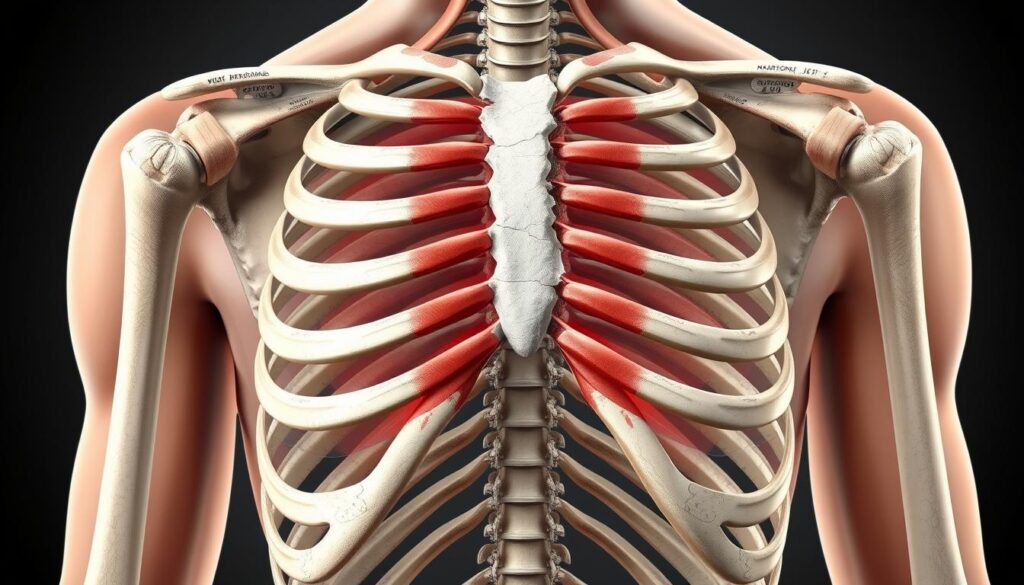
Broken ribs are painful chest injuries that can disrupt your daily life. They often result from blunt trauma or severe coughing. The middle ribs are most likely to break, making proper treatment crucial12.
Rib fractures involve a complex healing process. Recovery typically takes about 6 weeks. Most cases don’t need surgery, allowing you to heal at home with medical guidance21.
Managing broken ribs requires effective pain control and careful monitoring. Ice packs can help reduce swelling and pain. Apply them for 20 minutes every hour during the first two days2.
Prescription pain medications might be necessary during healing. They can help control discomfort and make recovery more comfortable3.
Key Takeaways
- Broken ribs typically occur in the middle chest region
- Recovery usually takes approximately 6 weeks
- Most rib fractures can be treated without surgery
- Pain management is crucial for effective healing
- Deep breathing exercises help prevent complications
Understanding Broken Ribs and Their Symptoms
Rib injuries can cause severe pain and difficulty breathing. Knowing the signs and causes helps with proper recovery and medical care4. Let’s explore the key aspects of broken ribs.
Common Causes of Rib Fractures
Broken ribs often result from specific situations:
- Direct blows to the chest during contact sports4
- Car accidents with significant impact5
- Severe falls4
- Intense coughing episodes5
Athletes in contact sports like hockey face higher risks. People with osteoporosis are also more prone to rib fractures4.
Key Warning Signs and Symptoms
Spotting broken rib symptoms helps you get proper medical care. Look out for these signs:
- Intense chest pain, especially during breathing or coughing6
- Visible bruising around the affected area6
- Swelling or tenderness near injured ribs
- Potential breathing difficulties
Most broken ribs heal within 2 to 6 weeks6. However, complications can occur. These may include damage to blood vessels or internal organs.
Lung punctures are another possible complication4. Seek medical help if you have ongoing chest pain or cough up blood.
Always consult a healthcare professional if you experience persistent chest pain or coughing up blood.
To prevent rib injuries, wear protective gear during sports. Also, maintain bone health through proper nutrition4.
Essential Treatment Approaches for Broken Ribs
Broken ribs need a smart plan for pain control and healing. Your treatment will ease discomfort and support natural recovery. Multiple rib fractures require extra care to avoid problems.
Managing pain is key to getting better. Here are top ways to help you heal:
- Use over-the-counter pain medications like ibuprofen
- Apply ice packs to reduce swelling
- Practice gentle breathing exercises
- Avoid strenuous chest activities
Find a balance between rest and gentle movement. Don’t stay still all the time. Limit activities that strain your chest wall according to medical experts.
*Proper pain control enables deep breathing, which helps prevent potential lung complications.*
Healing usually takes 2 to 6 weeks7. Listen to your body during this time. Get medical help if you notice:
- Worsening pain
- Fever development
- Breathing difficulties
| Recovery Stage | Key Actions | Duration |
|---|---|---|
| Initial Healing | Pain Management | 1-2 weeks |
| Intermediate Recovery | Gentle Exercises | 2-4 weeks |
| Final Recovery | Return to Normal Activities | 4-6 weeks |
Every injury is different. Your doctor can give advice that fits your specific needs8.
Conclusion
Broken rib recovery needs patience and care. Healing time varies based on injury severity and overall health9. Most people heal within 6 weeks, but keeping track of progress is vital10.
Focus on pain control and gentle rehab during recovery. Over one-third of patients may face breathing issues9. Work closely with your healthcare team.
Breathing exercises and slow movements help prevent lung problems. They also support your body’s natural healing. Your medical team will create a plan just for you.
Older patients or those with conditions like osteoporosis may need extra care10. Each broken rib case is different. Personal medical advice is key to getting better.
Stay positive and follow your doctor’s orders. This will boost your chances of full recovery. Be patient, listen to your body, and trust the healing process.
FAQ
What are the most common causes of broken ribs?
Broken ribs often result from blunt trauma like falls, sports injuries, or car accidents. Severe coughing, direct chest impacts, and workplace accidents can also cause rib fractures. High-impact activities pose a risk too.
How do I know if my rib is actually broken?
Intense chest pain when breathing or moving might indicate a broken rib. You may hear a cracking sound or feel swelling around the injured area. Bruising could also appear.
If you suspect a broken rib, seek a professional medical exam. X-rays or CT scans can confirm the diagnosis.
How long does it take to recover from broken ribs?
Most rib fractures heal within 2 to 6 weeks. Recovery time depends on injury severity and your overall health. Following medical advice is crucial for proper healing.
Manage pain, do breathing exercises, and slowly return to normal activities. These steps aid in recovery.
What pain relief options are available for broken ribs?
Over-the-counter medications like ibuprofen can help with pain and inflammation. Ice packs reduce swelling in the affected area. Your doctor may recommend prescription painkillers if needed.
Always consult a medical professional about the best pain management strategy for you.
When should I seek immediate medical attention?
Seek immediate help if you have severe chest pain or trouble breathing. Coughing up blood, developing a fever, or worsening pain are also red flags.
These symptoms could signal serious complications like pneumonia or lung collapse. Don’t ignore them.
Can I continue my normal activities with broken ribs?
Avoid strenuous activities and movements that cause pain. Rest is important, but don’t stay completely still. Do gentle breathing exercises as recommended by your doctor.
Gradually return to normal activities following your healthcare provider’s advice. This approach promotes proper healing.
Are there any long-term complications from broken ribs?
Most rib fractures heal without issues. However, some risks include chronic pain and increased chance of respiratory infections. People with conditions like asthma may face additional complications.
Proper treatment and follow-up care can reduce these risks. Always follow your doctor’s instructions.
How can I prevent lung complications during rib fracture recovery?
Use an incentive spirometer for deep breathing exercises. Practice controlled coughing techniques to clear your lungs. Keep pain well-managed to breathe comfortably.
These strategies help prevent lung infections and pneumonia during recovery. Follow your doctor’s advice closely.
Source Links
- Broken rib: Symptoms, diagnosis, treatment, and recovery – https://www.medicalnewstoday.com/articles/326109
- Rib fracture – aftercare Information | Mount Sinai – https://www.mountsinai.org/health-library/selfcare-instructions/rib-fracture-aftercare
- Treatment for Broken Ribs: Exercises and Other Tips for Recovery – https://www.healthline.com/health/treatment-for-broken-ribs
- Broken ribs – Symptoms and causes – https://www.mayoclinic.org/diseases-conditions/broken-ribs/symptoms-causes/syc-20350763
- Broken Rib – https://www.columbiadoctors.org/health-library/condition/broken-rib/
- Broken or bruised ribs – https://www.nhs.uk/conditions/broken-or-bruised-ribs/
- Initial evaluation and management of rib fractures – https://www.uptodate.com/contents/initial-evaluation-and-management-of-rib-fractures
- The ideal methods for the management of rib fractures – https://pmc.ncbi.nlm.nih.gov/articles/PMC6545517/
- Rib fracture displacement worsens over time – European Journal of Trauma and Emergency Surgery – https://link.springer.com/article/10.1007/s00068-020-01353-w
- Rib Fracture – StatPearls – NCBI Bookshelf – https://www.ncbi.nlm.nih.gov/books/NBK541020/

