
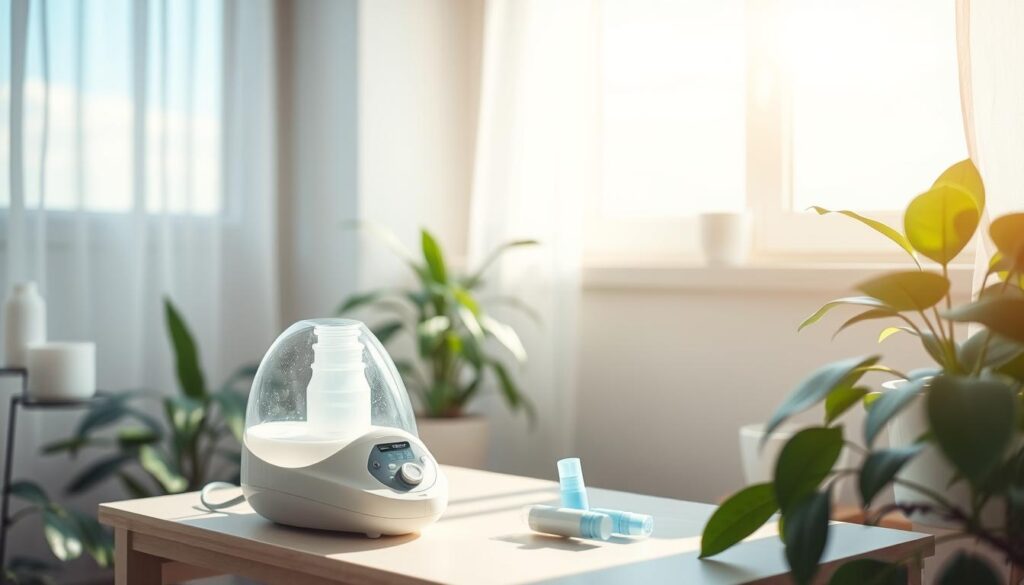
Budesonide is a powerful partner for better breathing. It offers hope to those with asthma and other respiratory issues. This medication provides targeted relief and long-term management for adults and children over six1.
Budesonide works to prevent and manage asthma symptoms. It reduces airway inflammation, helping you breathe easier. This medication isn’t a quick fix, but a strategic approach to respiratory care1.
Various inhaler options are available for personalized treatment. You can find a strategy that fits your specific needs. Consistent use is key for optimal results1.
Key Takeaways
- Budesonide helps prevent and control respiratory symptoms
- Available for adults and children with different inhalation methods
- Targets airway inflammation for better breathing
- Requires consistent use for optimal results
- Recommended for long-term respiratory health management
Understanding Budesonide and Its Role in Respiratory Care
Breathing challenges can greatly affect your daily life. Budesonide helps manage respiratory conditions, offering hope for asthma and COPD sufferers. It’s a powerful ally in the fight for easier breathing.
What is Budesonide and Its Mechanism of Action
Budesonide is a strong corticosteroid that fights respiratory inflammation. It reduces airway swelling, making breathing easier and more comfortable2. This medication targets the root cause of breathing problems.
It prevents symptoms before they worsen. Budesonide decreases inflammation, stops asthma and COPD symptoms, and boosts lung function.
- Decreases airway inflammation
- Prevents asthma and COPD symptoms
- Improves overall lung function
Budesonide Inhaler Types
You have several options for taking budesonide2:
- Pressurized Metered-Dose Inhalers (pMDI)
- Dry Powder Inhalers (DPI)
- Nebulizer Solutions
- Combination Inhalers with Bronchodilators
Benefits of Budesonide Treatment
Budesonide offers major benefits for asthma and COPD management2. It can reduce respiratory attacks and improve lung function. Regular use enhances overall quality of life.
Daily use is crucial for the best results2. Consistency helps you experience the full benefits of this medication.
“Breathe easier, live better with budesonide” – Respiratory Health Experts
Always rinse your mouth after using the inhaler. This prevents potential infections2. Consult your doctor to find the best treatment plan for your needs.
Disclaimer: Individual results may vary. Potential side effects should be discussed with a medical professional3.
Essential Guidelines for Safe and Effective Budesonide Use
Budesonide dosage for asthma or COPD prevention typically ranges from 1-2 puffs once or twice daily. Your doctor may adjust this based on your condition. Proper inhaler technique is crucial for effective medication use.
Different inhaler types include pressurized metered dose inhalers (pMDIs), breath-actuated inhalers (BAIs), and dry powder inhalers (DPIs). For children under 15, spacers are recommended with pMDIs.
Always confirm your inhaler technique with your healthcare provider to ensure optimal medication delivery4.
- Pressurized metered dose inhalers (pMDIs)
- Breath-actuated inhalers (BAIs)
- Dry powder inhalers (DPIs)
Budesonide use can cause side effects. These may include throat irritation, hoarseness, and oral fungal infections. Long-term use might affect bone density and children’s growth5.
Important: Never stop using budesonide abruptly without consulting your healthcare provider4.
Remember these key points for safe budesonide use:
- Use your inhaler regularly, even without symptoms
- Rinse your mouth after each use to prevent oral thrush
- Carry a steroid emergency card if using long-term
Following these guidelines helps manage your respiratory condition effectively. It also minimizes potential risks associated with budesonide use6.
Conclusion
Budesonide offers hope for patients with chronic lung diseases. It’s a proactive approach to control symptoms and improve lung function7. While not a cure, budesonide provides significant relief and helps maintain better respiratory health7.
Understanding budesonide’s benefits helps you work closely with healthcare professionals. Its targeted approach minimizes side effects, making it ideal for long-term use8. Proper administration and open communication with your doctor optimize your treatment strategy.
Respiratory care involves more than just medication. Regular check-ups and a healthy lifestyle complement budesonide’s role in your treatment plan7. This comprehensive approach helps you breathe easier and enjoy life more fully.
FAQ
What is Budesonide used for?
Budesonide is a corticosteroid that prevents and controls asthma and COPD symptoms. It reduces airway inflammation, easing breathing and managing chronic respiratory conditions.
How does Budesonide work in my body?
Budesonide decreases swelling and irritation in your airways. It prevents breathing issues by reducing inflammation. However, it doesn’t provide immediate relief during acute attacks.
What types of Budesonide inhalers are available?
Budesonide comes in several inhaler types. These include pressurized metered-dose inhalers (pMDIs), breath-actuated inhalers (BAIs), and dry powder inhalers (DPIs).
It’s also available as a suspension for nebulizers. This form is often used for children or those who struggle with handheld inhalers.
What are the main benefits of Budesonide treatment?
Budesonide offers significant benefits for respiratory health. It controls asthma symptoms and reduces attack frequency. The medication also improves lung function and manages COPD symptoms.
Regular use can decrease reliance on quick-relief inhalers. It may also reduce the need for oral steroids.
How should I use Budesonide?
Typical dosage is 1-2 puffs once or twice daily. Dosage depends on your condition and its severity. It’s crucial to use the inhaler correctly, following device-specific instructions.
Remember to rinse your mouth after use. This prevents oral thrush and reduces the risk of fungal infections.
What side effects should I be aware of?
Potential side effects include hoarseness, throat irritation, and oral fungal infections. Long-term use requires regular check-ups to monitor for systemic effects.
Always consult your healthcare provider about any concerns. Don’t stop using Budesonide abruptly without medical advice.
Is Budesonide an immediate relief medication?
No, Budesonide isn’t for immediate relief. It’s for long-term management and prevention of respiratory symptoms. For acute attacks, you’ll need a separate quick-relief inhaler.
Can children use Budesonide?
Yes, children can use Budesonide. It’s often given through nebulizer solutions or pediatric inhalers. A healthcare professional should determine the dosage based on the child’s needs.
Source Links
- Budesonide Oral Inhalation: MedlinePlus Drug Information – https://medlineplus.gov/druginfo/meds/a699056.html
- About budesonide inhalers – https://www.nhs.uk/medicines/budesonide-inhalers/about-budesonide-inhalers/
- Budesonide (inhalation route) – https://www.mayoclinic.org/drugs-supplements/budesonide-inhalation-route/description/drg-20071233
- How and when to use budesonide inhalers – https://www.nhs.uk/medicines/budesonide-inhalers/how-and-when-to-use-budesonide-inhalers/
- Budesonide and formoterol (inhalation route) – https://www.mayoclinic.org/drugs-supplements/budesonide-and-formoterol-inhalation-route/description/drg-20068949
- How and when to take budesonide tablets, capsules and granules – https://www.nhs.uk/medicines/budesonide-tablets-capsules-and-granules/how-and-when-to-take-budesonide-tablets-capsules-and-granules/
- Budesonide and Albuterol Oral Inhalation: MedlinePlus Drug Information – https://medlineplus.gov/druginfo/meds/a623009.html
- Therapeutic benefits of budesonide in gastroenterology – https://pmc.ncbi.nlm.nih.gov/articles/PMC3513866/

