
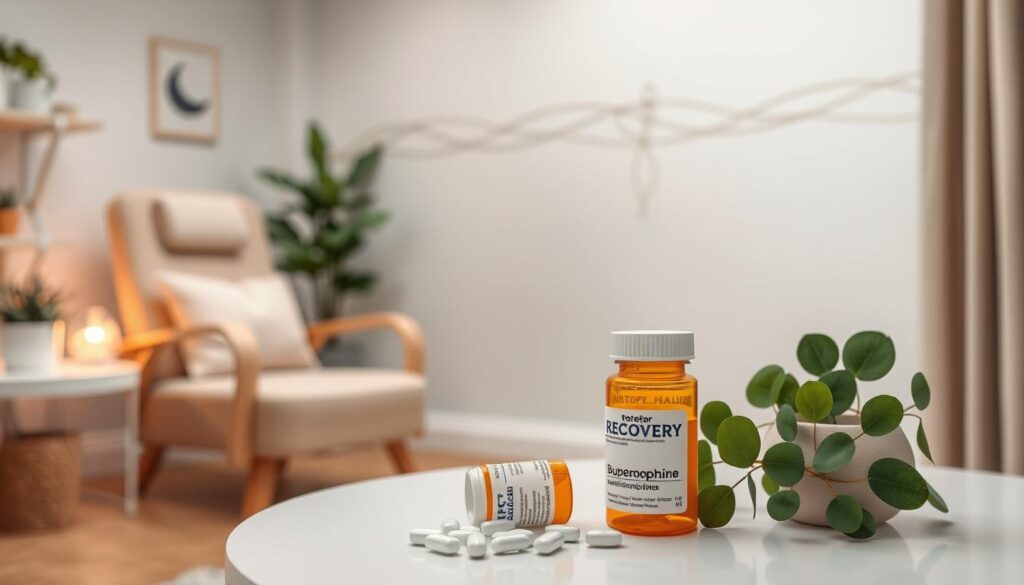
Opioid addiction affects millions of Americans. Suboxone, a treatment combining buprenorphine and naloxone, offers hope for those struggling. Buprenorphine can be prescribed in physician offices, expanding treatment access1.
This innovative approach provides a comprehensive solution for recovery. The unique combination addresses both physical and psychological aspects of addiction. Buprenorphine reduces cravings and withdrawal symptoms without producing intense euphoria2.
Naloxone acts as a safeguard, deterring potential misuse of the medication2. This combination offers a safer option for those seeking help.
Key Takeaways
- Buprenorphine offers a groundbreaking approach to opioid dependence treatment
- Medication can be prescribed directly in physician offices
- Reduces withdrawal symptoms and drug cravings effectively
- Combines two medications to prevent potential misuse
- Part of a comprehensive treatment strategy
Recovery is unique for everyone. Medication-assisted treatment offers a scientifically backed approach to overcoming opioid addiction. Working with healthcare professionals helps develop a personalized treatment plan1.
Understanding opioid use disorder is crucial. Buprenorphine should be part of a plan including counseling and support services1. This approach maximizes your chances of long-term recovery.
Understanding the Role of Buprenorphine/Naloxone in Addiction Treatment
Opioid dependency affects millions worldwide. Subutex and similar medications offer hope for those battling addiction. These drugs provide a science-backed approach to managing opioid withdrawal.
Medication-assisted treatment has transformed opioid dependence care. The buprenorphine and naloxone combo is a breakthrough in tackling complex addiction issues.
How Buprenorphine Works as a Partial Opioid Agonist
Buprenorphine acts as a partial opioid agonist in the body. It binds to opioid receptors with reduced activation, creating a safety mechanism.
This approach helps patients manage withdrawal symptoms at Suboxone clinics. It also minimizes potential risks3.
- Provides controlled symptom management
- Reduces risk of respiratory depression
- Limits potential for full opioid effects
Benefits of Combined Buprenorphine/Naloxone Therapy
Buprenorphine and naloxone offer many advantages for addiction treatment. The 4:1 ratio deters misuse while supporting recovery4.
| Treatment Aspect | Benefit |
|---|---|
| Craving Reduction | Minimizes intense drug desires |
| Abuse Deterrence | Prevents injectable misuse |
| Withdrawal Management | Provides controlled symptom relief |
Safety Profile and Risk Management
Understanding potential risks is crucial in opioid withdrawal management. Patients should know possible side effects and work with healthcare providers.
“Careful monitoring and professional guidance are essential in successful addiction recovery.”
Key safety considerations include watching for drug interactions. It’s also important to manage dosage carefully. Maintain open communication with medical professionals throughout treatment.
Treatment Protocol and Administration Methods
Suboxone treatment for opioid use disorder follows a structured medication-assisted protocol. It starts with an induction phase under medical supervision5. Treatment begins when you experience mild to moderate withdrawal symptoms.
Suboxone dosage is personalized for each patient. Initial doses usually range from 2-8 mg5. Your doctor will adjust the dose based on your specific needs.
- Initial sublingual or buccal administration
- Medication dissolves completely under the tongue
- Maintenance doses ranging from 4-24 mg daily
The correct administration method is vital for Suboxone treatment. Patients place the film under their tongue until it dissolves completely5. This ensures maximum absorption of the medication.
The medication comes in various strengths. These include 2 mg/0.5 mg, 4 mg/1 mg, and 8 mg/2 mg combinations of buprenorphine and naloxone.
Successful treatment extends beyond medication – it requires comprehensive support and ongoing medical guidance.
Some patients may benefit from monthly subcutaneous injections. Treatment duration is flexible and may continue indefinitely based on individual progress6.
Patient monitoring is crucial throughout the treatment process. Regular counseling and psychosocial support complement the medication. This ensures a holistic approach to overcoming opioid use disorder.
Conclusion
Medication for opioid use disorder is a crucial advancement in tackling addiction. Buprenorphine/naloxone offers a science-based approach to support recovery, effectively reducing opioid dependency7. This medication provides a strategic path to healing, especially when other methods have failed8.
Understanding Suboxone’s unique properties can boost your recovery journey. The combination medication stabilizes treatment outcomes and shows impressive completion rates8. It minimizes withdrawal symptoms while blocking potential opioid misuse, making it a powerful addiction management tool7.
Expert guidance is key when recovering from opioid addiction. Work with healthcare providers to create a personalized treatment plan. This should combine medication with counseling and support systems.
Ongoing research refines our knowledge of buprenorphine/naloxone’s life-changing potential. It offers hope and practical solutions for those battling substance use disorders78.
FAQ
What is Buprenorphine/Naloxone used for?
Buprenorphine/Naloxone treats opioid use disorder. It eases cravings and withdrawal symptoms while blocking euphoric effects. This medication is part of a complete treatment plan with counseling and behavioral therapies.
How does Buprenorphine work in treating opioid addiction?
Buprenorphine is a partial opioid agonist. It binds to opioid receptors but activates them less than full agonists. This creates a “ceiling effect” that lowers overdose risk.
The medication helps manage withdrawal symptoms. It also reduces the intense cravings linked to opioid dependence.
Why is Naloxone included in the medication?
Naloxone deters misuse of the medication. If injected or snorted, it triggers withdrawal symptoms. This discourages improper use and makes the treatment safer for patients.
How is Buprenorphine/Naloxone administered?
The medication dissolves under the tongue or between the cheek and gum. Initial doses range from 2-8 mg. Maintenance doses are usually 4-24 mg daily, based on individual needs.
What are the main benefits of this treatment?
Key benefits include fewer cravings and less illicit opioid use. It also improves treatment retention and lowers overdose risk. Office-based prescribing makes treatment more accessible to those struggling with addiction.
Are there any side effects or risks?
Buprenorphine/Naloxone can have side effects like any medication. It may interact with other central nervous system depressants. Patients need careful medical supervision.
Follow your healthcare provider’s guidance closely. Report any unusual symptoms or concerns promptly.
How long does treatment typically last?
Treatment duration varies for each person. Some patients may need long-term maintenance. Others might have shorter treatment periods. The approach depends on progress, recovery goals, and medical assessment.
Can this medication be used alone in treating opioid addiction?
Buprenorphine/Naloxone works best as part of a full treatment plan. This includes ongoing counseling and behavioral therapies. Psychosocial support helps address underlying causes of addiction and supports long-term recovery.
Source Links
- Buprenorphine – https://www.samhsa.gov/medications-substance-use-disorders/medications-counseling-related-conditions/buprenorphine
- Buprenorphine for Opioid Use Disorder – https://www.health.ny.gov/publications/0111.pdf
- Buprenorphine Quick Start Guide – https://www.samhsa.gov/sites/default/files/quick-start-guide.pdf
- Buprenorphine and Buprenorphine/Naloxone Diversion, Misuse, and Illicit Use: An International Review – https://pmc.ncbi.nlm.nih.gov/articles/PMC3154701/
- label – https://www.accessdata.fda.gov/drugsatfda_docs/label/2018/022410s033,020732s019,020733s023lbl.pdf
- Buprenorphine tapering schedule and illicit opioid use – https://pmc.ncbi.nlm.nih.gov/articles/PMC3150159/
- Buprenorphine/naloxone – one formulation that doesn’t fit all: a case report – Harm Reduction Journal – https://harmreductionjournal.biomedcentral.com/articles/10.1186/s12954-024-01054-2
- Main Study Findings and Author’s Conclusions – Buprenorphine/Naloxone Versus Methadone for the Treatment of Opioid Dependence: A Review of Comparative Clinical Effectiveness, Cost-Effectiveness and Guidelines – https://www.ncbi.nlm.nih.gov/books/NBK385170/

