
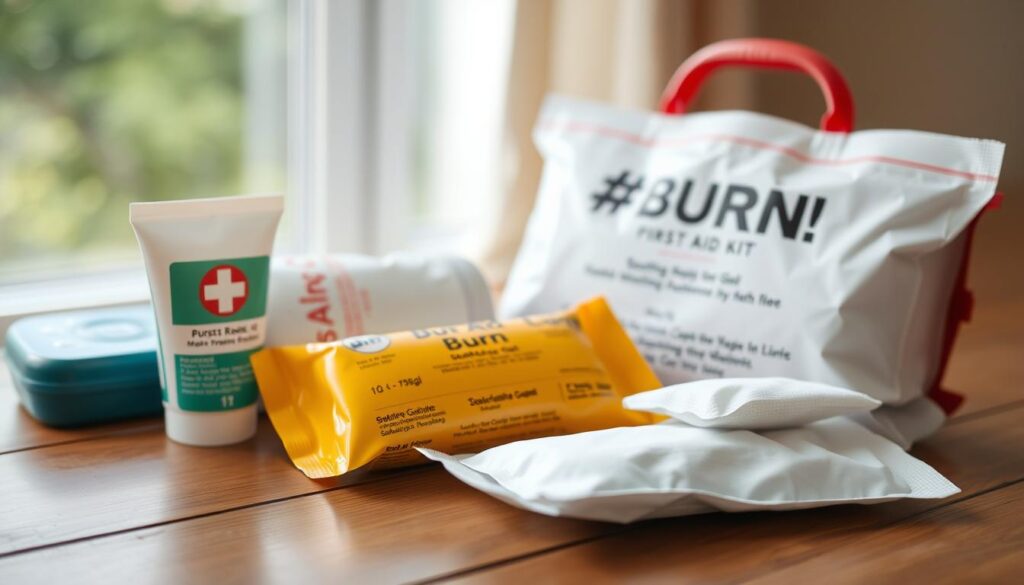
Burns are serious injuries that can happen unexpectedly. Quick action is vital to prevent further harm and promote healing1. Knowing the right burn relief techniques can make a big difference2.
Burns come from hot liquids, flames, or electrical gear. They cause tissue damage, ranging from minor surface injuries to severe wounds1. Signs include pain, redness, blisters, and skin changes2.
Fast, proper first aid is key. Cool the burn under cold water for 20 minutes to ease pain and reduce scarring1. It’s crucial to know when to get professional help, especially for kids or sensitive areas2.
Key Takeaways
- Burns can be caused by dry heat, liquids, chemicals, or electricity
- Immediate cooling can reduce burn severity
- Not all burns require the same treatment
- Professional medical advice is crucial for serious burns
- Proper first aid can prevent further skin damage
Understanding Burn Types and Severity Levels
Burns can range from minor surface damages to life-threatening conditions. Recognizing different burn types is vital for proper treatment. Your knowledge can greatly impact medical response and recovery.
https://www.youtube.com/watch?v=Dsvtzwp4nG8
Burn severity depends on depth, size, and injury location. Medical experts classify burns into three main levels.
- First-degree burns: Affect only the outer skin layer, causing redness and mild pain34
- Second-degree burns: Damage outer and underlying skin layers, causing blisters and swelling34
- Third-degree burns: Destroy multiple skin layers, potentially causing permanent tissue damage34
Minor Burns vs Major Burns: Key Differences
Telling minor and major burns apart is crucial for proper treatment. Minor burns affect small areas and top skin layers. Major burns are more extensive and can be life-threatening4.
Common Causes of Skin Burns
Burns can result from various sources. Some groups face higher risks than others.
“Understanding burn risks is the first step in effective burn prevention.” – Burn Safety Expert
When to Seek Emergency Medical Care
Quick medical help is crucial for serious burns. Get emergency care for:
- Burns larger than 2-3 inches
- Burns on sensitive areas like face, hands, or joints
- Third-degree burns of any size
- Signs of shock or extensive tissue damage34
Stay alert and respond quickly to potential burn risks. Your awareness can prevent serious injuries.
Burns First Aid: Immediate Treatment Steps
Quick and proper first aid can make a big difference for skin burns. It helps with healing and prevents further damage. Knowing how to care for burns is key to reducing pain and complications6.
- Cool the burn under running water for 20 minutes
- Remove any tight clothing or jewelry near the burned area
- Apply gentle burn ointments with aloe vera or cocoa butter
- Use sterile burn dressings to cover the wound loosely
Serious burns need immediate medical help. Burns larger than your hand should be checked at a hospital. Chemical and electrical burns need special care and quick treatment6.
Remember: Never use ice, greasy substances, or home remedies on significant burns.
The American Red Cross suggests specific first aid for different burn types7. They stress the importance of proper aftercare to prevent infection and help healing.
| Burn Type | Recommended Action |
|---|---|
| Minor Burns | Cool water, burn ointment, sterile dressing |
| Chemical Burns | Immediate medical attention, identify chemical |
| Electrical Burns | Do not approach, call emergency services |
Your quick response and careful treatment can significantly impact burn recovery.
Conclusion
Burn treatment knowledge is vital for effective healing and preventing complications. Burns are common injuries in various settings. Your approach to burn care can greatly affect recovery outcomes.
Burn prevention should be your top priority. Many people lack proper burn first aid knowledge. Good first aid can ease pain and limit damage8.
Learn about different burn types, from first-degree to third-degree. This helps you know when to seek medical help9.
Professional medical advice is crucial for complex burn cases. Some burns can cause serious issues like infections and scarring9. Stay informed to manage burn injuries effectively.
For detailed guidelines, check out burn care resources. These offer insights into treatment protocols.
Your quick action and knowledge can greatly impact burn treatment. Stay informed and prepared to handle burn emergencies safely.
FAQ
What are the different types of burns?
Burns are classified by severity and depth. Minor burns affect only the outer skin layer. They can usually be treated at home. Major burns are deeper and larger than 3 inches. They require immediate medical attention.
What are the common causes of burns?
Burns can be caused by hot liquids, flames, chemicals, electricity, steam, and sun exposure. Children often get burned by hot drinks, soups, and microwaved foods in the kitchen.
How do I treat a minor burn at home?
Cool the burn under running water for 20 minutes. Remove any tight items near the burn. Apply a lotion with aloe vera or cocoa butter.
Loosely bandage the burn. Avoid using ice or cold water. Don’t break any blisters that form.
When should I seek emergency medical care for a burn?
Seek immediate help for major burns, electrical burns, chemical burns, or burns on sensitive areas. Watch for burns larger than the person’s hand or deep burns with white skin.
Burns on the face, neck, joints, or genitals also need urgent care.
What should I do for a major burn while waiting for medical help?
Protect the person from further harm. Make sure they’re breathing. Remove tight items near the burn. Cover the burn with clean gauze or cloth.
Elevate the burned area. Don’t apply ice, iced water, or greasy substances to the burn.
How can I prevent burns in the kitchen?
Use caution with hot liquids. Turn pot handles inward. Keep kids away from hot stoves and appliances. Use oven mitts when handling hot items.
Be careful when removing food from microwaves or ovens.
What pain relief can I use for burns?
You can use over-the-counter medications like paracetamol or ibuprofen for burn pain. Always follow the recommended dosage. Consult a doctor if you’re unsure about treatment.
How do I care for a burn after initial treatment?
Keep the burned area clean and dry. Avoid direct sun exposure, especially in the first year. Watch for signs of infection.
Consult a doctor if the burn doesn’t heal properly or shows signs of complications.
Source Links
- Learn first aid for burns | British Red Cross – https://www.redcross.org.uk/first-aid/learn-first-aid/burns
- Burns and scalds – https://www.nhsinform.scot/illnesses-and-conditions/injuries/skin-injuries/burns-and-scalds/
- Burn Severity and Treatment – https://www.templehealth.org/services/burn/how-to-treat-burn/severity
- Burns: MedlinePlus Medical Encyclopedia – https://medlineplus.gov/ency/article/000030.htm
- Burns and Wounds – https://www.hopkinsmedicine.org/health/conditions-and-diseases/burns
- Burns and scalds – Treatment – https://www.nhs.uk/conditions/burns-and-scalds/treatment/
- Burns: Types, Symptoms, and How To Help | Red Cross – https://www.redcross.org/take-a-class/resources/learn-first-aid/burns?srsltid=AfmBOoo0mzMyca8CX_Y9y_hSzDEBkj6c7O6Z1ybYiHh-p8JsPZ6Xob3d
- Burn Basic First Aid: When to Seek Medical Help – https://www.aksharhospitals.com/blog/the-importance-of-burn-first-aid-when-to-seek-medical-help
- First Aid for Burns: Types, Symptoms & Treatment – https://cprcare.com/blog/first-aid-guide-for-burns/

