
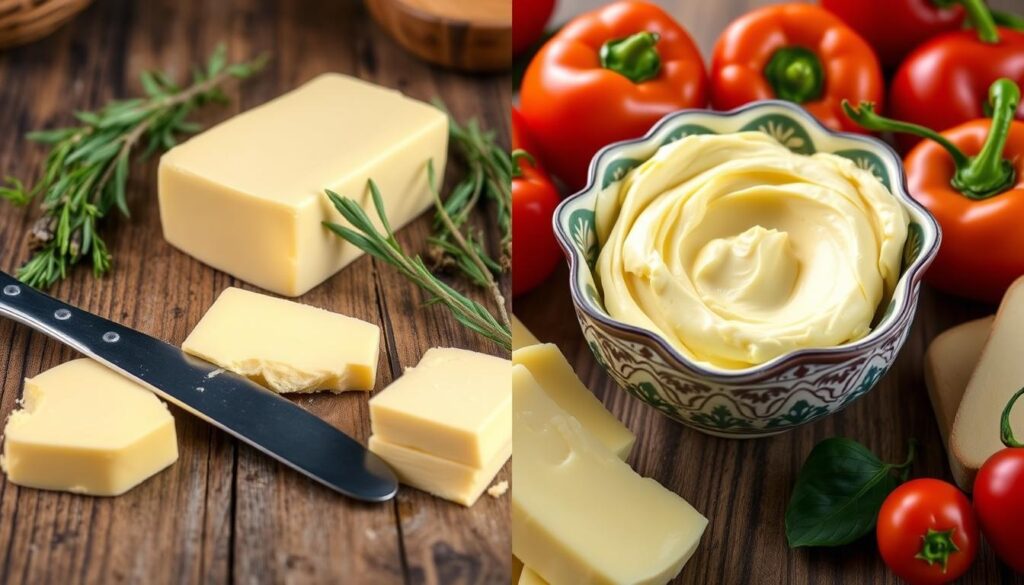
Butter and margarine are popular spreads with different nutritional profiles. Butter is a dairy product high in saturated fat. Margarine is made from vegetable oils and offers an alternative1. Your choice can impact your cholesterol levels and overall health1.
Butter contains 80-82% milk fat, with water and milk solids making up the rest1. Margarine is processed and may include trans fats2. However, trans fat-free margarines are now widely available1.
The health effects of these spreads are complex. Margarine can increase bad cholesterol and decrease good cholesterol1. Some studies show it might raise heart disease risk by 53% in women1.
Key Takeaways
- Butter and margarine have distinct nutritional profiles
- Saturated fat content varies between spreads
- Trans fats can have significant health implications
- Cholesterol levels may be affected by spread choices
- Modern alternatives offer healthier options
Understanding the Basics of Spreads
Butter and margarine have unique histories and production methods. These spreads differ in their nutritional profiles and culinary uses. Let’s explore their origins and how they’re made.
What is Butter and How It’s Made
Butter is a dairy product made by churning cream from milk. The process separates milk fat from liquid, creating a rich, creamy spread.
Grass-fed cow butter often contains extra nutrients like vitamin K2 and conjugated linoleic acid (CLA). Butter is known for its high saturated fat content3.
What is Margarine and Its Production Process
Margarine is a plant-based alternative created in France in 1869. It was developed to solve butter shortages4.
Made from vegetable oils like sunflower, canola, or olive oil, margarine undergoes hydrogenation. This process turns liquid oils into a solid spread5.
Key Ingredients and Composition
Margarine’s composition varies widely, with modern versions focusing on healthier fats. They aim to reduce trans fats and increase unsaturated fat content.
- Minimum 80% fat content5
- Potential vitamin fortification5
- Inclusion of emulsifiers and preservatives5
- Different formulations like soft, whipped, and spreadable varieties5
“Margarine represents a fascinating intersection of nutrition, technology, and culinary innovation.”
Knowing about these spreads helps you make smart food choices. You can balance taste, nutrition, and health goals more easily.
Butter vs. Margarine: Nutritional Comparison
Butter and margarine have unique nutritional profiles. Knowing these differences can help you make better food choices. Let’s explore these popular spreads and their impact on your health6.
- Butter contains 11g of total fat per tablespoon, with 7g being saturated fat7
- Stick margarine provides similar total fat but with different fat composition6
| Spread Type | Total Fat (g) | Saturated Fat (g) | Trans Fat (g) | Calories | Cholesterol (mg) |
|---|---|---|---|---|---|
| Butter | 11 | 7 | 0 | 100 | 30 |
| Stick Margarine | 11 | 2 | 3 | 100 | 0 |
| Soft/Tub Margarine | 7 | 1 | 0.5 | 60 | 0 |
Margarine makers have been cutting out trans fats, making newer versions healthier6. Some margarines now include plant compounds called phytosterols. These might help lower blood cholesterol levels6.
Your individual dietary needs will ultimately determine which spread is best for you6.
The 2017 American Heart Association notes that saturated fat can raise LDL cholesterol. Consider your health goals when picking between butter and margarine6.
Health Impact of Different Spreads
Butter and margarine affect your heart health differently. Their unique nutritional profiles play a key role in how they impact your body8.
Cardiovascular Health Considerations
Margarine and butter affect your heart differently. Plant-based margarine can lower cholesterol when it replaces saturated fat in your diet8.
Some margarines contain polyunsaturated fats. These fats may help reduce your risk of heart disease9.
Cholesterol Level Impacts
Your spread choice can greatly affect your cholesterol. Butter is about 50% saturated fat, which may raise “bad” LDL cholesterol9.
Margarine with phytosterols can help lower total cholesterol9. This makes it a better option for some people.
| Spread Type | Saturated Fat | Cholesterol Impact |
|---|---|---|
| Butter | 50% | Increases LDL |
| Margarine | Varies | Can Lower LDL |
Weight Management Insights
Be careful with spreads when watching your weight. Both butter and margarine pack a lot of calories8.
Look for spreads with less than 10% daily value of saturated fat. Also, check labels for salt content8.
- Select tub margarines with lower saturated fat
- Use spreads sparingly
- Consider overall dietary patterns
Remember, your individual health needs should guide your spread selection.
Conclusion
The butter versus margarine debate requires a balanced approach. Research shows that not all spreads are equal. Switching to tub margarine from stick margarine may lower heart-related risks10.
Knowing dietary guidelines helps you make smart food choices. Heart-healthy alternatives are vital for overall wellness. Focus on quality ingredients and nutritional value when picking spreads.
Studies show that cutting saturated fat without guidance can have unintended effects11. Soft margarine made from olive or canola oils can be heart-healthy options.
The best choice depends on your individual health needs. Whether you choose grass-fed butter or select margarine, moderation is key. Read labels carefully and watch your total fat intake.
Your diet is unique to you. Talk to nutrition experts to learn how butter or margarine fits into your balanced diet. They can help you support your specific health goals.
FAQ
What’s the main difference between butter and margarine?
Butter is a dairy product made from cream. It contains about 80% milk fat. Margarine is a processed spread created from vegetable oils.
Butter is natural with saturated fats. Margarine is made from plant-based oils. These oils are hydrogenated to become solid.
Is butter or margarine healthier?
The answer depends on the type and brand. Modern margarine can be healthier. Soft or liquid varieties with no trans fats are better options.
Butter from grass-fed cows offers extra nutrients like vitamin K2. However, it’s higher in saturated fat. Choose high-quality options and eat them in moderation.
How do the nutritional profiles differ?
Butter has more saturated fats and cholesterol. It also contains fat-soluble vitamins A, D, and E. Margarine typically has more unsaturated fats.
Many margarines are fortified with added vitamins. They generally have lower cholesterol. Most modern margarines are now trans-fat-free, making them potentially heart-healthier.
Can I use butter and margarine interchangeably in cooking?
Not always. Butter has a richer flavor. It works best in baking and cooking where taste is crucial.
Margarine can substitute in many recipes. Pay attention to the type (stick or soft) and water content. Some margarines are made specifically for baking or cooking.
How does each spread impact heart health?
Recent studies show mixed results. Current research on saturated fats and heart disease is more nuanced. Margarine’s unsaturated fats may help lower LDL cholesterol.
Butter from grass-fed cows might offer some heart benefits. These come from compounds like conjugated linoleic acid (CLA).
What should I look for when choosing between butter and margarine?
Check the nutrition label carefully. Look for margarines with no trans fats and lower saturated fat content. Choose options with added beneficial nutrients.
For butter, consider options from grass-fed cows. The best choice depends on your health goals and dietary needs.
Are there any health benefits to either spread?
Both have potential benefits. Butter provides vitamins A, D, E, and K2 (if from grass-fed cows). Margarine can offer heart-healthy unsaturated fats.
Some margarine brands are fortified with extra vitamins. Choose high-quality options and eat them in moderation for the best results.
Source Links
- Butter versus Margarine: Which is Healthier? – https://www.news-medical.net/health/Butter-versus-Margarine-Which-is-Healthier.aspx
- Margarine vs. butter: which is healthier? – https://www.bhf.org.uk/informationsupport/heart-matters-magazine/nutrition/ask-the-expert/margarine-vs-butter
- Butter vs Margarine: Everything You Need To Know for Baking – https://nutrimill.com/blogs/life-in-healthy-balance/butter-vs-margarine-everything-you-need-to-know-for-baking?srsltid=AfmBOop1y0Zj66PdFuqkG1zedmsY5-8U6trasudUn9xg4SK9DcBxAe-n
- Buttery Spread vs Margarine – What’s the Difference? – https://godairyfree.org/food-and-grocery/buttery-spread-margarine-differences
- Margarines and Spreads – Oklahoma State University – https://extension.okstate.edu/fact-sheets/margarines-and-spreads.html
- Butter vs. margarine: Which is most healthful? – https://www.medicalnewstoday.com/articles/304283
- Ask an expert: Butter vs. margarine – which is better for you? – https://blog.providence.org/regional-blog-news/ask-an-expert-butter-vs-margarine-which-is-better-for-you
- Butter vs. margarine: Which is better for my heart? – https://www.mayoclinic.org/healthy-lifestyle/nutrition-and-healthy-eating/expert-answers/butter-vs-margarine/faq-20058152
- Butter vs. Margarine: Which Is Healthier? – https://www.healthline.com/nutrition/butter-vs-margarine
- Theoretical effects of substituting butter with margarine on risk of cardiovascular disease – https://pmc.ncbi.nlm.nih.gov/articles/PMC5480968/
- What’s better for your health? Butter or margarine? Find out what an Allina Health bariatric dietitian thinks. – https://www.allinahealth.org/healthysetgo/nourish/butter-vs-margarine-whats-better

