
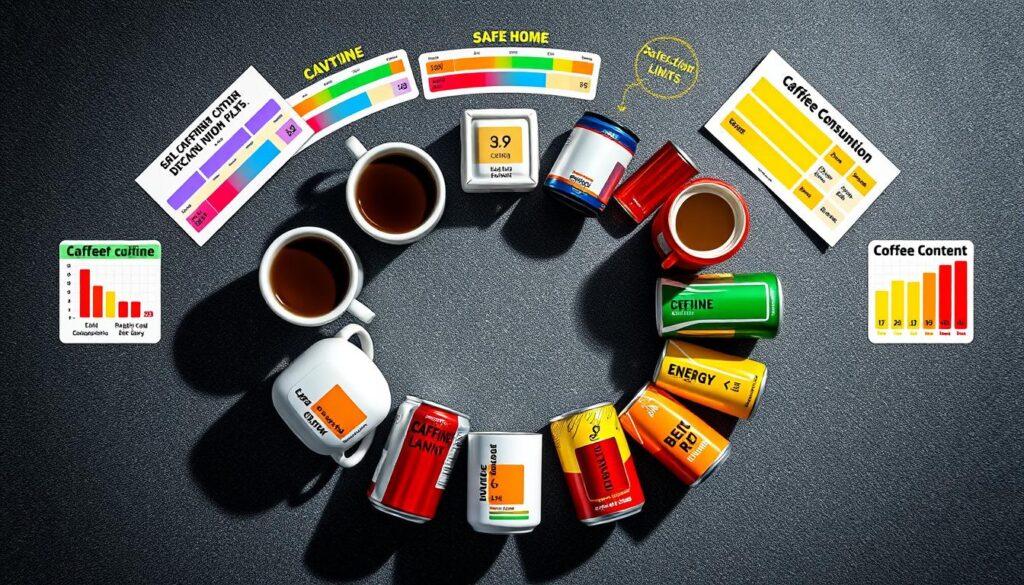
Caffeine is a powerful stimulant consumed by millions daily. Knowing your safe limits is vital to avoid caffeine toxicity. Most healthy adults can safely consume up to 400 milligrams of caffeine per day1.
Individual sensitivity to caffeine varies widely2. Your daily intake depends on body weight, metabolism, and overall health. Some people may get headaches or insomnia from just a few coffee cups1.
The average daily consumption is about 200 mg, equal to two coffee cups3. Pregnant women should limit their intake to less than 200 mg daily1. Excessive caffeine can lead to serious overdose symptoms.
Key Takeaways
- Safe daily caffeine limit is 400 mg for most adults
- Individual caffeine sensitivity varies significantly
- Excessive caffeine can cause serious health complications
- Pregnant women should restrict caffeine intake
- Monitor your body’s response to caffeine consumption
Understanding Safe Caffeine Consumption and Daily Limits
Caffeine is a popular stimulant in many daily routines. Knowing your safe limits can prevent caffeine poisoning and health risks. It’s crucial to understand your body’s response to caffeine.
The FDA offers clear guidelines for caffeine intake. For most healthy adults, the daily limit is 400 milligrams. This equals about two to three 12-ounce cups of coffee.
Knowing your personal caffeine sensitivity is crucial in managing potential caffeine addiction. It helps you avoid overconsumption and maintain a healthy balance.
FDA Guidelines for Different Age Groups
- Adults: Up to 400 mg daily4
- Pregnant women: Less than 200 mg daily4
- Children and teens: Minimal to no caffeine consumption4
Factors Affecting Individual Caffeine Sensitivity
Your caffeine tolerance depends on several personal factors:
- Body weight
- Medication interactions
- Existing medical conditions
- Genetic predisposition
Common Sources of Dietary Caffeine
| Beverage | Caffeine Content (mg) |
|---|---|
| Brewed Coffee | 113-247 mg per cup4 |
| Green Tea | 37 mg per cup4 |
| Soft Drinks | 23-83 mg per can4 |
| Energy Drinks | 41-246 mg per serving4 |
Pro tip: Even decaffeinated products contain small amounts of caffeine, typically 2-15 milligrams per 8-ounce serving4.
Over 85% of U.S. adults regularly consume caffeine. The average daily intake is around 180 mg5. Be mindful of your consumption to enjoy caffeine’s benefits safely.
Signs and Symptoms of Caffeine Overdose
Knowing caffeine overdose signs is vital for your health. Caffeine side effects can be mild or severe. They may pose serious health risks6.
Children and teens are at higher risk. They have a lower caffeine tolerance than adults6.
- Increased heart rate and palpitations
- High blood pressure
- Severe anxiety and restlessness
- Insomnia and jitteriness
- Upset stomach and nausea
- Persistent headaches
- Frequent urination
In extreme cases, you might face more dangerous symptoms6:
- Breathing difficulties
- Confusion and hallucinations
- Muscle twitching
- Irregular heartbeat
- Convulsions
“A teaspoon of powdered caffeine can be equivalent to 28 cups of coffee, with severe potential health consequences” – FDA Warning6
Experts warn that 80 to 100 mg/L of caffeine in blood can be fatal6. If you think you’ve overdosed, get medical help right away.
| Beverage | Caffeine Content (per 100ml) |
|---|---|
| Cola | 9.7 mg |
| Green Tea | 12.1 mg |
| Black Coffee | 74.7 mg |
| Espresso | 194 mg |
Remember, moderation is key to avoiding dangerous Caffeine Side Effects.
Hidden Sources of Caffeine and Risk Factors
Caffeine hides in unexpected places, making it vital to know its sources and risks. Your daily intake might exceed your estimates. This is especially true when considering caffeine’s complex metabolism7.
Unexpected Caffeine Carriers
Many people unknowingly consume caffeine through various products. Some surprising sources include:
- Energy bars
- Ice cream
- Dietary supplements
- Some medications
- Chocolate products
Energy drinks have surged in popularity recently. Over 500 new brands have launched since 20068. About half of college students drink at least one energy drink monthly to fight fatigue8.
Medication Interactions and Risks
Caffeine can interact with various medications, potentially increasing side effects. Prescription drugs like atazanavir, cimetidine, and theophylline may have significant interactions8.
| Medication Class | Potential Interaction |
|---|---|
| Antibiotics | Increased caffeine sensitivity |
| Heart Medications | Altered drug metabolism |
| Psychiatric Drugs | Potential adverse reactions |
Special Considerations for High-Risk Groups
Some people need extra caution with caffeine consumption. Those with heightened caffeine sensitivity should be particularly careful. Pregnant women, children, and individuals with specific medical conditions face greater risks9.
Your body’s response to caffeine can vary significantly based on genetic factors and individual metabolism.
Slowly reducing caffeine intake can help minimize withdrawal symptoms like headaches and fatigue. Understanding your personal caffeine sensitivity is crucial for maintaining good health7.
Conclusion
Understanding caffeine limits is crucial for safe and healthy intake. Up to 89% of Americans consume caffeine regularly. It’s vital to know the risks of uncontrolled consumption.
Keep track of your daily caffeine intake. The FDA suggests a 400 mg max for healthy adults. But everyone’s tolerance is different. Unregulated supplements increase overdose risks, especially with concentrated forms.
For more detailed medical info on caffeine intake, check out medical research platforms.
Awareness helps prevent caffeine-related health issues. Toxic symptoms can appear after consuming about 1 gram. Doses over 5 grams may be lethal10.
Pay attention to your body’s reactions. Seek medical help if you have nausea, fast heartbeat, or other unusual symptoms11.
Smart caffeine use means knowing your limits and risks. Make informed choices about your caffeine intake. Your health depends on balanced consumption.
FAQ
How much caffeine is safe to consume daily?
The FDA suggests up to 400 mg of caffeine per day for healthy adults. This equals about 2-3 cups of coffee. Everyone’s tolerance is different, though.
Pregnant women should stick to less than 200 mg. Kids and teens should avoid caffeine or keep it minimal.
What are the symptoms of caffeine overdose?
Caffeine overdose can cause a racing heart, anxiety, and trouble sleeping. You might also feel jittery, sick to your stomach, or have headaches.
Severe cases may lead to breathing issues, confusion, or even hallucinations. If you think you’ve overdosed, get medical help right away.
What are some unexpected sources of caffeine?
Caffeine hides in surprising places like energy bars, ice cream, and some medicines. It’s also in dietary supplements, chewing gum, and over-the-counter drugs.
Always check labels for caffeine content. Even decaf products have small amounts.
Can caffeine interact with medications?
Yes, caffeine can mix badly with some meds and herbal supplements. It might not play nice with ephedrine, theophylline, or echinacea.
These interactions could increase the risk of side effects. Always talk to your doctor about possible drug interactions.
Who is at high risk for caffeine-related health issues?
Pregnant women, kids, and teens should be extra careful with caffeine. People with heart problems or anxiety disorders need to watch out too.
Some medications don’t mix well with caffeine. Pure caffeine products can be super dangerous, even in small amounts.
How can I reduce caffeine intake and manage withdrawal symptoms?
Cut back on caffeine slowly to avoid headaches and tiredness. Replace coffee with water or herbal tea.
Stay hydrated and get enough sleep. Ask your doctor for personalized advice on cutting back caffeine.
How does caffeine affect different age groups?
Most adults can handle up to 400 mg of caffeine daily. Kids and teens should skip energy drinks.
Pregnant women need to keep it under 200 mg. Everyone reacts differently, so pay attention to how your body responds.
Source Links
- Caffeine: How much is too much? – https://www.mayoclinic.org/healthy-lifestyle/nutrition-and-healthy-eating/in-depth/caffeine/art-20045678
- Caffeine Overdose: Symptoms, Side Effects, and Treatment – https://www.healthline.com/health/caffeine-overdose
- How Many Yerbas Does It Take to Overdose on Caffeine? – https://www.mcgill.ca/oss/article/health-and-nutrition-you-asked/how-many-yerbas-does-it-take-overdose-caffeine
- Spilling the Beans: How Much Caffeine is Too Much? – https://www.fda.gov/consumers/consumer-updates/spilling-beans-how-much-caffeine-too-much
- The Safety of Ingested Caffeine: A Comprehensive Review – https://pmc.ncbi.nlm.nih.gov/articles/PMC5445139/
- Caffeine overdose: Symptoms, treatment, and how much is too much? – https://www.medicalnewstoday.com/articles/322933
- Caffeine: Cognitive and Physical Performance Enhancer or Psychoactive Drug? – https://pmc.ncbi.nlm.nih.gov/articles/PMC4462044/
- Caffeinated Energy Drinks and Supplements: A Wake-Up Call for Consumers and Healthcare Providers | Published in PATIENT SAFETY – https://patientsafetyj.com/article/116073-caffeinated-energy-drinks-and-supplements-a-wake-up-call-for-consumers-and-healthcare-providers
- CAFFEINE: Overview, Uses, Side Effects, Precautions, Interactions, Dosing and Reviews – https://www.webmd.com/vitamins/ai/ingredientmono-979/caffeine
- The clinical toxicology of caffeine: A review and case study – https://pmc.ncbi.nlm.nih.gov/articles/PMC6247400/
- Caffeine Intoxication: Unregulated, Over-the-Counter Sale of Potentially Deadly Supplements – https://pmc.ncbi.nlm.nih.gov/articles/PMC8824417/

