
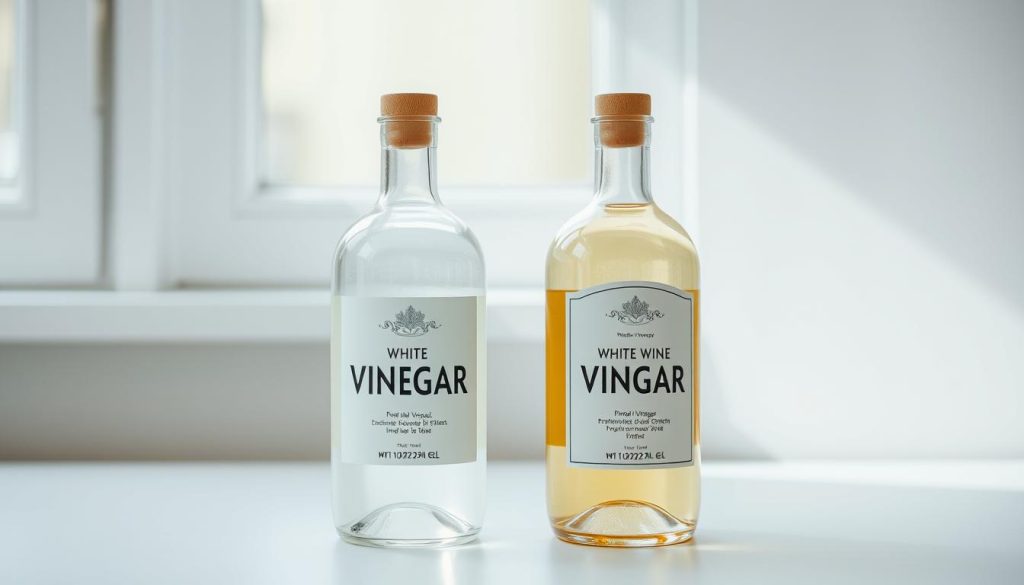
White wine vinegar and white vinegar have distinct differences. White wine vinegar comes from fermented white wine, offering a complex flavor. Both are acidic, but they bring unique qualities to dishes1.
Cooks often ponder vinegar substitutions in recipes. White vinegar, made from distilled alcohol, has a sharp taste. White wine vinegar provides a milder, refined flavor1.
Substituting requires adjustments. For one tablespoon of white wine vinegar, use ¾ tablespoon white vinegar and ¼ tablespoon water. This helps maintain a similar flavor in your cooking2.
Key Takeaways
- White wine vinegar offers a more complex flavor than white vinegar
- Dilute white vinegar when substituting for white wine vinegar
- Consider the dish’s flavor profile before making vinegar substitutions
- Understand the acidity levels of different vinegar types
- Experiment carefully when replacing vinegars in recipes
Understanding White Wine Vinegar: Origins and Uses
White wine vinegar is a fascinating culinary ingredient with deep historical roots. It comes from Mediterranean and Central European countries. This unique vinegar is made by fermenting white wine carefully.
The traditional Orleans method involves slowly aging white wine with bacteria in wooden barrels. This centuries-old process creates a distinctive product with unique characteristics.
Distinctive Production Methods
White wine vinegar production is intricate and time-honored. Winemakers remove grape skins before fermentation. The process involves several key steps:
- Selecting high-quality white wine
- Introducing specific bacterial cultures
- Aging in wooden barrels
- Monitoring acetic acid development
Flavor Profile and Acetic Acid Content
White wine vinegar has a complex flavor profile. Its acetic acid content can reach up to 10%3. This gives it a sharper taste than other vinegars.
The vinegar’s flavors are notably astringent. Yet, they’re less harsh than white distilled vinegar4.
Culinary Applications
Chefs love white wine vinegar for its versatility in cooking. It shines in:
- Light vinaigrettes
- Classic French sauces like Hollandaise
- Mayonnaise preparations
- Pickling vegetables
Its unique properties make it perfect for delicate culinary creations. It adds a nuanced acidic touch to dishes4.
The vinegar’s polyphenols offer potential health benefits. These include antioxidant properties that may boost overall health4.
White Vinegar vs White Wine Vinegar: Key Differences and Similarities
White vinegar and white wine vinegar have distinct differences in cooking. White vinegar is 90% water and 5% grain alcohol, fermented to produce acetic acid. It has a highly acidic and neutral flavor profile5.
White wine vinegar offers a mellower taste with less acidity5. Chefs prefer it for delicate dishes like light vinaigrettes and sauces5. The versatility of vinegar substitutes allows for creative cooking.
White wine vinegar is lighter and more delicate compared to other vinegar types6. When substituting, consider acidity levels. You may need more white wine vinegar due to its lower acidity5.
White vinegar is the most cost-effective option for high-volume use6. It’s a practical choice for budget-conscious cooks. Knowing these differences helps you choose the right vinegar for your dishes.
Selecting the right vinegar can elevate your cooking. It can turn an ordinary dish into something extraordinary. Your choice impacts both flavor and culinary success.
FAQ
What’s the main difference between white vinegar and white wine vinegar?
White vinegar is a harsh, clear vinegar made from grain alcohol. White wine vinegar comes from fermenting white wine in wooden barrels. It has a milder, more complex flavor than white vinegar.
White wine vinegar is often used in cooking. White vinegar is better for cleaning and pickling.
Can I substitute white vinegar for white wine vinegar in recipes?
Substituting white vinegar for white wine vinegar isn’t ideal. White vinegar is more acidic and has a sharper taste. If needed, use less white vinegar and add some white wine or lemon juice.
How is white wine vinegar made?
White wine vinegar is made through a two-step process. First, yeast turns white wine into alcohol. Then, bacteria change the alcohol into vinegar.
This process usually happens in wooden barrels. The barrels can add subtle flavors to the vinegar.
What are the best culinary uses for white wine vinegar?
White wine vinegar is great for salad dressings, marinades, and sauces. It’s also good for deglazing pans. French and Mediterranean cuisines often use it.
It adds a bright, tangy flavor to dishes. It’s not as harsh as regular white vinegar.
What is the acetic acid content in white wine vinegar?
White wine vinegar usually has 5-7% acetic acid. This makes it taste milder than distilled white vinegar. Its moderate acidity makes it better for cooking and flavoring dishes.
Are there good alternatives to white wine vinegar?
Good alternatives include champagne vinegar, rice vinegar, and apple cider vinegar. Each has its own unique flavor. Choose based on your recipe and taste preferences.
Lemon juice can also work to add acidity to dishes.
How should I store white wine vinegar?
Keep white wine vinegar in a cool, dark place. Use a tightly sealed lid. It doesn’t need to be refrigerated.
Properly stored, white wine vinegar can last up to two years. It will keep its quality and flavor during this time.
Source Links
- 8 White Wine Vinegar Substitutes To Use In A Pinch – https://www.oola.com/life-in-flavor/2459615/8-white-wine-vinegar-substitutes-to-use-in-a-pinch/
- The Best White Wine Vinegar Substitutes – Evolving Table – https://www.evolvingtable.com/substitute-white-wine-vinegar/
- 11 Types of Vinegar and the Best Uses for Each – https://www.realsimple.com/food-recipes/ingredients-guide/vinegar
- White Wine Vinegar: Color-Free Wine Vinegar – https://www.spiceography.com/white-wine-vinegar/
- The Differences Between the Six Most Popular Types of Vinegar – https://www.allrecipes.com/article/types-of-vinegar-guide/
- All the Types of Vinegar, Decoded (You’re Welcome) – https://www.bonappetit.com/story/types-of-vinegars-decoded?srsltid=AfmBOop0FfP0Asz_zWc3tKckGo51pBB9IY9wZEPpb5sMUINoW10XpT5d

