
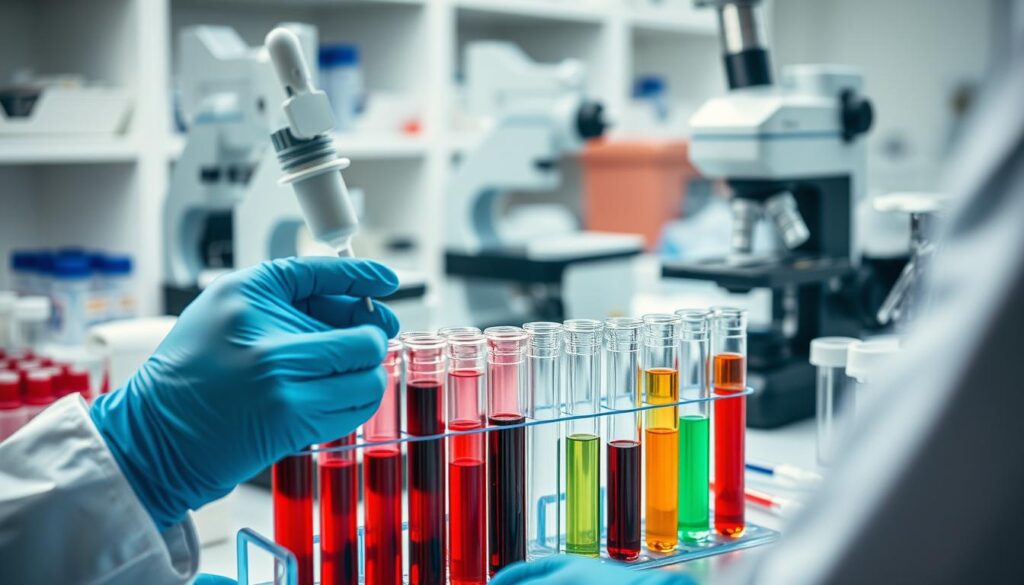
Cancer blood tests are a game-changer in medical diagnostics. They offer valuable insights into potential health issues through simple blood sample analysis. These advanced screening methods can detect early signs of cancer cells and related markers1.
These innovative liquid biopsy techniques can spot abnormal cells and proteins. They provide crucial preliminary information for further medical investigation. However, they aren’t conclusive on their own2.
Various cancer blood tests measure different indicators. They can detect tumor markers and circulating cancer cells. The complete blood count (CBC) test can identify potential blood-related cancers1.
CBC tests also provide insights into your overall health. They complement traditional diagnostic procedures. Early detection through these tests can improve potential treatment outcomes.
Key Takeaways
- Cancer blood tests offer non-invasive screening methods
- These tests can detect early signs of potential cancer
- Multiple test types provide different diagnostic insights
- Blood tests complement traditional diagnostic procedures
- Early detection improves potential treatment outcomes
Understanding Cancer Blood Tests and Their Purpose
Blood tests are vital for cancer detection and management. They offer insights into your body’s health, helping doctors spot issues early. These tools are key in precision oncology, revealing cellular health through advanced methods.
Cancer blood tests examine various components and markers. Each test serves a unique purpose in understanding your body’s complex processes.
Complete Blood Count (CBC) Revealed
A Complete Blood Count (CBC) provides critical information about your blood cells. It measures several key components in your blood.
- White blood cells (crucial for immune function)3
- Red blood cells (oxygen transportation)4
- Platelet levels (blood clotting ability)5
Normal ranges differ between men and women. For women, typical ranges include:
- White blood cells: 4,500 to 10,000 cells/mcL4
- Red blood cells: 4.2 to 5.4 million cells/mcL4
- Platelets: 150,000 to 450,000/dL4
Blood Chemistry Panels: Deeper Insights
Blood chemistry panels show your overall metabolic health. They check important substances like electrolytes, enzymes, and proteins. Circulating tumor cells and cell-free DNA can be found through these advanced screenings.
Tumor Marker Tests: Cancer Detection
Tumor marker tests find specific proteins made by cancer cells. These biomarkers help in cancer diagnosis and treatment planning.
- Cancer diagnosis
- Treatment planning
- Monitoring treatment effectiveness5
“Blood tests are powerful diagnostic tools that provide critical insights into your health status.” – Cancer Research Experts
Blood tests are valuable but often used with other methods. They help create a full picture of your health.
Types of Cancer Blood Tests and Detection Methods
Cancer detection has advanced with new blood testing techniques. These tests offer insights into tumor monitoring and personalized medicine. Liquid biopsy is a groundbreaking approach to understanding cancer at the molecular level6.
- Circulating Tumor DNA (ctDNA) Analysis: Detects genetic fragments released by cancer cells
- Immunophenotyping: Identifies specific cancer cell markers6
- Tumor Marker Tests: Measure substances produced by cancer cells6
Liquid biopsies have transformed cancer diagnostics. They offer a non-invasive way to track cancer progression. These tests analyze blood samples for genetic mutations7.
“Early detection is key in cancer treatment” – Medical Oncology Experts
Sophisticated blood tests can help your personalized medicine journey. They show cancer’s genetic profile. This information can guide doctors toward more targeted treatments8.
Key advantages of cancer blood tests include:
- Minimal invasiveness
- Rapid results
- Comprehensive genetic insights
- Potential for early detection
These blood tests use cutting-edge tumor monitoring techniques. They represent a big step forward in cancer diagnostics. They also help create better treatment strategies7.
Conclusion
Cancer blood tests are powerful tools in modern healthcare. They offer insights into early detection and personalized medicine. These tests analyze blood markers to help healthcare providers understand potential cancer risks and guide treatment strategies9.
Blood tests can’t diagnose cancer definitively. However, they provide crucial information for further investigation through advanced diagnostic techniques. Research shows 41% of cancer patients had common blood tests before diagnosis10.
Full blood count, urea and electrolytes, and liver function tests are important for screening. These tests play a key role in assessing cancer risk9. Researchers are identifying specific blood test abnormalities that might increase cancer risk.
Cancer blood tests are part of a comprehensive diagnostic approach. Your doctor can help you choose the most relevant tests for your health profile. The future of cancer detection is moving towards more sophisticated, personalized blood tests.
Understanding these tests empowers you to make informed healthcare decisions. Your proactive engagement with diagnostic tools can significantly impact cancer management. Early detection and precision oncology are becoming more accessible through advanced blood testing methods.
FAQ
What are cancer blood tests, and how do they work?
Cancer blood tests analyze samples for signs of cancer. They look for cancer cells, proteins, or tumor-produced substances. These tests help detect cancer early and monitor treatment effectiveness.
They also assess overall organ function. While not definitive alone, they provide crucial information for further diagnostic procedures.
What types of cancer blood tests are available?
Several types of cancer blood tests exist:
• Complete Blood Count (CBC): Measures blood cell levels to detect blood cancers
• Blood Chemistry Panels: Evaluate organ function and detect abnormalities
• Tumor Marker Tests: Look for proteins produced by cancer cells
• Circulating Tumor Cell Tests: Identify cancer cells in the bloodstream
• Cell-Free DNA Tests: Analyze genetic material shed by cancer cells
Can a blood test definitively diagnose cancer?
No, cancer blood tests can’t definitively diagnose cancer alone. They’re screening tools that provide valuable insights. Your doctor may recommend additional tests like imaging studies or biopsies.
How accurate are cancer blood tests?
Cancer blood test accuracy varies by test and cancer type. They can sometimes produce false positives or negatives. Doctors use them with other methods for comprehensive health evaluation.
What are liquid biopsies, and how do they differ from traditional cancer tests?
Liquid biopsies detect cancer-related genetic mutations through blood samples. They’re less invasive than traditional tissue biopsies, which require surgery. These tests help with early detection and guide treatment strategies.
Who should consider getting a cancer blood test?
Cancer blood tests may benefit those with family history or specific risk factors. They’re also useful for people undergoing cancer treatment. These tests help monitor cancer progression and treatment effectiveness.
Always consult your doctor to determine if a cancer blood test is right for you.
How often should I get cancer blood tests?
Cancer blood test frequency depends on age, health history, and cancer risk. Your specific medical condition also plays a role. Your doctor will recommend a personalized screening schedule based on your health needs.
Source Links
- Why your doctor might order a cancer blood test – https://www.mayoclinic.org/diseases-conditions/cancer/in-depth/cancer-diagnosis/art-20046459
- Lab and Blood Tests for Cancer Diagnosis and Treatment – https://www.cancercenter.com/diagnosing-cancer/lab-tests
- Understanding Your Lab Test Results – https://www.cancer.org/cancer/diagnosis-staging/tests/understanding-your-lab-test-results.html
- How to Read Blood Test Results: CMP, CBC with Differential – https://www.cancercenter.com/diagnosing-cancer/lab-tests/how-to-read-blood-test-results
- Blood tests – https://www.cancerresearchuk.org/about-cancer/tests-and-scans/blood-tests
- Tests and Procedures Used to Diagnose Cancer – https://www.cancer.gov/about-cancer/diagnosis-staging/diagnosis
- Diagnosis – https://stanfordhealthcare.org/medical-conditions/cancer/cancer/cancer-diagnosis.html
- What Blood Tests Are Used To Diagnose Cancer – Testing.com – https://www.testing.com/what-blood-tests-are-used-diagnose-cancer/
- The Association between Blood Test Trends and Undiagnosed Cancer: A Systematic Review and Critical Appraisal – https://pmc.ncbi.nlm.nih.gov/articles/PMC11083147/
- Primary care blood tests before cancer diagnosis: National Cancer Diagnosis Audit data – https://bjgp.org/content/73/727/e95

