
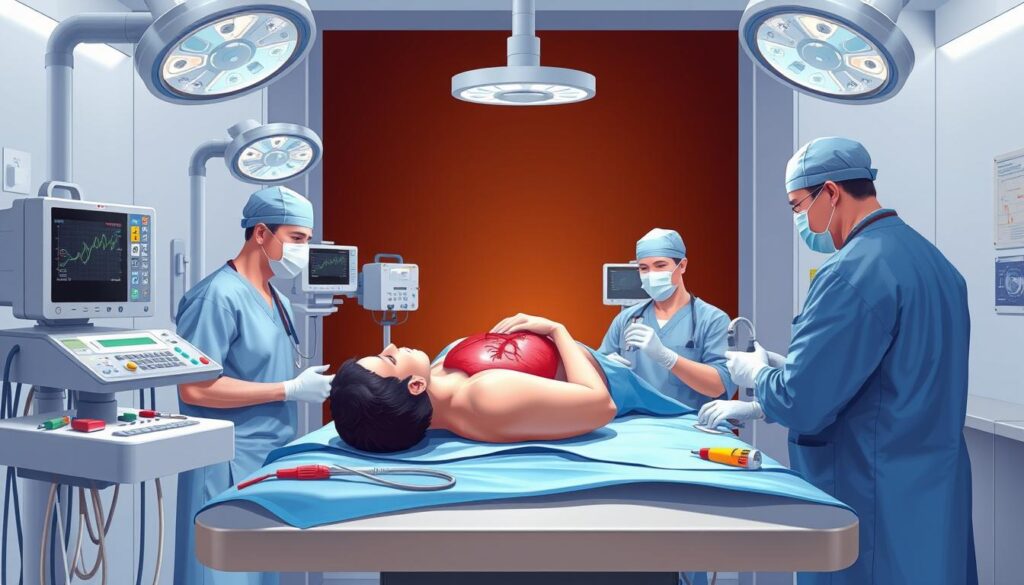
Heart health can be tricky to understand. Cardiac catheterization is a powerful test that helps doctors explore and treat heart conditions1. This method gives doctors key insights into your heart through a small incision2.
In this procedure, doctors insert a thin tube into a blood vessel. They usually do this in your groin or wrist. This method lets them check your heart’s structure and blood flow.
Cardiac catheterization isn’t just for diagnosis. Doctors can also use it to treat heart problems2. They might place a stent or do a balloon angioplasty during the same visit.
Key Takeaways
- Cardiac catheterization is a common heart procedure in the United States
- The test provides detailed information about heart health
- Procedures are typically performed in specialized cardiac labs
- Patients remain awake but mildly sedated during the process
- Major complications are extremely rare
Understanding Cardiac Catheterization Procedure
Cardiac catheterization is a vital tool for heart diagnostics and treatment. It lets doctors explore the heart with precision and minimal invasiveness. This advanced technique offers deep insights into cardiovascular health.
What is a Cardiac Catheter?
A cardiac catheter is a flexible tube that navigates through blood vessels. It helps doctors investigate heart function and perform procedures3. Physicians can insert catheters through the groin, arm, wrist, or neck.
- Groin area
- Arm
- Wrist
- Neck
How the Procedure Works
Doctors use X-ray imaging to guide the tube through blood vessels. They inject contrast dye to make vessels and heart chambers visible4. This method allows for detailed examination of heart structure and function.
“Cardiac catheterization provides unprecedented insights into cardiovascular health.” – Cardiology Experts
Types of Cardiac Catheterization
There are two main types of cardiac catheterization:
- Diagnostic catheterization: Gathering information about heart structure
- Interventional procedures: Treating specific heart conditions
Interventional procedures include angioplasty and stent placement3. These methods effectively address various heart issues with minimal patient discomfort.
Preparing for Your Cardiac Catheterization
Careful preparation is key for a cardiac catheterization. Your healthcare team will provide specific pre-procedure instructions. These guidelines ensure a smooth and safe experience5.
Medication management is crucial for your preparation. Discuss your current medications with your doctor6. Some important considerations include:
- Patients may need to take four baby aspirins (325 mg) or 81 mg of aspirin if on specific medications7
- Blood thinners like Coumadin, Pradaxa, Xarelto, or Eliquis might require temporary discontinuation7
- Avoid taking diuretics on the morning of the procedure7
Fasting is another important pre-procedure requirement. For appointments before noon, you should not eat after midnight. Clear liquids are allowed until leaving for the hospital7.
Your healthcare provider will give you specific instructions tailored to your needs6.
“Proper preparation is key to a successful cardiac catheterization procedure.”
On the day of your procedure, take these important steps:
- Arrive 1-1.5 hours before the scheduled time5
- Bring personal medications and toiletries6
- Have a family member or friend available to drive you home7
- Avoid bringing valuable items or jewelry6
Before the procedure, you’ll undergo preparatory tests. These may include blood tests, urinalysis, chest X-ray, and an EKG5.
Your medical team will review these results carefully. They’ll confirm you’re ready for the cardiac catheterization.
Common Uses and Benefits of Cardiac Catheterization
Cardiac catheterization is vital for diagnosing and treating heart conditions. This advanced procedure provides unique insights into heart health. It reveals information previously only accessible through invasive surgery.
Diagnostic Applications
Doctors use cardiac catheterization to diagnose complex heart conditions precisely. The procedure helps identify critical heart issues.
- Coronary artery disease
- Heart valve problems
- Congenital heart defects
- Abnormal heart rhythms
Over 1 million cardiac catheterizations occur yearly in the U.S. Serious complications happen in less than 1% of cases8. This makes it a trustworthy tool for understanding heart functions.
Treatment Options
Cardiac catheterization offers several treatment possibilities. Interventional procedures include:
- Angioplasty to open blocked arteries
- Stent implantation
- Valve repair
- Transcatheter procedures for structural heart issues
Minimally invasive techniques like TAVR provide alternatives to open-heart surgery. These methods reduce recovery time and potential risks9.
Recovery and Aftercare
Your post-procedure care is crucial for a smooth recovery. Patients typically experience:
| Recovery Aspect | Recommendation |
|---|---|
| Hospital Stay | Most patients go home same day |
| Rest Period | Several days of home rest recommended |
| Follow-up Appointments | Scheduled to monitor recovery |
“Your health journey doesn’t end with the procedure – it’s just beginning,” says cardiac health experts.
Follow your doctor’s instructions on activity restrictions carefully. Attend all follow-up appointments to ensure the best recovery possible10.
Conclusion
Cardiac catheterization is a powerful tool in modern heart care. It offers vital insights into your heart’s condition and potential treatments. Understanding this procedure helps you make informed decisions about your cardiac health1112.
The risks of this medical intervention are relatively low. Experienced professionals perform it safely. Often, the potential benefits outweigh possible complications11.
Your health factors influence the procedure’s approach and outcomes. Age, medical conditions, and lifestyle choices impact its complexity11. Consult a cardiologist at a specialized cardiac care center for personalized advice12.
Heart disease prevention is an ongoing process. Cardiac catheterization provides valuable diagnostic information. However, maintaining a healthy lifestyle remains crucial11.
Regular check-ups, proper nutrition, and exercise are key to heart health. Managing stress also plays a vital role. Stay proactive and informed to protect your cardiovascular system.
FAQ
What is cardiac catheterization?
Cardiac catheterization is a medical procedure that uses a thin tube. Doctors insert this tube into a blood vessel in your groin or wrist. They guide it to your heart to diagnose and treat heart conditions.
How long does the procedure take?
The procedure usually takes 30 to 60 minutes. You’ll be awake but sedated during the test. Most patients can go home the same day after monitoring.
What conditions can cardiac catheterization help diagnose?
This procedure can diagnose several heart conditions. These include coronary artery disease, heart valve problems, and congenital heart defects. It also helps identify abnormal heart rhythms.
The test provides detailed information about your heart’s structure and function. It also shows how blood flows through your heart.
How should I prepare for cardiac catheterization?
You’ll need to fast for 6-8 hours before the procedure. Tell your doctor about all medications you’re taking. Some may need to be stopped or adjusted.
On the day of the procedure, you’ll change into a hospital gown. The medical team will place an IV line for you.
Are there different types of cardiac catheterization?
Yes, there are two main types: diagnostic and interventional. Diagnostic catheterization gathers information about your heart’s structure and function. Interventional procedures can treat heart conditions.
These treatments include angioplasty, stent placement, and valve repairs.
What are the risks associated with cardiac catheterization?
While generally safe, there are some potential risks. These include bleeding at the insertion site and allergic reactions to contrast dye. Blood vessel damage, blood clots, and infection are rare complications.
Your medical team will discuss these risks with you. They’ll take precautions to minimize them.
What happens after the procedure?
After the procedure, you’ll rest in a recovery area for several hours. You might need to lie flat for 2-6 hours, depending on the insertion site.
You’ll get instructions on caring for the insertion site. The staff will tell you how to watch for complications. They’ll also guide you on resuming normal activities.
Can cardiac catheterization be used for treatment?
Yes! Interventional cardiac catheterization can treat various heart conditions. It can open blocked arteries through angioplasty and place stents to keep arteries open.
Doctors can also perform valve repairs and close certain congenital heart defects. These treatments don’t require open-heart surgery.
How soon can I return to normal activities?
Most patients can resume normal activities within a few days. Your doctor will give you specific guidance about activity restrictions. They may advise avoiding strenuous exercise for a short time.
Is cardiac catheterization painful?
You might feel pressure when the catheter is inserted, but shouldn’t experience significant pain. The doctor uses local anesthesia at the insertion site. You’ll be sedated to ensure your comfort throughout the procedure.
Source Links
- Cardiac Catheterization – https://www.heart.org/en/health-topics/heart-attack/diagnosing-a-heart-attack/cardiac-catheterization
- Cardiac Catheterization: Purpose, Procedure and Recovery – https://my.clevelandclinic.org/health/diagnostics/16832-cardiac-catheterization
- Cardiac Catheterization – https://www.hopkinsmedicine.org/health/treatment-tests-and-therapies/cardiac-catheterization
- Cardiac catheterization Information | Mount Sinai – https://www.mountsinai.org/health-library/tests/cardiac-catheterization
- Preparing for Your Cardiac Catheterization | Lawrence General Hospital – http://www.lawrencegeneral.org/services-and-centers/heart-and-vascular/peripheral-vascular-access-center/preparing-for-your-cardiac-catheterization
- Cardiac Catheterization – https://www.massgeneral.org/heart-center/treatments-and-services/cardiac-catheterization
- Preparing For Cardiac Catheterization | Beaumont Heart Procedures – https://www.beaumont.org/treatments/cardiac-catheterization-what-to-expect
- Cardiac Catheterization: Uses, Procedure, and Risks – https://www.healthline.com/health/cardiac-catheterization
- Cardiac Catheterization – https://www.webmd.com/heart-disease/cardiac-catheterization1
- Cardiac catheterization: Definition, benefits, risks, and more – https://www.medicalnewstoday.com/articles/cardiac-catheterization
- Cardiac Catheterization Risks & Complications | CVG Cares – https://cvgcares.com/conditions/risks-and-complications-of-cardiac-catheterization/
- Cardiac Catheterization (for Parents) – https://kidshealth.org/en/parents/cardiac-catheter.html

