
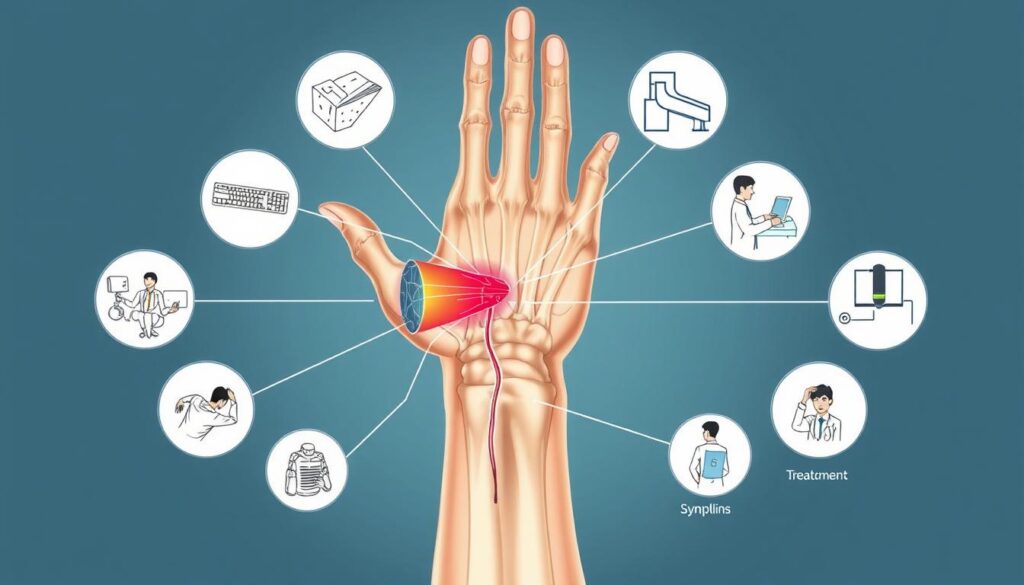
Carpal tunnel syndrome affects your daily life and hand function. It happens when the median nerve gets squeezed in your wrist1. This condition develops slowly, causing wrist pain and hand numbness2.
The syndrome is tough for people who do repetitive hand movements. Symptoms start with mild tingling in your thumb and fingers1. Knowing about median nerve compression helps spot this problem early2.
Women are more likely to get carpal tunnel syndrome than men1. Risk factors include certain jobs, health issues, and body structure2.
Key Takeaways
- Carpal tunnel syndrome affects the median nerve in the wrist
- Symptoms develop gradually and can worsen over time
- Women are more likely to experience this condition
- Repetitive hand movements increase risk
- Early detection is crucial for effective management
What is Carpal Tunnel Syndrome?
Carpal tunnel syndrome affects millions of people. It causes discomfort and potential long-term challenges in hand function. The condition involves the wrist’s anatomy and the median nerve’s role.
Carpal tunnel syndrome occurs when the median nerve gets squeezed in your wrist3. This nerve controls sensations and movements in your hand. It travels from your forearm through the wrist.
Understanding the Condition
Your risk of developing this syndrome depends on several key factors:
- Repetitive hand movements at work3
- Exposure to vibrating tools3
- Age over 40 years3
- Family history of the condition3
Who Is Most Vulnerable?
Some groups are more likely to get carpal tunnel syndrome. Women are three times more likely to develop it than men4.
Health conditions and lifestyle factors can increase your risk. These include pregnancy, diabetes, and jobs with repetitive tasks.
| Risk Group | Contributing Factors |
|---|---|
| Pregnant Women | Hormonal changes and fluid retention |
| Diabetic Patients | Blood sugar level fluctuations4 |
| Workers with Repetitive Tasks | Continuous hand and wrist movements |
Development and Progression
Carpal tunnel syndrome often starts slowly. You might notice minor symptoms at first3. These can get worse over time.
Early detection is key to prevent lasting damage to the median nerve3. Quick action can make a big difference in managing the condition.
Early intervention can make a significant difference in managing carpal tunnel syndrome effectively.
Know your risk factors and watch for early signs. This can help you protect your wrist health5. You can also prevent long-term problems.
Recognizing Symptoms of Carpal Tunnel Syndrome
Carpal tunnel syndrome develops slowly, affecting your daily life. Spotting early signs is vital to prevent nerve damage and keep hands working well.
Common Signs You Might Experience
Hand tingling and numbness are early signs of carpal tunnel syndrome. These feelings often occur in your thumb, index, and middle fingers6.
You might feel “pins and needles” during repetitive hand motions6. Symptoms can wake you up at night.
- Nighttime symptoms that wake you from sleep
- Weakness when gripping objects6
- Burning sensations in specific fingers6
- Increased discomfort during activities involving wrist bending
When to Seek Medical Advice
Watch for ongoing symptoms. See a doctor if hand tingling, numbness, or weakness disrupts your daily life7.
Impact on Daily Activities
Carpal tunnel syndrome can mess up your routine. Simple tasks like typing or holding a cup become hard.
This condition gets worse over time6. Act fast to prevent further problems.
“Don’t ignore persistent hand symptoms – early detection is key to effective treatment.”
Some jobs raise your risk, especially those with lots of wrist movements. Constant wrist flexing or using power tools can speed up carpal tunnel syndrome86.
: Median Nerve Compression Research7: Carpal Tunnel Syndrome Clinical Guidelines8: Occupational Hand Injury Studies
Treatment Options for Carpal Tunnel Syndrome
Carpal tunnel syndrome requires a tailored approach based on your symptoms and condition severity. Your doctor can guide you through effective treatments to ease pain and improve hand function. Various methods can help manage this condition.
Conservative Treatments
Conservative treatments often bring relief for carpal tunnel syndrome. Wrist splints are key in managing symptoms, especially at night9. These supports keep your wrist neutral, easing pressure on the median nerve10.
- Nonsteroidal anti-inflammatory drugs (NSAIDs) for pain management
- Corticosteroid injections to reduce inflammation
- Ice therapy for pain relief
Surgical Interventions
Severe cases may require carpal tunnel release surgery. Two main surgical approaches are available:
- Open surgery: A traditional method taking 8-10 minutes10
- Endoscopic surgery: Utilizing a small telescope to cut the transverse carpal ligament9
Home Remedies to Consider
Ergonomic practices can greatly reduce carpal tunnel syndrome symptoms. Try these strategies:
- Take frequent breaks during repetitive tasks
- Maintain proper wrist positioning
- Practice gentle hand and wrist stretches
“Early intervention can prevent permanent nerve damage”11
Preventive Measures
Knowing your risk factors is key to preventing carpal tunnel syndrome. Those using vibrating equipment should be extra careful11. Regular exercise and proper workplace ergonomics can help lower your risk.
Maintaining overall hand health is crucial in minimizing carpal tunnel syndrome. Stay aware of your hand positioning and take breaks often.
Managing and Living with Carpal Tunnel Syndrome
Carpal tunnel syndrome requires active management to maintain your quality of life. Adapting your daily routine can significantly improve comfort and functionality. A good plan combines prevention, exercises, and self-care techniques tailored to you.
Workplace ergonomics are vital for managing your condition. Adjust your workspace to reduce strain from repetitive hand movements. Use ergonomic keyboards and take regular breaks to minimize symptoms.
Maintain proper wrist positioning to avoid discomfort. Hand exercises and occupational therapy can provide relief and improve flexibility over time12.
Support groups offer practical advice and emotional support for carpal tunnel syndrome. They also provide up-to-date information on treatment options. Professional treatments like physical therapy or surgery may be necessary.
Work closely with healthcare providers to develop a personalized strategy. This approach ensures your unique needs are addressed effectively12.
FAQ
What exactly is carpal tunnel syndrome?
Carpal tunnel syndrome occurs when the median nerve in your wrist gets squeezed. This happens in a narrow passage called the carpal tunnel. It causes numbness, tingling, and pain in your hand and forearm.
What are the most common symptoms of carpal tunnel syndrome?
The main signs include numb and tingly fingers, especially at night. You might also feel weakness in your hand and have trouble gripping things. Pain may increase when you bend your wrist or repeat hand movements.
Who is most at risk for developing carpal tunnel syndrome?
Women, pregnant individuals, and overweight people are more likely to get it. Certain health issues like diabetes or rheumatoid arthritis also increase the risk. Those who do repetitive hand movements at work or in hobbies face higher chances too.
How is carpal tunnel syndrome diagnosed?
Doctors usually do a physical exam and ask about your symptoms. They might also run nerve tests. They’ll check your hand strength and feeling, and do specific tests for nerve compression.
What are the treatment options for carpal tunnel syndrome?
Treatments range from simple fixes to surgery. Options include wrist splints, pain meds, and steroid shots. Changing your habits can help too. In severe cases, surgery may be needed to ease nerve pressure.
Can carpal tunnel syndrome be prevented?
You can lower your risk by using proper wrist positions. Take breaks during repeated tasks and do hand exercises. Staying healthy and keeping a good weight also helps.
How long does recovery take after carpal tunnel surgery?
Most people can do normal activities within a few weeks. Full recovery and strength can take several months. Follow your doctor’s advice for the best healing.
Are there any home remedies that can help manage symptoms?
Try wearing wrist splints, especially at night. Use ice to reduce swelling and do gentle stretches. Change activities that strain your wrists. Over-the-counter pain relief can also help with discomfort.
When should I see a doctor about potential carpal tunnel syndrome?
See a doctor if you have ongoing numbness, tingling, or weakness in your hand. Get checked if these symptoms mess with your daily life. Also, seek help if rest and home care don’t make things better.
Can carpal tunnel syndrome lead to permanent nerve damage?
If left untreated, it can cause lasting nerve damage. This may lead to chronic weakness and less feeling in your hand. Early diagnosis and treatment are key to avoiding long-term problems.
Source Links
- Carpal tunnel syndrome – Symptoms and causes – https://www.mayoclinic.org/diseases-conditions/carpal-tunnel-syndrome/symptoms-causes/syc-20355603
- Carpal Tunnel Syndrome – OrthoInfo – AAOS – https://orthoinfo.aaos.org/en/diseases–conditions/carpal-tunnel-syndrome/
- How Do I Know if I’m Getting Carpal Tunnel Syndrome? – https://my.clevelandclinic.org/health/diseases/4005-carpal-tunnel-syndrome
- Carpal Tunnel Syndrome – https://www.hopkinsmedicine.org/health/conditions-and-diseases/carpal-tunnel-syndrome
- Carpal Tunnel Syndrome | MedlinePlus – https://medlineplus.gov/carpaltunnelsyndrome.html
- Recognizing Warning Signs of Carpal Tunnel Syndrome – https://www.graniteortho.com/carpal-tunnel-syndrome/
- Carpal tunnel syndrome – https://www.mountsinai.org/health-library/diseases-conditions/carpal-tunnel-syndrome
- Carpal Tunnel Vs. Tendonitis: Identifying The Symptoms – https://www.henryford.com/blog/2023/12/carpal-tunnel-vs-tendonitis-identifying-symptoms
- 5 Treatment Options for Carpal Tunnel Syndrome – https://orthopedicinstitutesf.com/5-treatment-options-for-carpal-tunnel-syndrome/
- Carpal Tunnel Syndrome: Myths, Facts, Diagnosis, and Treatment – https://www.hss.edu/conditions_carpal-tunnel-syndrome-myths-facts-diagnosis-treatment.asp
- What Are Some Treatment Options for Carpal Tunnel? | OIP – https://www.oip.com/treatment-options-carpal-tunnel-wrist-pain/
- Our Tips For Managing Carpal Tunnel Syndrome – https://stmarysphysicianassociates.com/blog/tips-for-managing-carpal-tunnel-syndrome/

