
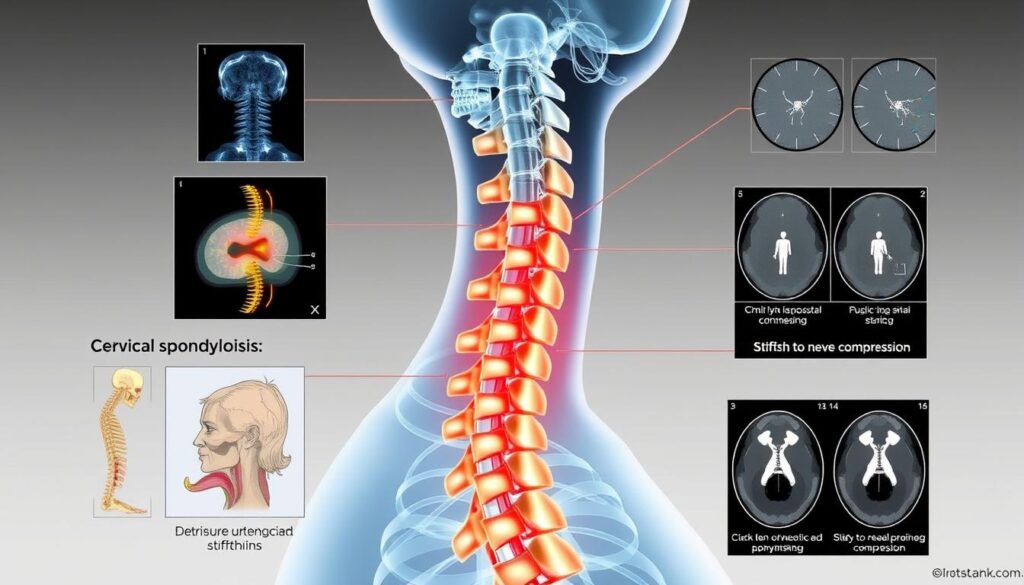
Neck pain can be tough, especially when caused by cervical spondylosis. This condition affects the spine’s cervical region as we age1. It’s important to understand spinal stenosis for better neck health management.
Cervical spondylosis happens when the spine ages naturally. It causes wear in the neck’s vertebrae and disks. Over 85% of people above 60 have some form of this condition1.
Not everyone with cervical spondylosis feels pain. However, it’s crucial to spot potential signs early. Your job and habits can affect your chances of getting it.
Jobs with repeated neck movements may increase your risk1. Smoking has also been linked to more neck pain and possible problems1.
Key Takeaways
- Cervical spondylosis affects over 85% of people over 60
- Not all worn disks cause painful symptoms
- Lifestyle and occupation can impact neck health
- Early detection is crucial for effective management
- Treatment options range from conservative to surgical approaches
Understanding Cervical Spondylosis and Its Impact
Cervical spondylosis affects your spine as you age. It changes your neck, impacting mobility and comfort. Understanding these changes helps manage risks and symptoms better.
This condition affects over 85% of people above 602. It involves wear and tear of spinal structures. This can lead to nerve compression and radiculopathy.
What Causes Cervical Spondylosis
Several factors contribute to cervical spondylosis:
- Natural aging process
- Disk degeneration
- Reduced disk height
- Increased pressure on facet joints
- Potential bone spur formation
Risk Factors and Prevention
Key risk factors for cervical spondylosis include:
- Advanced age
- Genetic predisposition
- Smoking
- Physically demanding occupations
- Previous neck injuries
Good posture and staying active help prevent cervical spondylosis. Regular exercise strengthens neck muscles. It also reduces the risk of herniated discs.
Common Complications
Cervical spondylosis can lead to nerve compression and radiculopathy. These conditions may cause:
- Weakness in arms and hands
- Numbness
- Balance disruptions
- Chronic neck pain
“Early recognition and management of cervical spondylosis can significantly improve long-term outcomes,” says Dr. Sarah Williams, orthopedic specialist.
Conservative treatment often works well for most patients3. However, surgery might be needed if symptoms persist or worsen.
Key Symptoms and Warning Signs
Cervical spondylosis affects neck health as you age. Over 85% of people above 60 have this condition42. Recognizing warning signs helps manage cervical health effectively.
Some may not notice symptoms. Others might experience various issues. Understanding these signs is crucial for proper care.
The primary symptoms of cervical spondylosis include:
- Neck pain and stiffness
- Headaches originating from the neck
- Grinding or popping sensations when moving your neck
- Numbness or weakness in arms and hands
Bone spurs can develop in cervical osteoarthritis. They may cause spinal cord compression. These changes can lead to serious complications if ignored2.
Some people experience additional symptoms such as:
- Trouble maintaining balance
- Muscle spasms in neck and shoulders
- Reduced range of neck movement
“Understanding your symptoms is the first step toward effective management of cervical spondylosis.”
Risk factors for severe symptoms include:
- Advanced age
- Occupations involving heavy lifting
- Previous neck injuries
- Genetic predisposition
- Smoking
It’s crucial to consult a healthcare professional if you experience persistent neck pain or neurological symptoms. Early detection can prevent long-term complications4. Cervical spondylosis typically doesn’t lead to disability.
| Symptom Category | Potential Impact |
|---|---|
| Mild Symptoms | Occasional neck stiffness, minimal pain |
| Moderate Symptoms | Regular neck pain, reduced mobility |
| Severe Symptoms | Nerve compression, weakness, balance issues |
Diagnosis and Treatment Options
Cervical spondylosis requires a thorough approach to diagnosis and treatment. Understanding various methods helps identify and manage this neck condition effectively. Your healthcare journey starts with this knowledge.
Diagnostic Methods and Tests
Doctors use multiple techniques to assess cervical spondylosis accurately. The process typically involves a physical exam, medical history review, and advanced imaging studies.
Imaging tests are crucial in diagnosing cervical spondylosis. These may include X-rays for bone structures, MRI scans for soft tissues, and CT scans for detailed spinal analysis.
Advanced techniques reveal critical information about neck pain and spinal stenosis. Electromyography (EMG) and nerve conduction studies assess nerve function precisely5.
Medical Treatment Approaches
Treatment for cervical spondylosis depends on symptom severity. Your doctor might recommend various options based on your specific needs.
| Treatment Category | Specific Interventions |
|---|---|
| Medication | NSAIDs, muscle relaxants, corticosteroids |
| Pain Management | Epidural steroid injections |
| Surgical Options | Decompression procedures |
Nonsurgical treatments often effectively manage cervical spondylosis5. Over 90% of people aged 60 and older experience some form of this condition.
Physical Therapy and Exercise
Physical therapy is vital in managing neck pain from cervical spondylosis. Your plan might include targeted stretching, posture correction, and strength training for neck muscles.
Early intervention and consistent physical therapy can significantly improve your quality of life with cervical spondylosis.
Some patients may need surgery if conservative treatments fail. Minimally invasive surgeries offer hope for those with severe spinal stenosis6.
Conclusion
Cervical spondylosis affects many people. Two-thirds experience neck pain in their lifetime7. Early recognition and care can make a big difference in managing this condition.
Your approach to radiculopathy and herniated discs matters. It can greatly affect your comfort and mobility over time8. Many cases respond well to simple treatments.
About 15% of people have neck pain8. With proper guidance and lifestyle changes, you can manage symptoms effectively. It’s vital to see specialists for comprehensive treatment plans9.
Age-related spine changes are normal. But they don’t have to control your life. Stay informed and active. Work with your doctors. You can reduce the impact of cervical spondylosis79.
FAQ
What is cervical spondylosis?
Cervical spondylosis is a common age-related condition affecting the neck’s spine. It involves disk degeneration, bone spurs, and possible nerve compression. Over 85% of people above 60 have it, but many don’t notice symptoms.
What are the main symptoms of cervical spondylosis?
Common symptoms include neck pain, stiffness, and headaches. You might hear grinding or popping when turning your neck. Some people experience numbness or weakness in their arms and hands.
Severe cases can cause walking difficulties, balance issues, and muscle spasms. These problems may affect the neck and shoulders.
What causes cervical spondylosis?
Aging leads to spine changes, causing cervical spondylosis. Disk degeneration reduces cushioning between vertebrae. This increases pressure on facet joints, potentially causing arthritis and bone spurs.
Who is at risk for developing cervical spondylosis?
Risk factors include age, genetics, smoking, and certain jobs. Depression and previous neck injuries also increase your chances. The risk rises significantly after age 60.
How is cervical spondylosis diagnosed?
Diagnosis starts with a physical exam, testing strength, sensation, and reflexes. Imaging tests like X-rays, MRI, and CT scans help visualize spinal structures.
Doctors may use EMG and nerve conduction studies to check nerve function. These tests provide a complete picture of your condition.
What are the treatment options for cervical spondylosis?
Treatment usually involves physical therapy and medications like NSAIDs and muscle relaxants. Soft cervical collars may help some patients. Physical therapy focuses on strengthening exercises and posture improvement.
Severe cases might need steroid injections or surgery. Your doctor will recommend the best approach for your situation.
Can cervical spondylosis be prevented?
You can’t stop age-related changes, but you can lower your risk. Stay active, use good posture, and avoid neck injuries. Keep physically fit and manage any underlying health issues.
When should I see a doctor about cervical spondylosis?
See a doctor if you have ongoing neck pain or arm weakness. Seek help for walking difficulties, balance problems, or severe neck stiffness. Don’t ignore symptoms that affect your daily life.
Source Links
- Cervical Spondylosis (Arthritis of the Neck) – OrthoInfo – AAOS – https://orthoinfo.aaos.org/en/diseases–conditions/cervical-spondylosis-arthritis-of-the-neck/
- Cervical spondylosis can cause neck pain-Cervical spondylosis – Symptoms & causes – Mayo Clinic – https://www.mayoclinic.org/diseases-conditions/cervical-spondylosis/symptoms-causes/syc-20370787
- Cervical spondylosis. An update – PMC – https://pmc.ncbi.nlm.nih.gov/articles/PMC1307540/
- Cervical Spondylosis – https://www.hopkinsmedicine.org/health/conditions-and-diseases/cervical-spondylosis
- Cervical Spondylosis: Causes, Symptoms, Home Treatments, and More – https://www.healthline.com/health/cervical-spondylosis
- Lumbar and Cervical Spondylosis: Symptoms & Treatments | HSS – https://www.hss.edu/conditions_spondylosis-overview.asp
- Cervical spondylosis and neck pain – https://pmc.ncbi.nlm.nih.gov/articles/PMC1819511/
- Cervical Spondylosis: Recognition, Differential Diagnosis, and Management – https://pmc.ncbi.nlm.nih.gov/articles/PMC3116771/
- Understanding Cervical Spondylosis: Causes, Symptoms, and Treatments | The Spine Diagnostic & Pain Treatment Center – https://spinediagnostic.com/understanding-cervical-spondylosis-causes-symptoms-and-treatments/

