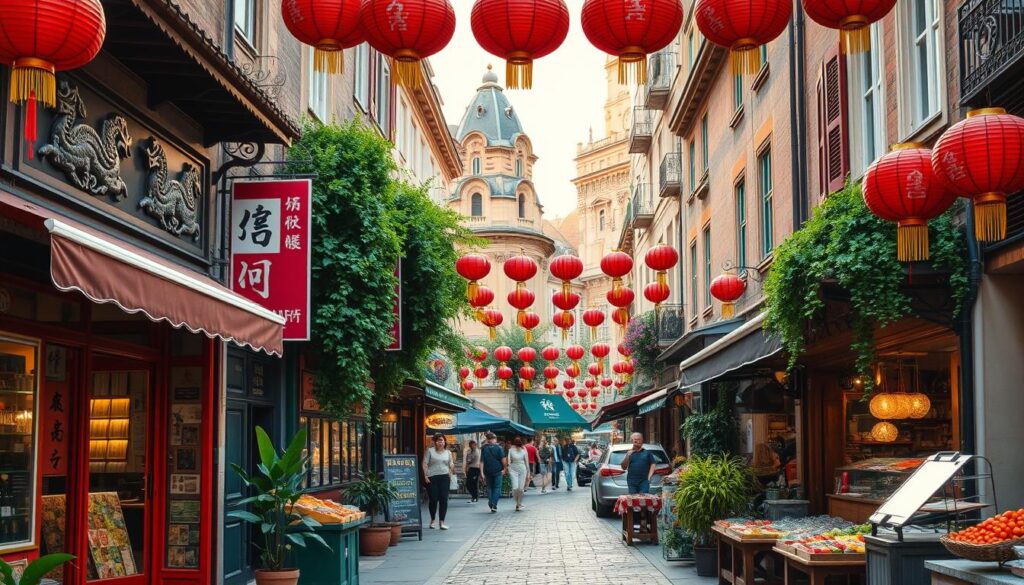
Europe’s cities are home to lively Chinese communities. These ethnic enclaves showcase migration, culture, and resilience. From London to Paris, Asian neighborhoods offer a peek into the Chinese diaspora1.
Chinatowns are more than just places on a map. They’re living cultural experiences that connect immigrants to their roots2. These areas bring generations together and keep traditions alive.
London’s Chinese community is truly remarkable. It has Chinatowns in several cities, including Manchester and Liverpool1. The capital boasts 124,250 Chinese residents, making up 1.5% of its population2.
Paris has two distinct Chinatowns. The 13th arrondissement hosts Europe’s largest. Another thrives in the lively Belleville neighborhood1. Each area has its own unique charm and character.
Other European cities are developing Chinese communities too. Berlin has two Chinatowns. Antwerp in Belgium is becoming a new hub for Chinese culture1.
Italy is home to over 310,000 Chinese residents. Prato and Milan have established Chinatowns. This shows how widespread these dynamic communities are1.
Key Takeaways
- European Chinatowns span multiple countries and cities
- London and Paris host the most prominent Chinese communities
- Chinatowns represent cultural diversity and immigrant experiences
- Each Chinatown has unique historical and demographic characteristics
- These ethnic enclaves continue to grow and evolve across Europe
Discovering the History of Chinatowns
European Chinatowns are vibrant immigrant districts that changed urban landscapes. These cultural hubs tell a story of migration and resilience. They showcase community building through generations of Overseas Chinese settlers.
The Origins of Chinese Communities in Europe
Chinese communities in European cities began through unique migration paths. Early settlements formed around specific areas.
- Maritime trade routes
- Port city labor markets
- Colonial connections
Notable Historical Events Shaping Chinatowns
Key moments shaped these urban gateways for Chinese immigrants:
- Post-World War II migrations from Hong Kong
- Vietnamese boat people resettlement
- Economic reforms in China driving international movement
“Migration is not just about moving places, but about creating new homes and identities” – Unknown Immigrant Historian
The Evolution of Culture and Identity
Chinese communities changed from temporary labor settlements to permanent multicultural neighborhoods. Generational changes brought deeper integration into their new homes.
At the same time, these communities maintained strong cultural ties to their ancestral roots3.
Exploring Iconic Chinatowns Across Europe
European Chinatowns showcase the rich tapestry of Chinese diaspora and Asian neighborhoods. Each city’s Chinatown tells a unique story of cultural integration and culinary traditions. These vibrant spaces blend historical heritage with modern urban life.
London’s Vibrant Chinatown
London’s Chinatown is a beacon of Chinese culture in the UK. It’s in the heart of the West End, boasting 65 restaurants and cafes. This cultural hub for the Chinese community was established after World War II.
- Over 65 authentic restaurants
- Rich cultural events throughout the year
- Centrally located in London’s West End
Paris’ Unique Blend of Cultures
Paris has two distinct Chinatowns showcasing the diversity of the Chinese diaspora. The largest is in the 13th arrondissement, bounded by several avenues.
This neighborhood houses about 50,000 people, creating a vibrant Asian community. It reflects the city’s multicultural landscape and rich cultural heritage.
| Chinatown Location | Population | Unique Characteristics |
|---|---|---|
| 13th Arrondissement | ~50,000 | Largest European Chinese district |
| Belleville | Diverse | Secondary Chinese neighborhood |
The Enchanting Atmosphere of Amsterdam’s Chinatown
Amsterdam’s Chinatown is one of the youngest in Europe. It’s home to the largest Chinese Buddhist monastery on the continent.
Despite its compact size, this Asian neighborhood offers a rich cultural heritage. It’s a must-visit destination for those exploring European Chinatowns.
“Each Chinatown is a world within a world, telling stories of migration, resilience, and cultural pride.”
Culinary Delights in European Chinatowns
European Chinatowns offer a tasty trip through Chinese food traditions. These cultural hubs have become food hotspots for tourists. Each area tells its own story through unique flavors and dining experiences.
Must-Try Dishes and Restaurants
European Chinatowns serve up a variety of mouth-watering dishes. These reflect authentic Chinese cuisine. You’ll find traditional restaurants in London’s Chinatown and hidden gems across Europe.
- Sichuan spicy dishes
- Dim sum platters
- Authentic street food
- Regional specialty meals
The Influence of Chinese Cuisine on Local Tastes
Chinese restaurants have changed local dining scenes. In Budapest, Monori Center shows this food mix. About half of the Night Market’s customers are now Hungarian5.
| City | Unique Culinary Feature |
|---|---|
| Amsterdam | First Chinese restaurant established in 19286 |
| Budapest | Night Market with diverse Chinese dishes5 |
Festivals Celebrating Culinary Traditions
“Food is our common ground, a universal experience.” – James Beard
European Chinatowns host lively food festivals that show off rich cultural heritage. Amsterdam celebrates with Chinese New Year events and traditional lion dances6.
Visit these ethnic areas and taste amazing food that connects cultures. Experience a world of flavor in European Chinatowns!
Visiting Tips for Your Chinatown Adventure
Planning is key to exploring European Chinatowns. These areas offer a rich mix of traditions to discover. Timing matters when visiting these lively cultural hubs7.
Respect local customs in Chinatown. Learn basic Mandarin or Cantonese phrases to show appreciation. Most Chinatowns are easy to reach by public transport.
Over 3 million U.S. residents speak Chinese at home. This shows the language diversity you might find8.
Chinese New Year offers great chances for cultural immersion. Restaurants and cultural sites are busy during festivals. Many Americans seek new food experiences, making Chinatown perfect for food lovers8.
Weekday visits often give a more real and less crowded experience. Each Chinatown has its own special features. Paris and London’s Chinatowns have different feels.
Wear comfy clothes and bring cash for small shops. Keep an open mind as you explore these unique urban areas.
FAQ
What is the oldest Chinatown in Europe?
Liverpool hosts Europe’s oldest Chinatown, established in the early 1800s. It began with Chinese seamen settling in port cities. This marked the start of Chinese communities in Europe.
How many Chinatowns are there in Paris?
Paris boasts two distinct Chinatowns. The largest is in the 13th arrondissement, home to about 50,000 people. Another Chinatown thrives in the Belleville neighborhood.
The 13th arrondissement Chinatown started as a Vietnamese district. Now, it hosts a diverse Asian community.
Which European Chinatown has the best dining options?
Milan’s Chinatown tops the list with a culinary rating of 6.2 out of 10. It offers 47 restaurants with average meal prices of £10.7.
Madrid follows closely with a score of 5.8. Budapest provides the most affordable dining options in Europe.
When is the best time to visit a European Chinatown?
Chinese New Year is a fantastic time to explore European Chinatowns. London and Madrid host numerous celebratory events during this period.
For a more authentic experience, visit during off-peak hours or weekdays. Each Chinatown offers unique cultural experiences throughout the year.
What are the origins of Chinese communities in European cities?
European Chinese communities have diverse roots. Early settlements began with seamen in port cities.
European colonialism in Asia and immigration from Hong Kong in the 1950s contributed to their growth. The fall of Saigon brought Vietnamese boat people of Chinese origin.
Which European Chinatown is most accessible by public transportation?
London’s Chinatown, in the West End, is highly accessible by public transport. Paris’ largest Chinatown in the 13th arrondissement is well-connected too.
Multiple metro lines serve Paris’ Chinatown. This makes it easy for tourists and locals to explore the area.
Are there any unique cultural landmarks in European Chinatowns?
Amsterdam’s Chinatown houses Europe’s largest Chinese Buddhist monastery. Paris’ 13th arrondissement Chinatown offers a mix of Vietnamese and Asian cultural experiences.
Many European Chinatowns host cultural events during Chinese New Year. These events showcase their rich heritage and traditions.
Source Links
- Chinatowns in Europe – https://en.wikipedia.org/wiki/Chinatowns_in_Europe
- Urban Chinatowns in Europe: with Cases in London and Paris – https://academicworks.cuny.edu/cgi/viewcontent.cgi?article=1290&context=hc_pubs
- Chinatown | The Story of Chinatown – https://www.pbs.org/kqed/chinatown/resourceguide/story.html
- 6 Chinatowns You Have To Visit Around The World – ASAI Hotels – https://www.asaihotels.com/guide/6-chinatowns-you-have-to-visit-around-the-world/
- Budapest’s Chinatown Offers More Than You’d Think – https://www.offbeatbudapest.com/budapest-city-guide/chinatown-budapest-restaurants/
- Chinatown Amsterdam (2024): The Ultimate Guide | Vondel Hotels – https://www.vondelhotels.com/en/vondel-magazine/chinatown-amsterdam-2024-the-ultimate-guide
- NYC’s Chinatown: Must-See Spots, Hidden Gems, and Foodie Favorites – https://www.takewalks.com/blog/ny-chinatown
- Chinatown San Francisco | Practical Guide for Visitors – Urban Survival Hub – https://urbansurvivalhub.com/what-to-do-in-chinatown-san-francisco/