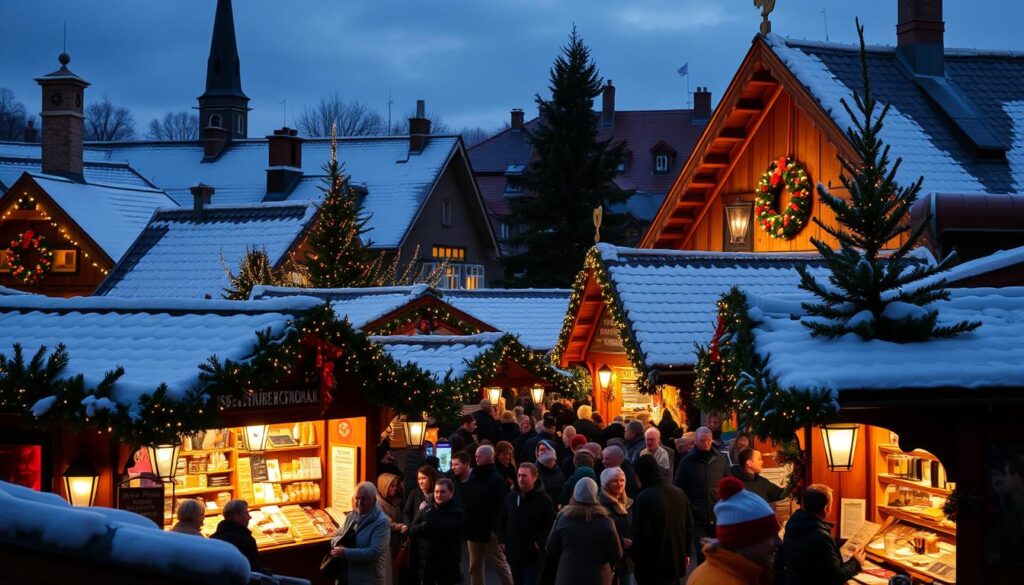
Germany turns into a magical winter wonderland during the holidays. Its famous Christmas markets attract millions of visitors from around the world. These vibrant markets offer more than just shopping; they’re living cultural experiences1.
Germany blends commerce and celebration in a unique way. Cities like Nuremberg, Dresden, and Berlin host spectacular holiday events. These markets are among the most renowned globally1.
At these markets, you’ll find a world of wonder. Handcrafted goods, seasonal treats, and festive atmospheres create lasting memories. Unlike regular markets, these offer a genuine connection to German heritage.
Each market tells its own story. Some date back to the Late Middle Ages. The Nuremberg Christkindlesmarkt and Dresden’s Striezelmarkt are iconic destinations1.
These markets have delighted visitors for centuries. They represent unique cultural celebrations that capture the essence of German holiday traditions.
Key Takeaways
- Germany hosts some of the world’s most famous Christmas markets
- Markets offer unique handcrafted gifts and traditional experiences
- Some markets have historical roots dating back to the Middle Ages
- Markets attract millions of visitors annually
- Each market represents a unique cultural celebration
A Brief History of German Christmas Markets
German Christmas markets have deep roots in medieval trading. These festive gatherings evolved from winter markets where people stocked up on supplies. Over time, they transformed into vibrant holiday celebrations.
Origins in the Middle Ages
The earliest Christmas markets date back to the late Middle Ages. Dresden’s Striezelmarkt, established in 1434, is one of the oldest operating Christmas markets worldwide2.
Nuremberg’s Christkindlesmarkt also boasts an impressive history, with records dating back to 16282. These markets showcase Germany’s rich cultural heritage.
- First documented markets appeared in the 15th century
- Markets began as winter supply gatherings
- Evolved into festive cultural celebrations
Influence on Modern Celebrations
These markets reflect a fascinating economic and cultural phenomenon. Berlin’s Christmas market grew from 50 stalls in 1650 to 600 by 17502.
Today, Germany hosts 2,500 to 3,000 holiday markets annually. These events attract millions of visitors from around the world3.
The Christmas market tradition represents more than just a shopping experience—it’s a living connection to centuries of cultural heritage.
These markets have become hubs of cultural exchange. They attract international tourists and preserve traditions that have endured for generations3.
German Christmas markets blend history, commerce, and festive spirit. They continue to enchant visitors with their unique charm and holiday atmosphere.
Top Christmas Markets to Visit in Germany
Germany’s Christmas markets are living showcases of cultural tradition. They offer unique glimpses into regional holiday celebrations. Visitors from around the world flock to these festive attractions4.
Germany boasts diverse markets, each with its own charm. These markets showcase local crafts, foods, and traditions. They’re vibrant hubs of festive cheer.
Nuremberg Christkindlesmarkt
The Nuremberg Christkindlesmarkt is a legendary holiday destination. It dates back to 1628 and features nearly 200 independent vendors5. The market runs from November 29 to December 24, 20244.
Dresden Striezelmarkt
Dresden’s Striezelmarkt is the world’s first genuine Christmas market. It celebrates its 590th edition in 2024, from November 27 to December 244. The market offers unique treats like famous Stollen and traditional crafts5.
Munich Christkindlmarkt
Munich’s Christmas Market in Marienplatz has over 130 stalls. It opens from November 25 to December 24, 20244. This market’s roots date back to the 14th century6.
Frankfurt Christmas Market
The Frankfurt Christmas Market began in 13936. Visitors explore holiday delights in historic Römerberg square. It’s a true piece of German cultural heritage.
“These markets are not just shopping destinations, but living museums of German holiday tradition.”
- Each market offers unique regional specialties
- Markets typically run from late November to Christmas Eve
- Handcrafted goods are a major attraction
What to Expect at Christmas Markets
German Christmas markets transform city centers into magical winter wonderlands. These festive destinations offer more than just shopping. They provide an immersive experience of traditional German holiday celebrations.
Festive Atmosphere and Decorations
Stepping into a German Christmas market is like entering an enchanting world. Twinkling lights illuminate wooden stalls, creating a warm and inviting atmosphere. Traditional markets showcase intricate decorations that capture the holiday spirit7.
Delicious Seasonal Treats
Your taste buds are in for a treat at these markets! Visitors can enjoy many traditional culinary delights:
- Glühwein (mulled wine)
- Bratwurst and sausages
- Freshly baked pretzels
- Gingerbread (lebkuchen)
- Hot chocolate with festive spirits
Markets offer unique souvenir mugs with your first drink purchase. These mugs serve as memorable keepsakes of your visit7.
Unique Gifts and Handcrafted Goods
Christmas markets are treasure troves of handcrafted items. You’ll find intricate ornaments and traditional wooden toys at unique markets. Local artisans showcase their skills, offering authentic German souvenirs8.
“Each market tells a story of local traditions and regional creativity.”
German Christmas markets blend tradition, culture, and festive cheer. They offer unforgettable experiences for holiday shoppers and seasonal explorers alike.
Tips for Enjoying Your Visit
German Christmas markets are both festive and economically significant. Visit on weekdays to avoid crowds and enjoy a relaxed atmosphere. Traders recognize the importance of these events in various markets.
Best Times to Visit
These markets typically run from late November through December. Early mornings and weekday afternoons offer the most peaceful experience. You can explore stalls and enjoy mulled wine without overwhelming crowds.
Navigating Crowds and Customs
Dress warmly in layers and wear comfortable shoes for cobblestone streets. Learn local etiquette like returning Glühwein mugs for deposits. Some markets offer guided tours to enhance your cultural understanding.
Local Etiquette and Safety
Be aware of security measures at markets. Interact respectfully with vendors and other visitors. Use social media platforms like Instagram to share your market adventures9.
Your preparation and cultural sensitivity will ensure a memorable German Christmas market experience.
FAQ
When are German Christmas markets typically open?
German Christmas markets usually run from late November to late December. Most operate from the last week of November through the week before Christmas. For a better experience, visit on weekdays to avoid crowds.
What are some must-try foods at German Christmas markets?
Sample classic treats like Glühwein (mulled wine) and roasted almonds. Try Stollen from Dresden and Lebkuchen from Nuremberg. Each market offers unique regional specialties that will delight your taste buds.
Which German Christmas market is the most famous?
The Nuremberg Christkindlesmarkt is widely considered the most famous German Christmas market. It’s known for its historic ambiance and traditional crafts. The iconic Christkind (Christmas angel) officially opens the market each year.
How should I dress for a German Christmas market?
Dress warmly in layers and wear comfortable shoes for cobblestone streets. Pack a warm coat, gloves, hat, and sturdy walking shoes. Thermal underlayers are recommended for extended market visits.
Are German Christmas markets suitable for children?
Yes! Many German Christmas markets offer family-friendly activities. These include carousel rides, holiday performances, and kid-friendly food options. Some markets have special areas designed specifically for children.
What unique gifts can I find at German Christmas markets?
Discover handcrafted items like wooden toys, intricate ornaments, and hand-blown glass decorations. You’ll also find traditional nutcrackers, handmade jewelry, and regional artisanal products. Each market offers unique local crafts that make memorable souvenirs.
How do I handle the Glühwein deposit system?
When buying Glühwein, you’ll pay a small deposit (Pfand) for the mug. Keep the mug as a souvenir or return it to get your deposit back. Many visitors enjoy collecting mugs as keepsakes from different markets.
Which markets are best for first-time visitors?
For first-timers, we suggest the Nuremberg Christkindlesmarkt, Dresden Striezelmarkt, and Frankfurt Christmas Market. These markets offer a mix of traditional atmosphere and festive experiences. They capture the essence of German Christmas market culture.
Source Links
- Christmas market – https://en.wikipedia.org/wiki/Christmas_market
- A Brief History of Christmas Markets – https://www.smithsonianmag.com/history/a-brief-history-of-christmas-markets-180981308/
- The surprisingly sordid history of Germany’s Christmas markets – https://www.nationalgeographic.com/travel/article/german-christmas-markets-nazis-tradition
- 13 Best German Christmas Markets — Including the Oldest in the World – https://www.travelandleisure.com/best-german-christmas-markets-6822454
- The 11 best Christmas markets in Germany – https://www.timeout.com/germany/things-to-do/best-christmas-markets-in-germany
- Travel to Europe your way | Christmas Markets in Germany & Austria – https://to-europe.com/tour-package/featured/christmas-markets-in-germany-and-austria/
- Are the Munich, Germany Christmas Markets Worth Visiting? – https://ginaonaplane.com/are-the-munich-germany-christmas-markets-worth-visiting/
- Christmas in Cologne 2024: Christmas markets & festive atmosphere – https://www.cologne-tourism.com/experiences-lifestyle/christmas
- 10 Tips to Attract Tourists to your Destination – https://time.ly/blog/tips-for-attracting-tourists-to-your-destination/