
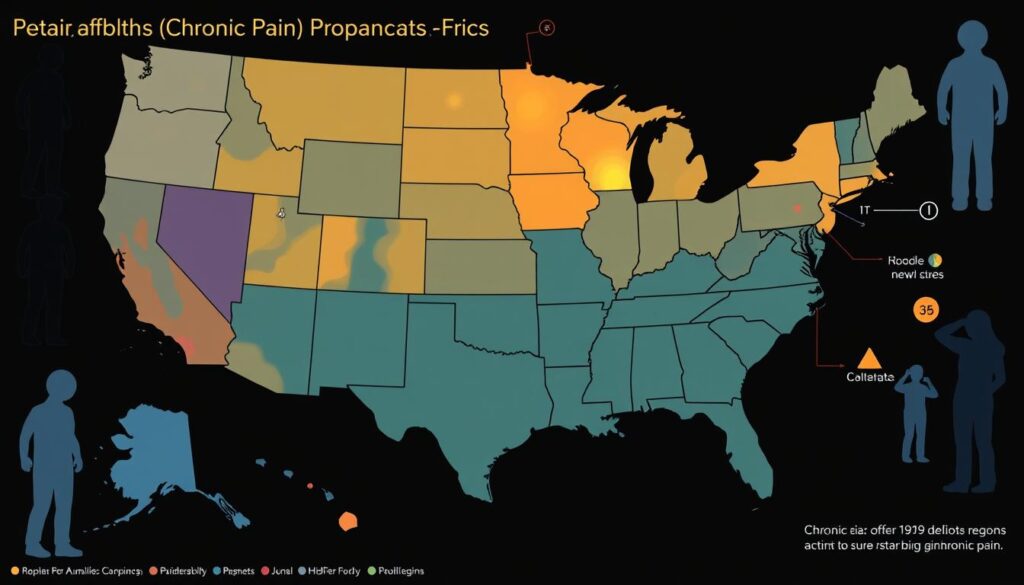
Chronic pain is a major health issue affecting millions of Americans. About 51.6 million adults suffer from ongoing discomfort. This includes 17.1 million people with high-impact chronic pain1.
Pain statistics reveal a troubling trend. Nearly 61.4% of people continue to experience pain year after year2. New cases appear at a rate of 52.4 per 1,000 persons annually2.
Your knowledge of chronic pain can make a real difference. Awareness campaigns highlight its widespread impact. They also encourage support for those affected.
Research keeps working to find better ways to manage and ease chronic pain. Despite challenges, there’s hope for those suffering from this condition.
Key Takeaways
- Chronic pain affects over 51 million U.S. adults
- High-impact chronic pain impacts 17.1 million people
- Pain persistence remains a significant challenge
- New pain cases continue to emerge annually
- Awareness and understanding are crucial for support
Definition of Chronic Pain and Its Impact
Chronic pain affects millions of Americans. It disrupts daily life and creates significant challenges. Recognizing its impact helps understand how it affects well-being and quality of life.
What is Chronic Pain?
Chronic pain lasts for three months or longer. It extends beyond the typical healing period of an injury or illness. This condition can greatly affect your ability to perform everyday activities.
It can make maintaining a normal lifestyle difficult3. Chronic pain requires a different approach than short-term discomfort.
Chronic Pain vs. Acute Pain
Duration and impact set chronic pain apart from acute pain. Acute pain is short-term, responding to specific injury or illness. Chronic pain needs a more comprehensive approach:
- Acute pain typically resolves within weeks
- Chronic pain persists for months or years
- Chronic pain can limit work and personal activities
Prevalence in the United States
Recent studies show alarming statistics about chronic pain in the U.S.:
- About 4.8% of adults experience high-impact chronic pain, affecting 10.6 million people3
- An additional 13.6% suffer from chronic pain without major activity limitations3
- Approximately 83% of individuals with high-impact chronic pain cannot work3
“Chronic pain is not just a physical experience, but a complex interplay of physiological, psychological, and social factors.”
Knowing chronic pain causes and symptoms is key for effective relief solutions. The condition affects various groups differently. It’s more common among older people, those with less education, and certain ethnic groups3.
Chronic pain is complex, involving physical, mental, and social aspects. Understanding this helps create better management strategies. These strategies address both physical symptoms and overall life quality.
Demographics of Chronic Pain Sufferers
Chronic pain affects many people across the United States. It’s a complex health issue that impacts various groups differently. Let’s explore who suffers from chronic pain and how it affects them.
Age Groups Affected by Chronic Pain
Chronic pain doesn’t care how old you are. In 2021, over 51 million Americans had chronic pain. That’s about 20.9% of the U.S. population4.
Older adults face chronic pain more often. About 65% of adults 65 and older experience it5. However, younger adults aren’t safe from chronic pain either.
- About 65% of adults ages 65 and older experience chronic pain5
- Younger adults are not immune, with significant chronic pain statistics across different age ranges
Gender Differences in Chronic Pain
Gender plays a big role in who gets chronic pain. Research shows that women have chronic pain more often than men5.
Women typically report more pain sensitivity. They also have more chronic pain conditions. In some medical cases, women experience more severe pain.
- Higher pain sensitivity
- More frequent chronic pain conditions
- Greater pain severity in certain medical contexts
Socioeconomic Factors Influencing Pain
Money and social status affect who gets chronic pain4. People with less money often have more pain problems.
Adults with very low income have four times more high-impact chronic pain4. Divorced or separated adults have nearly twice the chronic pain rates of married people4.
- Adults with family income less than 100% of the federal poverty level have a four times higher prevalence of high-impact chronic pain4
- Divorced or separated adults experience nearly two times higher chronic pain rates compared to married individuals4
- Adults with less than a high school education constitute 24%-28% of chronic pain patients5
“Chronic pain is not just a medical condition, but a complex interplay of personal, social, and economic factors.”
Knowing these details helps doctors care for chronic pain patients better. They can create plans that fit different groups’ needs.
Common Causes of Chronic Pain
Chronic pain affects millions of Americans, impacting their daily lives. It’s a complex condition with various causes and symptoms. Understanding these can help you manage this challenging health issue better.
Chronic pain has many underlying factors. Recent research has revealed new insights into its prevalence and characteristics. These findings cover different populations6.
Arthritis and Joint Pain
Arthritis is a main source of chronic pain for many adults. It causes ongoing joint inflammation, leading to discomfort and reduced mobility. Over time, it can also cause long-term joint damage.
- Ongoing discomfort in affected areas
- Reduced mobility
- Potential long-term joint damage
Back Pain: A Common Complaint
Back pain is another major contributor to chronic pain conditions. Several factors can influence back pain. These include poor posture, muscle strain, and underlying spinal conditions.
- Poor posture
- Muscle strain
- Underlying spinal conditions
“Chronic pain is not just a physical experience, but a complex interaction of physical, emotional, and environmental factors.” – Pain Research Expert
Neuropathic Pain Disorders
Neuropathic pain is a challenging type of chronic pain to treat. It stems from nerve damage or dysfunction. This can create persistent sensations that are hard to manage.
- Burning
- Tingling
- Electrical-like sensations
Chronic pain prevalence varies across different groups. In 2023, about 24.3% of U.S. adults experienced chronic pain. Women reported slightly higher rates at 25.4% compared to men at 23.2%6.
Age plays a significant role in chronic pain. Pain rates increase from 12.3% in younger adults to 36.0% among those 65 and older7. Understanding these factors is key to developing effective management strategies.
The Psychological Aspect of Chronic Pain
Chronic pain affects more than just your body. It impacts your emotions and mental state, creating complex challenges for many Americans. Understanding how pain and mental health connect is key for managing chronic pain effectively.
Emotional Well-being and Chronic Pain
Persistent pain can greatly affect your emotional health. Studies show chronic pain patients face more psychological issues.
- Up to 45% of individuals with chronic pain experience depression8
- Chronic pain sufferers are four times more likely to develop anxiety9
- Pain can lead to increased stress and reduced quality of life10
The Role of Anxiety and Depression
Mental health disorders are closely linked to chronic pain. Biological mechanisms connect these conditions, creating a tough cycle for patients10.
Specific conditions show this connection:
| Condition | Mental Health Impact |
|---|---|
| Fibromyalgia | Higher risk of anxiety disorders9 |
| Arthritis | Associated with mood disorders9 |
| Chronic Migraines | Increased prevalence of depression9 |
Coping Mechanisms and Treatment Approaches
Dealing with chronic pain requires a complete approach. Mental health experts suggest:
- Psychotherapy
- Relaxation techniques
- Medication management
- Lifestyle modifications
“Treating both chronic pain and mental health simultaneously is essential for comprehensive patient care.” – Mental Health Experts10
Grasping the psychological aspects of chronic pain helps you create better strategies. This knowledge can improve your overall health and well-being.
Diagnosis and Assessment of Chronic Pain
Diagnosing chronic pain requires a comprehensive approach beyond simple medical exams. Your healthcare provider will use various tools to understand your pain. This helps develop effective chronic pain management strategies11.
Tools and Techniques for Pain Assessment
Comprehensive pain assessment involves several critical components:
- Detailed patient interviews
- Physical examinations
- Standardized pain assessment questionnaires
- Psychological evaluations
The aim is to create a complete picture of your pain experience. Clinicians know that pain is subjective and can’t be measured by one metric12.
Importance of a Medical History Review
Your medical history is crucial in chronic pain treatment options. Doctors will explore:
- Previous medical conditions
- Family health background
- Lifestyle factors
- Emotional and psychological health
“Understanding a patient’s complete health narrative is key to effective pain management.” – Pain Management Specialists
Multidisciplinary Approach to Diagnosis
Modern chronic pain management needs teamwork between different healthcare pros. This might include:
- Physicians
- Physical therapists
- Psychologists
- Nutritionists
Healthcare teams consider biological, psychological, and social factors. This helps them create more effective treatment plans13.
Treatment Options for Chronic Pain
Chronic pain management needs a comprehensive approach. It involves exploring various treatment options and pain relief solutions. Understanding different strategies is key to finding effective relief for persistent discomfort.
Medication Strategies for Pain Management
Pain relief solutions start with understanding medication choices. Different medications target pain in unique ways.
- NSAIDs help reduce inflammation and provide pain relief, but can cause side effects like stomach issues and potential kidney problems14
- Acetaminophen offers safer pain management when used appropriately14
- COX-2 inhibitors provide targeted pain relief with potentially fewer stomach complications14
Physical Therapy and Rehabilitation Approaches
Rehabilitation is crucial in chronic pain treatment. Physical therapy can help restore function, improve mobility, and reduce pain intensity.
| Treatment Type | Primary Benefits |
|---|---|
| Manual Therapy | Reduces muscle tension, improves joint mobility |
| Exercise Programs | Strengthens muscles, increases flexibility |
| Electrical Stimulation | Interrupts pain signals, promotes healing |
Alternative Therapies for Pain Relief
Alternative pain relief solutions can complement traditional treatments:
- Acupuncture
- Massage therapy
- Mind-body techniques
- Herbal supplements
“Pain management is not about eliminating pain completely, but about improving quality of life.” – Pain Management Specialist
Everyone’s chronic pain treatment journey is unique. Consulting healthcare professionals helps create a personalized approach. They can address your specific needs and guide you towards effective pain management15.
The Role of Lifestyle in Managing Chronic Pain
Chronic pain management isn’t just about medical treatments. Your daily habits can greatly affect how you deal with pain. Learning about lifestyle’s impact on pain can change your wellness approachthrough comprehensive self-management strategies16.
Importance of Diet and Nutrition
Nutrition is a powerful tool for managing chronic pain. Research shows that food choices directly affect pain severity and overall health16.
Key strategies include eating anti-inflammatory foods and balancing protein intake. Reducing processed food consumption is also important17.
- Consuming anti-inflammatory foods
- Maintaining balanced protein intake
- Reducing processed food consumption
Exercise and Pain Management Strategies
Physical activity is crucial for dealing with chronic pain. Gentle, consistent exercise can help control pain levels and boost mobility.
Low-impact activities like swimming, walking, and yoga can be especially helpful16.
“Movement is medicine for chronic pain management.” – Pain Research Experts
Stress Reduction Techniques
Stress greatly affects chronic pain experiences. Using stress reduction methods can help you manage pain better16.
Effective techniques include meditation, deep breathing exercises, and regular sleep patterns. Psychological counseling can also be beneficial.
- Meditation
- Deep breathing exercises
- Regular sleep patterns
- Psychological counseling
By combining these lifestyle approaches, you can create a well-rounded plan for managing chronic pain. This strategy supports your overall well-being17.
The Impact of Chronic Pain on Daily Life
Chronic pain reshapes every aspect of a person’s life. It creates challenges beyond physical discomfort. Nearly 21% of U.S. adults live with chronic pain, dramatically altering their daily experiences18.
Effective coping strategies can help manage chronic pain. Understanding its impacts is crucial for developing these strategies.
Effects on Work and Employment
Chronic pain significantly disrupts professional life. About 17.1 million adults face high-impact chronic pain that severely limits work abilities18. Pain-related work limitations lead to reduced productivity and potential job loss19.
- 6.9% to 8.0% of adults experience high-impact chronic pain affecting employment19
- Increased work absenteeism
- Potential career trajectory changes
Social Life and Relationships
Chronic pain creates invisible barriers in social interactions. Over 55% of individuals struggle to engage in social activities20. The emotional toll can strain personal relationships.
Coping with chronic pain becomes a complex psychological journey. It affects every aspect of human interaction.
“Chronic pain is not just a physical experience, but a life-altering condition that touches every aspect of human interaction.”
Activities of Daily Living and Independence
Daily tasks become challenging for those managing chronic pain. Nearly 44% of individuals find running errands independently difficult20. The impact goes beyond physical limitations.
Chronic pain often triggers emotional responses like anxiety and depression. These feelings can further complicate daily life.
| Daily Life Aspect | Impact Percentage |
|---|---|
| Work Limitations | 70% |
| Social Activity Challenges | 55.6% |
| Independent Errands | 44% |
Navigating chronic pain requires resilience, support, and personalized management strategies.
Chronic Pain Management Programs
Chronic pain management programs offer hope and support. These specialized programs provide a holistic approach to chronic pain management. They go beyond traditional medical treatments21.
Chronic pain affects millions of Americans daily. 24.3% experience daily challenges21. Healthcare providers have developed specialized resources to help people regain control22.
Overview of Pain Management Clinics
Pain management clinics offer comprehensive care through multidisciplinary approaches. These centers provide tailored treatments for chronic pain. They address both physical and emotional aspects22.
- Comprehensive medical evaluations
- Personalized treatment plans
- Integrated care strategies
Patient Education and Self-Management
Empowering patients is crucial in chronic pain management. Education programs teach valuable skills to manage pain. They help you understand and control your condition23.
“Knowledge is the first step towards healing” – Pain Management Expert
Support Groups and Community Resources
You’re not alone in your pain journey. The U.S. Pain Foundation offers more than a dozen programs21. These support groups provide:
- Emotional support
- Practical coping strategies
- Community connections
Use these chronic pain support resources to manage your pain. They can help improve your quality of life. A comprehensive approach is key to success23.
Understanding the Opioid Crisis in Pain Management
The opioid crisis poses a major challenge in chronic pain treatment. Millions struggle to balance effective relief with potential risks24. Over 9 million Americans misused opioids last year, highlighting the need for alternative solutions24.
Connection Between Chronic Pain and Opioid Use
Chronic pain affects about 50 million U.S. adults. Nearly 20 million experience pain that disrupts daily activities24. Complex pain management has led to dangerous opioid dependence, especially since the 1990s24.
Risks Associated with Opioid Prescriptions
- Over 100,000 annual drug overdose deaths24
- 75% of overdose deaths involve opioids24
- Synthetic opioids like fentanyl pose significant risks24
Alternative Pain Management Strategies
Healthcare pros now focus on comprehensive chronic pain treatments to reduce opioid dependency. Personalized and coordinated care offers the most promising approach to managing pain effectively25.
| Pain Management Approach | Benefits |
|---|---|
| Physical Therapy | Non-pharmacological pain relief |
| Cognitive Behavioral Therapy | Addresses psychological aspects of pain |
| Alternative Treatments | Acupuncture, meditation, holistic approaches |
Effective pain management requires a multidisciplinary approach that prioritizes patient safety and comprehensive care26.
Ongoing research through HEAL aims to improve pain management strategies. This offers hope for those struggling with chronic pain and potential opioid dependencies24.
Future Directions in Chronic Pain Research
Chronic pain treatment is evolving rapidly, offering hope to millions of Americans. New research is creating more personalized and effective pain management approaches27.
Emerging Treatments and Technologies
Researchers are exploring innovative strategies to revolutionize chronic pain treatment. The National Institutes of Health has invested over $4.5 billion in pain research from 2011 to 202028.
- Advanced neuroimaging techniques to map pain pathways
- Development of non-opioid pharmaceutical interventions
- Precision medicine approaches for personalized pain management
The Importance of Continued Research
Chronic pain requires a multifaceted approach to understand and treat. Recent studies show that 50 million U.S. adults experience chronic pain1.
The chronic pain awareness campaign highlights this complex medical challenge. Ongoing research is crucial for developing better solutions.
“Innovation in pain research is not just about treatment, but about understanding the human experience of pain.” – Pain Research Expert
Patient-Centered Approaches in Future Studies
Future research focuses on individual experiences, recognizing that pain management varies for each person. Cutting-edge studies are exploring new avenues for treatment.
- Developing targeted treatment protocols
- Exploring genetic markers influencing pain perception
- Creating comprehensive pain management strategies
Research investment and patient-centered approaches are key to improving chronic pain treatment. These efforts can transform millions of lives affected by persistent pain27281.
Conclusion: Moving Toward Better Pain Management Outcomes
Chronic pain affects about 100 million U.S. adults, making it a major health concern2930. The economic impact is huge, costing $560-635 billion yearly in medical treatment and lost productivity30.
Effective pain management needs new, comprehensive strategies. Healthcare pros now favor multidisciplinary approaches. Research shows integrative methods, including patient education, can greatly improve outcomes31.
Your understanding and advocacy are vital for changing pain management. Supporting research and promoting open talks contribute to better pain care. The future needs teamwork and empathy to develop solutions for chronic pain.
The Importance of Awareness and Education
Learning about chronic pain helps reduce stigma and improve treatment. Sharing knowledge and supporting research are key steps. Open talks with healthcare providers also advance pain management.
Encouraging Open Dialogue About Pain
Your voice is crucial in discussing chronic pain. Sharing experiences and supporting research break down barriers. This helps improve understanding of this complex health issue.
Hope for the Future in Pain Management Solutions
New tech, research, and patient-focused care offer hope for better pain management. Stay informed and engaged about potential breakthroughs. The future of pain care looks promising.
FAQ
What exactly is chronic pain?
Chronic pain lasts for at least three months. It persists beyond typical healing time. This pain can greatly affect your daily life and activities.
How common is chronic pain in the United States?
Chronic pain affects 51.6 million U.S. adults. This is about 20.9% of the adult population. High-impact chronic pain limits 17.1 million people’s activities most days.
Who is most likely to experience chronic pain?
Certain groups have higher rates of chronic pain. These include non-Hispanic American Indian or Alaska Native adults. Bisexual adults and divorced or separated individuals are also at risk.
Adults with conditions like myalgic encephalomyelitis/chronic fatigue syndrome face higher chronic pain rates.
What are the primary causes of chronic pain?
Chronic pain can stem from various conditions. These include arthritis, back problems, and neuropathic disorders. Previous injuries and underlying medical conditions can also cause chronic pain.
Myalgic encephalomyelitis/chronic fatigue syndrome and dementia are linked to high chronic pain rates.
How does chronic pain impact mental health?
Chronic pain is linked to depression and increased suicide risk. It can cause significant psychological stress. This affects daily life, work activities, and overall quality of life.
Adults with poor health or disabilities experience high rates of chronic pain.
What treatment options are available for chronic pain?
Treatment approaches now include multidisciplinary strategies. These may involve medications and physical therapy. Integrative approaches like diet and exercise modifications are also used.
Stress reduction techniques and pain management programs are helpful. Healthcare providers focus on creating personalized treatment plans.
How can I manage chronic pain in my daily life?
Managing chronic pain requires a holistic approach. Maintain a healthy lifestyle and practice stress reduction techniques. Engage in appropriate exercise and explore alternative therapies.
Participate in support groups for additional help. Work closely with healthcare professionals to develop a comprehensive pain management strategy.
What is the economic impact of chronic pain?
Chronic pain costs American society 5 to 5 billion annually. It affects healthcare costs and lost productivity. Higher-impact chronic pain is more common among those with lower family incomes.
Are there hope and ongoing research for chronic pain management?
Yes! The National Institutes of Health studies chronic pain continuously. Research focuses on developing better treatments and understanding pain mechanisms. Patient-centered approaches are emphasized.
Emerging technologies and integrative medicine offer promising ways to improve pain management.
Source Links
- Chronic Pain Among Adults — United States, 2019–2021 – https://www.cdc.gov/mmwr/volumes/72/wr/mm7215a1.htm
- NIH study finds high rates of persistent chronic pain among U.S. adults – https://www.nih.gov/news-events/news-releases/nih-study-finds-high-rates-persistent-chronic-pain-among-us-adults
- Prevalence and Profile of High Impact Chronic Pain – https://www.nccih.nih.gov/research/research-results/prevalence-and-profile-of-high-impact-chronic-pain
- More Than 1 In 5 Americans Experience Chronic Pain. Here’s What To Know – https://www.forbes.com/sites/omerawan/2024/02/25/more-than-1-in-5-americans-experience-chronic-pain-heres-what-to-know/
- Chronic Pain Statistics & Key Facts | How Does It Affect You? – https://www.asbestos.com/cancer/chronic-pain-statistics/
- Products – Data Briefs – Number 518 – https://www.cdc.gov/nchs/products/databriefs/db518.htm
- Chronic pain: a review of its epidemiology and associated factors in population-based studies – https://pmc.ncbi.nlm.nih.gov/articles/PMC6676152/
- Pain and Psychology—A Reciprocal Relationship – https://pmc.ncbi.nlm.nih.gov/articles/PMC5472077/
- Chronic Pain and Mental Health – https://www.mhanational.org/chronic-pain-and-mental-health
- Chronic Pain and Mental Health Often Interconnected – https://www.psychiatry.org/news-room/apa-blogs/chronic-pain-and-mental-health-interconnected
- Assessment of patients with chronic pain – https://pmc.ncbi.nlm.nih.gov/articles/PMC3841375/
- Prevalence of Chronic Pain and High-Impact Chronic Pain Among … – https://www.cdc.gov/mmwr/volumes/67/wr/mm6736a2.htm
- Clinical Diagnosis and Treatment of Chronic Pain – https://pmc.ncbi.nlm.nih.gov/articles/PMC10743062/
- Taking pills for chronic pain? – https://www.mayoclinic.org/chronic-pain-medication-decisions/art-20360371
- Chronic Pain – https://www.hopkinsmedicine.org/health/conditions-and-diseases/chronic-pain
- The Key Role of Lifestyle Factors in Perpetuating Chronic Pain: Towards Precision Pain Medicine – https://pmc.ncbi.nlm.nih.gov/articles/PMC9145084/
- The Importance of Nutrition as a Lifestyle Factor in Chronic Pain Management: A Narrative Review – https://pmc.ncbi.nlm.nih.gov/articles/PMC9571356/
- The Impact of Pain in America – U.S. Pain Foundation – https://uspainfoundation.org/news/the-impact-of-pain-in-america/
- High-Impact Chronic Pain – International Association for the Study of Pain (IASP) – https://www.iasp-pain.org/resources/fact-sheets/high-impact-chronic-pain/
- Study shows millions of people live with co-occuring chronic pain and mental health symptoms – https://healthsciences.arizona.edu/news/releases/study-shows-millions-people-live-co-occuring-chronic-pain-and-mental-health-symptoms
- U.S. Pain Foundation – serving patients with chronic pain – https://uspainfoundation.org/
- Pain Management – https://www.research.va.gov/topics/pain.cfm
- Mental Health, Pain, and Illness Management | Compass Health Center – https://compasshealthcenter.net/specialties/chronic-pain-illness-management/
- NIH HEAL Initiative | The Opioid Crisis – https://heal.nih.gov/about/opioid-crisis
- CDC Clinical Practice Guideline for Prescribing Opioids for Pain — United States, 2022 – https://www.cdc.gov/mmwr/volumes/71/rr/rr7103a1.htm
- Chronic Pain Management and Opioid Misuse: A Public Health Concern (Position Paper) – https://www.aafp.org/about/policies/all/chronic-pain-management-opiod-misuse.html
- New Directions in the Treatment of Chronic Pain: National Pain Strategy Will Guide Prevention, Management, and Research – https://pmc.ncbi.nlm.nih.gov/articles/PMC4745638/
- PDF – https://cdmrp.health.mil/cpmrp/pdf/CPMRP Strategic Plan_2022.pdf
- Outcomes in Pain Medicine: A Brief Review – https://pmc.ncbi.nlm.nih.gov/articles/PMC4107859/
- Summary | Relieving Pain in America: A Blueprint for Transforming Prevention, Care, Education, and Research – https://nap.nationalacademies.org/read/13172/chapter/2
- Barriers and Solutions for Improving Pain Management Practices in Acute Hospital Settings: Perspectives of Healthcare Practitioners for a Pain-Free Hospital Initiative – https://pmc.ncbi.nlm.nih.gov/articles/PMC7370760/

