
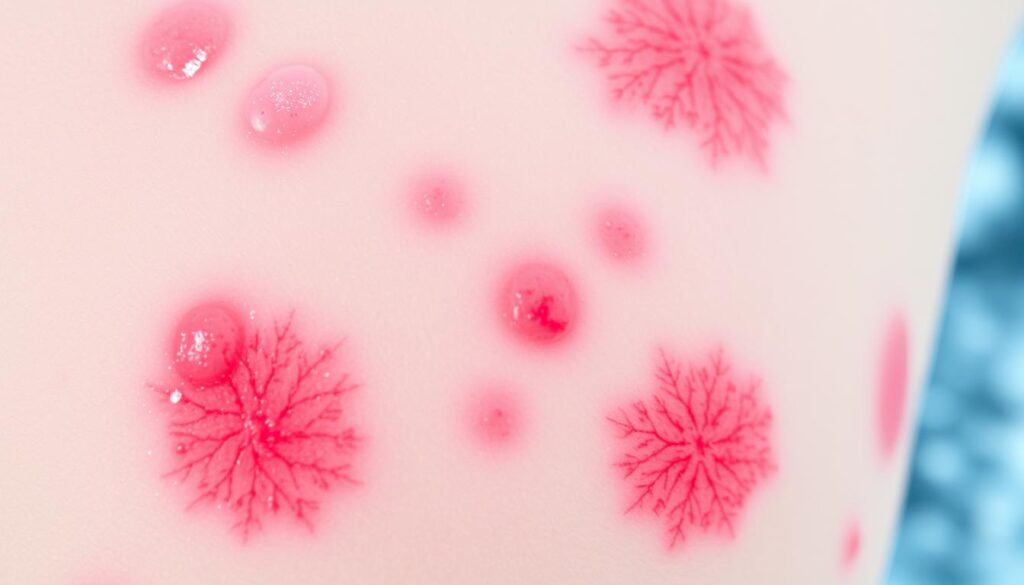
Cold urticaria is a unique cold allergy affecting many people. It causes unusual skin reactions after exposure to chilly temperatures. This condition can trigger unexpected responses when encountering cold environments or objects1.
Understanding cold hypersensitivity helps manage symptoms and prevent complications. Cold urticaria mainly affects young adults, causing uncomfortable and potentially dangerous skin reactions1.
Cold exposure can lead to itchy welts, swelling, or severe systemic responses. In rare cases, it may cause anaphylaxis, a whole-body reaction1.
Anaphylaxis symptoms include fainting, racing heart, and significant swelling. Early recognition of signs helps manage this challenging skin condition effectively1.
Understanding your body’s unique response is crucial for safety and comfort. This applies to both inherited and acquired cold urticaria1.
Key Takeaways
- Cold urticaria is a skin condition triggered by cold temperatures
- Symptoms can range from mild welts to severe systemic reactions
- Young adults are most commonly affected by this condition
- Preventive measures and medications can help manage symptoms
- Consulting a healthcare professional is crucial for proper diagnosis
Understanding Cold Urticaria: Causes and Risk Factors
Cold urticaria is an allergic reaction to cold temperatures. It can greatly affect your daily life. Your body reacts unexpectedly to cold, causing uncomfortable symptoms.
This condition mainly affects young adults aged 20-40. It’s rare, impacting about 6 in 10,000 people worldwide2.
Primary Triggers of Cold Urticaria
Your body might react to cold temperatures through various triggers, including:
- Swimming in cold water
- Drinking chilled beverages
- Handling cold objects
- Entering air-conditioned rooms
- Exposure to cold air or wind
Detailed Risk Factors
Several factors can increase your chances of developing this condition:
- Age: Most common in young adults3
- Gender: Affects males and females equally4
- Climate: More prevalent in colder environments4
The cause involves an immunoglobulin E (IgE) mediated mast cell activation. This makes your body release histamine when exposed to cold3.
The allergic reaction can lead to painful welts and serious symptoms. Knowing how your body responds to cold is key to managing this condition.
Understanding your body’s unique response to cold is crucial in managing this challenging condition.
| Factor | Impact on Cold Urticaria |
|---|---|
| Age Range | 20-40 years most affected2 |
| Prevalence | 6 in 10,000 people worldwide2 |
| Duration | 4.8-9.3 years average4 |
Cold urticaria can be linked to conditions like Raynaud’s phenomenon. Its exact cause is complex and not fully understood.
Genetic factors, health issues, and environment may all play a role. These elements contribute to developing this unique condition.
Recognizing Cold Urticaria Symptoms
Cold urticaria causes symptoms that appear quickly after exposure to cold temperatures. Knowing these signs helps manage the condition effectively. Symptoms usually show up within minutes of cold contact5.
Cold urticaria symptoms can range from mild to severe. Understanding them is key to proper management5.
Key symptoms of cold urticaria include:
- Temporary itchy welts on skin exposed to cold
- Swelling of hands when holding cold objects
- Lip swelling from consuming cold food or drinks
- Worsening reactions as skin warms up5
Serious cases may require immediate medical care. These can include severe reactions such as:
- Anaphylaxis
- Racing heart
- Swelling of limbs or torso
- Potential shock response5
Full skin exposure, like swimming in cold water, can be dangerous. This can lead to loss of consciousness and significant health risks5.
Doctors can diagnose cold urticaria with a cold stimulation test. They place an ice cube on your skin to check for a reaction5. You can learn more about this here.
Remember, if you experience severe symptoms like difficulty breathing or extensive hives, seek medical help immediately.
Conclusion
Managing cold urticaria requires a strategic approach to prevention and treatment. Understanding your triggers and working with healthcare professionals can improve your quality of life through comprehensive medical research. Cold urticaria affects about 3% of chronic urticaria cases6.
Your treatment strategy should include wearing protective clothing and avoiding sudden temperature changes. Consider taking non-sedating antihistamines as well. In children, physical urticarias make up 22% of chronic urticaria cases7.
Over 90% of cold urticaria cases are idiopathic, meaning the exact cause is unknown6. Professional medical guidance is crucial for developing an effective management plan. A board-certified allergist can help identify potential underlying autoimmune factors.
With proper prevention techniques and personalized medical advice, you can control symptoms effectively. This approach allows you to maintain an active and comfortable lifestyle. Don’t let cold urticaria hold you back from enjoying life to the fullest.
FAQ
What is Cold Urticaria?
Cold urticaria is a skin condition triggered by cold temperatures. It causes itchy welts and swelling when your skin is exposed to cold. This condition mainly affects young adults and children.
Your body releases histamine in response to cold stimuli. In severe cases, it can lead to life-threatening symptoms like anaphylaxis.
What Are the Common Triggers of Cold Urticaria?
Cold urticaria can be set off by various chilly exposures. These include swimming in cold water, drinking cold beverages, and eating ice cream.
Handling cold objects, walking in frigid temperatures, or entering air-conditioned rooms can also trigger it. Sudden temperature changes may cause your skin to react with itchy hives.
How is Cold Urticaria Diagnosed?
Doctors typically use a simple ice cube test to diagnose cold urticaria. They place an ice cube on your skin for five minutes.
They then observe the area for hive formation. If welts appear after the skin warms up, it indicates cold urticaria.
What Are the Symptoms of Cold Urticaria?
Symptoms usually appear within minutes of cold exposure. They can include itchy welts on cold-exposed skin and swelling of hands when holding cold objects.
Swelling of lips when eating cold food or drinks is also common. Severe cases might lead to anaphylaxis, causing fainting and breathing difficulties.
Who is Most at Risk for Developing Cold Urticaria?
Young adults are most commonly affected by acquired cold urticaria. People with conditions like hepatitis or cancer might have a higher risk.
Rarely, the condition can be inherited. This can cause painful welts and flu-like symptoms after cold exposure. Those with sensitive skin cells may be more susceptible.
Can Cold Urticaria Be Treated?
While there’s no cure, management strategies can help control symptoms. These include taking antihistamines before cold exposure and protecting your skin from sudden temperature changes.
Avoiding ice-cold foods and drinks is also recommended. Carrying an epinephrine autoinjector, if prescribed, is crucial. In some cases, doctors might recommend medications like omalizumab.
Is Cold Urticaria Dangerous?
Cold urticaria can be potentially dangerous, especially with full-body cold exposure like swimming. Severe reactions can lead to anaphylaxis, causing loss of consciousness.
In extreme cases, it might result in drowning. It’s crucial to take precautions and consult with a healthcare professional.
Can Cold Urticaria Resolve on Its Own?
For some people, cold urticaria may resolve spontaneously after weeks or months. However, this varies by individual.
It’s essential to work with a board-certified allergist or dermatologist. They can help manage your symptoms and develop an appropriate treatment plan.
Source Links
- Cold urticaria-Cold urticaria – Symptoms & causes – Mayo Clinic – https://www.mayoclinic.org/diseases-conditions/cold-urticaria/symptoms-causes/syc-20371046
- A Guide to Cold Urticaria – https://resources.healthgrades.com/right-care/skin-hair-and-nails/cold-urticaria
- Cold urticaria – UpToDate – https://www.uptodate.com/contents/cold-urticaria
- Cold-induced urticaria: challenges in diagnosis and management – https://pmc.ncbi.nlm.nih.gov/articles/PMC3736478/
- Cold Urticaria: Identifying Symptoms and Effective Treatments (2024) – https://www.wyndly.com/blogs/learn/cold-urticaria?srsltid=AfmBOooqc0sg32crnCS3JasmecQ0GsEUwNtA83QmqHvf_lezJACGrgn-
- Cold Urticaria: A Rare Manifestation of Lymphoma | Soyyigit – https://www.journalmc.org/index.php/JMC/article/view/1803/1406
- Anaphylaxis in atypical cold urticaria: case report and review of literature – Italian Journal of Pediatrics – https://ijponline.biomedcentral.com/articles/10.1186/s13052-018-0578-6

