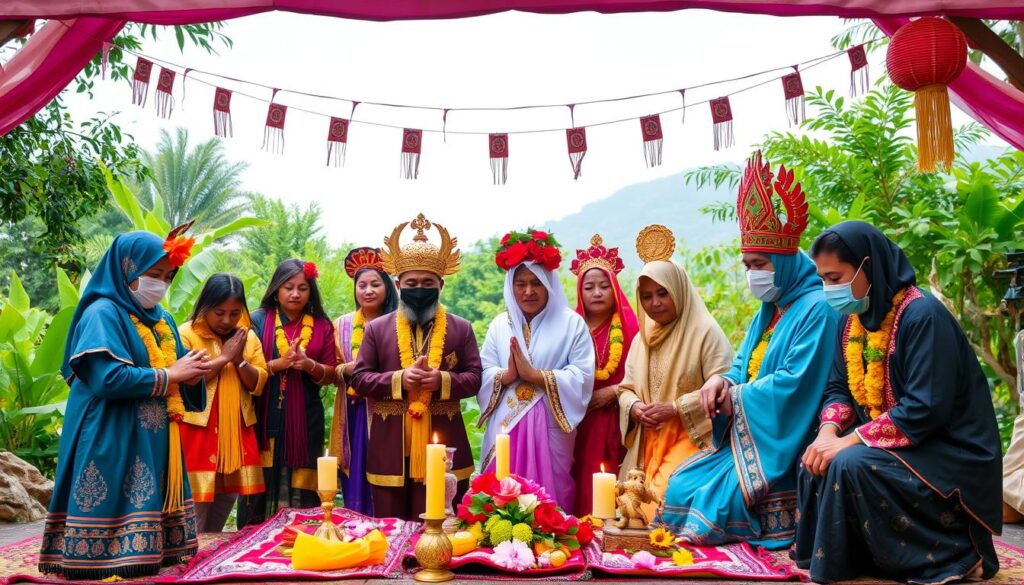
Coming-of-Age celebrations mark the leap from childhood to adulthood in cultures worldwide. These ceremonies honor maturation and personal growth. They showcase how societies recognize a young person’s budding independence12.
Different cultures celebrate adolescence through unique rituals reflecting their values. Jewish Bar and Bat Mitzvahs occur at ages 12-132. Latin American Quinceañeras are celebrated at age 1512.
These ceremonies are more than just parties. They mark when young people are seen as emerging adults. New responsibilities are given, and they join more mature social circles.
Japan’s Seijin-no-Hi happens at age 2012. The Amish Rumspringa begins at age 162. These traditions represent a personal transformation for youth.
Key Takeaways
- Coming-of-Age celebrations occur between ages 12-21
- Rituals vary widely across different cultural contexts
- These ceremonies mark the transition to adulthood
- Cultural traditions reflect unique societal values
- Celebrations recognize personal growth and emerging independence
Understanding Coming-of-Age Celebrations
Coming-of-age celebrations mark a powerful moment of self-discovery and identity formation. These unique cultural rituals symbolize the transition to adulthood. They capture the essence of growth and transformation, like a personal Bildungsroman.
What is a Coming-of-Age Celebration?
A coming-of-age celebration is a ritual recognizing a young person’s transition into adulthood. These ceremonies vary across cultures but share a common goal. They acknowledge personal growth and new responsibilities3.
From the Jewish Bar and Bat Mitzvah at 13 to the Hispanic Quinceanera at 15, each tradition is unique. These events tell a story of cultural identity and personal growth3.
The Significance Behind the Traditions
These celebrations carry deep cultural meaning beyond a simple birthday party. They’re rites of passage symbolizing spiritual, social, and personal maturity4. Different cultures mark this transition through various ceremonies.
- Jewish teens complete Bar/Bat Mitzvah4
- Catholic teens undergo confirmation4
- Muslim teens assume religious responsibilities4
Common Cultural Variations
| Culture | Tradition | Age |
|---|---|---|
| Japanese | Seijin-no-Hi | 20 years |
| Maasai | Warrior Initiation | 10-20 years |
| American | Sweet 16 | 16 years |
“Every culture has its own way of saying, ‘You are now an adult.'” – Cultural Anthropologist
Planning Your Own Coming-of-Age Celebration
Transitioning to adulthood is a big milestone worth celebrating. Your coming-of-age event marks personal growth in a unique way. This guide helps create a memorable experience honoring your journey to adulthood5.
Choosing the Right Time and Place
Celebration timing varies based on cultural traditions and personal significance. Age thirteen is historically recognized as a pivotal moment in many cultures6.
Consider these factors when picking the perfect moment:
- Cultural background and family traditions
- Personal milestones (13, 16, 18, or 21 years old)
- Meaningful locations that reflect your personality
Themes and Activities to Explore
Creating a memorable celebration needs thoughtful planning and meaningful activities. Good communication between parents and teens can make this transition powerful5.
Here are some ideas to think about:
- Involve family and close friends in the planning
- Create opportunities for personal reflection
- Plan activities that showcase personal growth
Celebrating adulthood is about emphasizing the positive aspects of growing up and personal development.
Include elements that show your character growth, such as:
- Volunteer activities that demonstrate social responsibility5
- Symbolic rituals marking your transition
- Multigenerational gatherings that provide guidance5
Your coming-of-age celebration is a chance to reflect on growth. It’s also a time to look forward to the exciting journey of adulthood5.
Making It Memorable
Planning a memorable coming-of-age celebration takes careful thought. It should showcase your growth and identity. Your event needs to reflect your unique journey of self-discovery7.
Personal touches can make your event extraordinary. Display your achievements, talents, and interests. Create interactive stations for family and friends to explore your life story.
Consider using childhood photo collages or video tributes. Share key moments from your personal development journey. These can illustrate your growth effectively.
Involving loved ones adds meaning to your celebration. Assign special roles that highlight your relationships. Use traditional ceremonies or symbolic rituals to mark your transition.
Hire professional photographers to capture these precious moments. They’ll create keepsakes that preserve memories of your transformation. Your celebration is a powerful story of personal growth.
Choose mementos that remind you of this life transition. A time capsule with meaningful items works well. Or try a guest book signed by your supporters.
These tangible memories will be lasting reminders. They’ll showcase your unique path to adulthood8. Your coming-of-age celebration is more than just an event.
FAQ
What exactly is a coming-of-age celebration?
A coming-of-age celebration marks the shift from childhood to adulthood. These events vary across cultures, usually occurring between ages 12-21. They represent new social status, responsibilities, and rights for the individual.
How do coming-of-age celebrations differ across cultures?
Coming-of-age celebrations show great diversity worldwide. Jewish teens have Bar and Bat Mitzvahs, while Latin American girls celebrate Quinceañeras. Japanese youth take part in Seijin-no-Hi ceremonies.
Some indigenous cultures, like the Maasai, have warrior initiation rituals. These often include physical challenges to test readiness for adulthood.
At what age are coming-of-age celebrations typically held?
The age for these celebrations varies by culture and tradition. Common milestones include 13, 15, 16, 18, and 21 years old. Jewish traditions mark this at 12-13, while Latin American cultures celebrate at 15.
Many Western countries recognize adulthood at 18 or 21. Each culture has its own reasons for choosing a specific age.
How can I personalize a coming-of-age celebration?
Make the event unique by including the individual’s interests and cultural background. Add displays of childhood photos and performances showcasing their talents. Create meaningful rituals and keepsakes like time capsules or guest books.
What are some common elements of coming-of-age celebrations?
These events often include religious or cultural ceremonies and symbolic gestures. Family and friends give speeches, and there’s usually music and dancing. Photo presentations and activities highlighting the person’s growth are also common.
Are coming-of-age celebrations religious in nature?
Not all coming-of-age celebrations are religious, though many have spiritual roots. Some are cultural or social events marking the transition to adulthood. The nature of the celebration depends on the individual’s background and family traditions.
How important are these celebrations to personal development?
Coming-of-age celebrations play a vital role in shaping identity and self-discovery. They acknowledge personal growth and mark a significant life milestone. These events help young people recognize their new adult responsibilities and roles.
Source Links
- Coming of age – https://en.wikipedia.org/wiki/Coming_of_age
- HCCC Libraries: Cultures & Values ~ Colicchio: Coming of Age Rituals – https://library.hccc.edu/c.php?g=931124&p=6713635
- 13 Amazing Coming of Age Traditions From Around the World – https://www.globalcitizen.org/en/content/13-amazing-coming-of-age-traditions-from-around-th/
- How Different Cultures Recognize a Child’s Coming of Age – https://www.parents.com/coming-of-age-8665808
- Rite of Way: Coming-of-Age Rituals for a New Generation – https://www.parentmap.com/article/rite-of-way-coming-of-age-rituals-for-a-new-generation
- Coming of Age Ceremonies Can Help Your Adolescent Children Become Adults | G3 Ministries – https://g3min.org/coming-of-age-ceremonies-can-help-your-adolescent-children-become-adults/?srsltid=AfmBOorEbT0QOOpda29hG4JT_JWn90xn_eZMblVyCOSPQ12PPzbzVgC3
- Memorable Milestones: Making Celebrations Meaningful at Every Stage – https://www.littlerockfamily.com/post/129412/memorable-milestones-making-celebrations-meaningful-at-every-stage
- What Makes a Good “Coming of Age” Story? – Kristin Kraves Books – https://kristinkravesbooks.com/2020/10/30/what-makes-a-good-coming-of-age-story/