
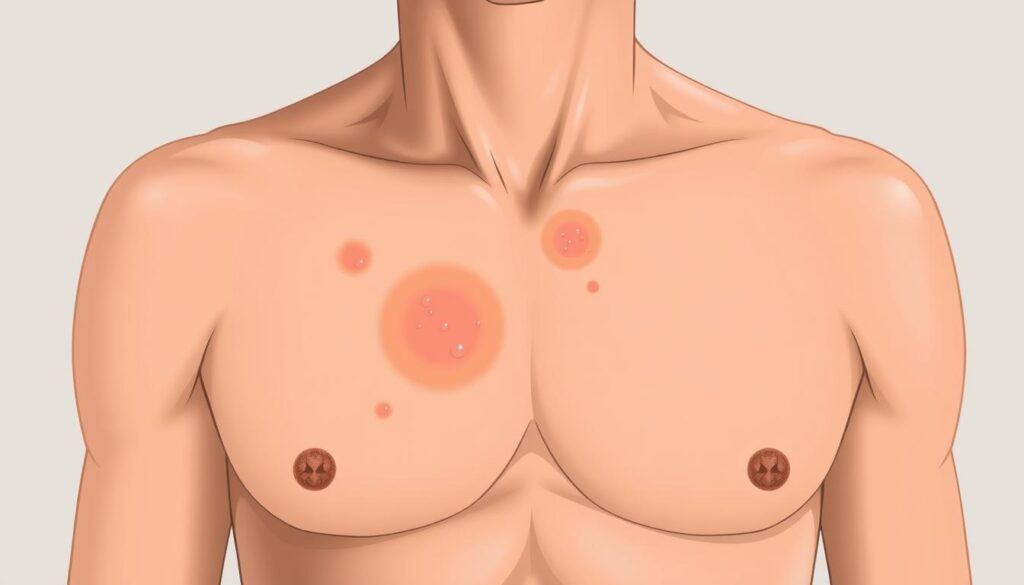
Sexual health demands vigilance and regular check-ups. Recognizing STD symptoms in men can lead to early detection and proper treatment. Over a million STIs occur worldwide daily, emphasizing the need for awareness.
Some STDs show no signs, but certain symptoms require immediate medical care. Men’s STD symptoms range from mild discomfort to severe health issues1.
Your well-being hinges on understanding risks and spotting red flags. Chlamydia often goes unnoticed in men, making regular testing vital2.
The U.S. sees about 14 million new HPV cases yearly. This statistic underscores the importance of staying informed1.
Key Takeaways
- Over 1 million STIs are contracted globally daily
- Some STDs can be asymptomatic in males
- Early detection is crucial for effective treatment
- Regular testing helps maintain sexual health
- Multiple STDs can present different symptoms
Understanding STD Risk Factors and Transmission
STIs pose significant health risks for men. Many cases go unnoticed due to minimal or absent symptoms. Knowing how these infections spread can help protect your sexual health3.
Common Ways STDs Spread
STIs can spread through various sexual activities. These include unprotected vaginal, anal, and oral contact. Skin-to-skin contact with infected areas also poses risks3.
- Unprotected vaginal, anal, and oral sexual contact
- Skin-to-skin contact with infected areas
- Exchange of bodily fluids during sexual encounters3
High-Risk Behaviors to Avoid
Some behaviors increase your risk of contracting STIs. Signs of chlamydia, gonorrhea, and syphilis can be more common in certain situations.
- Multiple sexual partners
- Unprotected sexual encounters
- Sharing needles during tattoos or drug use3
“Knowing your risks is the first step in preventing sexually transmitted infections.”
The Importance of Regular Testing
STI symptoms in guys often remain hidden. Routine screenings are crucial for early detection. Many infections like chlamydia can be asymptomatic, silently affecting your health4.
Regular testing helps detect and treat potential infections early. This prevents serious complications such as organ damage, infertility, and potential HIV transmission3.
- Organ damage
- Infertility
- Potential HIV transmission3
Proactive health management is key to maintaining your sexual wellness.
Signs of Common STDs in Men
Knowing STD warning signs is vital for men’s sexual health. Many STDs can be tricky, with symptoms that might not show up right away. Regular testing is key, as symptoms typically appear around 20 days after infection5.
Here are key symptoms to watch for in common STDs:
- Chlamydia: Look for penis discharge, pain when peeing, and sore testicles. These signs usually show up 1-3 weeks after getting infected5.
- Gonorrhea: Watch for painful urination and odd discharge. Symptoms often appear within a week to a month5.
- Herpes: Painful blisters or open sores can form around genitals or mouth. These typically develop 2-4 weeks after infection5.
Some STDs have more complex symptoms. Syphilis progresses through stages, starting with a painless genital sore. This sore, called a chancre, usually appears about 3 weeks after infection5.
| STD | Initial Symptoms | Typical Timeframe |
|---|---|---|
| Chlamydia | Genital discharge, urination pain | 1-3 weeks |
| Gonorrhea | Painful urination | 1 month |
| Herpes | Genital blisters | 2-4 weeks |
Many STDs can occur without symptoms. This makes sexual health education and regular testing crucial for men6. Having multiple partners and certain behaviors can raise your risk5.
Early detection and treatment are key to managing sexually transmitted diseases effectively.
Notice any odd symptoms? Think you might have been exposed? See a doctor right away for proper diagnosis and care7.
Conclusion
Knowing STI symptoms in guys is vital for male sexual health. Your awareness can lead to early detection and prevention8. With over 20 types of STIs, staying informed is crucial8.
Regular testing is key for spotting venereal diseases in men. The CDC suggests yearly tests for sexually active men9. Early detection prevents health issues and reduces spread to partners9.
Prevention is essential in sexual health. Latex condoms can significantly reduce STI transmission8. HPV and hepatitis B vaccines offer extra protection8. Some STIs may not show symptoms right away8.
Your sexual health is your responsibility. Practice safe sex and get regular tests. Talk openly with your doctor about any concerns9.
FAQ
How do I know if I have an STD?
STDs often have no symptoms. Common signs include unusual discharge, pain during urination, and genital sores. Professional medical testing is the only way to be certain.
If you have concerns about exposure, see a healthcare provider. They can perform a thorough STD screening for you.
Are some STDs more common in men?
Yes, certain STDs occur more often in men. Chlamydia, gonorrhea, and HPV are particularly widespread. Men who have sex with men may face higher risks for syphilis and HIV.
Regular testing is vital, especially for sexually active individuals. Those with multiple partners should get tested more frequently.
Can STDs be prevented?
STD prevention includes using condoms and getting vaccinated for HPV and hepatitis. Limiting sexual partners and regular screenings also help reduce risks.
Open talks with partners about sexual health can significantly lower transmission chances. Getting tested together is another smart preventive measure.
How quickly do STD symptoms appear?
Symptom onset varies by infection. Some STDs like chlamydia may show signs within weeks. Others, like HIV, might take months to display symptoms.
Many STDs can be silent for long periods. That’s why routine testing is crucial, even if you feel fine.
What should I do if I think I’ve been exposed to an STD?
Contact a healthcare professional right away. Get tested as soon as possible and avoid sexual activity until you get results.
Inform recent sexual partners about potential exposure. Many STDs are treatable with early detection, so quick action is key.
Are home STD testing kits reliable?
Home testing kits offer initial screening but aren’t as thorough as professional medical tests. For the most accurate results, visit a healthcare provider.
Professional tests detect a wider range of infections. They also provide immediate guidance for treatment if needed.
Can I get an STD even if my partner shows no symptoms?
Yes, you can. Many STDs can be present without visible signs. A person can be infected and contagious without knowing it.
Regular testing, using protection, and open talks with partners are crucial. These steps help prevent STD transmission effectively.
Source Links
- Signs and Symptoms of Common STDs in Men – https://www.healthline.com/health/mens-health-signs-of-common-stds
- Signs of STDs in men: Symptoms and when they appear – https://www.medicalnewstoday.com/articles/323123
- Sexually Transmitted Infections (Sexually Transmitted Diseases) – https://my.clevelandclinic.org/health/diseases/9138-sexually-transmitted-diseases–infections-stds–stis
- STDs in Men: Types, Warning Signs, Symptoms, Causes & Treatment – https://www.medicinenet.com/stds_in_men_overview/article.htm
- Sexually Transmitted Diseases (STD) in Men: Symptoms, Causes, Types, Treatment | Medcare – https://www.medcare.ae/en/health-library/sexually-transmitted-diseases-stds-in-men-common-causes-signs-types-testing-treatment-more.html
- Sexually transmitted diseases (STDs) – Symptoms and causes – https://www.mayoclinic.org/diseases-conditions/sexually-transmitted-diseases-stds/symptoms-causes/syc-20351240
- 8 Common STDs: What You Need to Know – https://www.pfizer.com/news/articles/8_common_stds
- Sexually Transmitted Infections | STIs | Venereal Disease | MedlinePlus – https://medlineplus.gov/sexuallytransmittedinfections.html
- Symptoms of STD in Male: A Comprehensive Guide – https://www.chcfl.org/symptoms-of-std-in-male-a-comprehensive-guide/

