
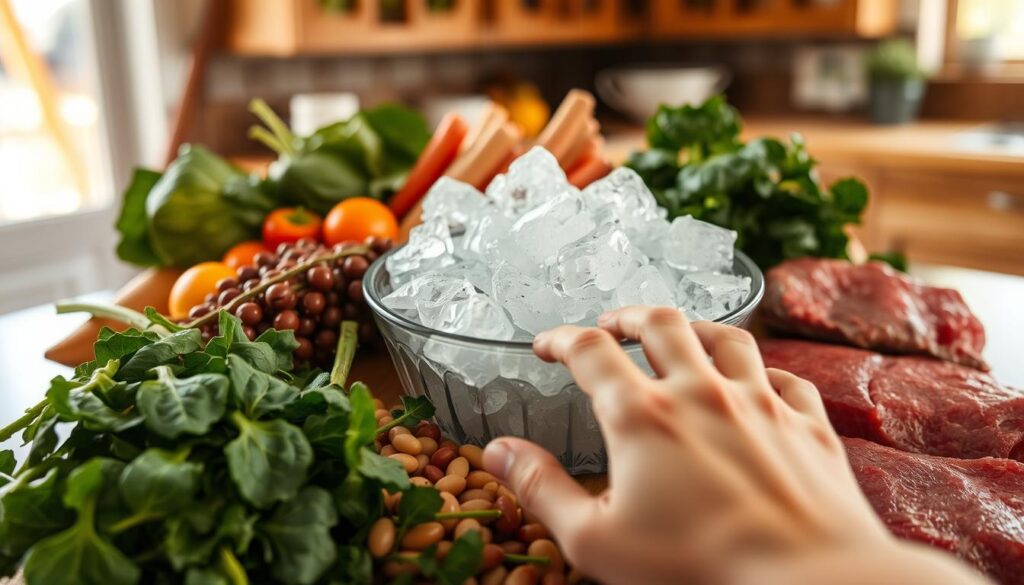
Do you often munch on ice? This habit might signal a health issue. Craving nonfood items like ice is called pica1. It’s often linked to iron deficiency anemia, a common health problem1.
Iron deficiency anemia affects many people, especially women2. It’s more common during menstrual cycles2. Your ice craving could be your body’s way of hinting at a nutrient shortage.
Anemia can cause ice cravings and may briefly ease fatigue1. Pregnant women are at higher risk due to increased nutrient needs1. These cravings might be a sign of anemia in pregnancy.
Key Takeaways
- Ice cravings might indicate iron deficiency anemia
- Pica can be linked to nutritional or mental health disorders
- Women are at higher risk of iron deficiency
- Persistent ice cravings warrant medical consultation
- Anemia affects oxygen transportation in the body
Understanding Craving Ice and Anemia: The Hidden Connection
Ice chewing might be your body’s silent signal of a health issue. Many people have unusual cravings without knowing they could indicate a nutritional deficiency. This habit could point to a serious underlying problem.
What is Pagophagia?
Pagophagia is a specific form of pica involving compulsive ice eating3. It’s more than just liking cold treats. This condition can be a warning sign of iron deficiency anemia4.
About 20% of pica cases occur in pregnant women due to low iron stores5. This highlights the connection between pregnancy and this unusual craving.
Signs Your Ice Cravings Are Related to Anemia
- Persistent and uncontrollable urge to chew ice3
- Extreme fatigue and weakness
- Pale or yellowish skin
- Shortness of breath
- Constant chills
How Iron Deficiency Affects Your Body
Iron is crucial for oxygen transportation in your body. Low iron levels can lead to significant health challenges. Patients with iron deficiency who eat ice might experience unique brain responses.
One study suggested that ice chewing could potentially increase oxygenated blood flow to the brain5. This finding sheds light on why some people crave ice.
| Iron Deficiency Symptom | Potential Impact |
|---|---|
| Reduced Hemoglobin | Decreased Oxygen Carrying Capacity |
| Cognitive Function | Impaired Mental Processing |
| Physical Stamina | Significant Energy Reduction |
Pagophagia is not just a quirky habit—it could be your body’s distress signal for iron deficiency.
Not all ice cravings indicate anemia, but persistent symptoms need medical evaluation. Stress, poor nutrition, and mental health issues can also cause these unusual cravings3.
Common Symptoms of Iron Deficiency Beyond Ice Cravings
Iron deficiency manifests through subtle yet significant symptoms. It impacts overall health and causes nearly half of the world’s anemia cases6. Recognizing warning signs early is crucial for proper treatment.
Your body sends multiple signals when iron levels are low. Here are the most common iron deficiency signs to watch for:
- Persistent Fatigue: Feeling constantly tired and weak
- Unusual Pale or Yellow Skin
- Shortness of Breath
- Frequent Cold Sensations
- Hair Loss and Brittle Nails
Surprising indicators include tongue inflammation and restless leg syndrome. Almost 24 percent of iron-deficient people experience restless leg syndrome6. A study showed 27 percent of anemia patients developed atrophic glossitis, a tongue inflammation6.
| Symptom | Prevalence |
|---|---|
| Restless Leg Syndrome | 24% in iron-deficient patients |
| Tongue Inflammation | 27% in anemia patients |
| Angular Cheilitis | 35% linked to iron deficiency |
About 10 million Americans struggle with iron deficiency. Women are more frequently affected by this condition6. If you’re experiencing multiple symptoms, consult a healthcare professional for an anemia diagnosis.
“Your body speaks volumes about your health through subtle signals. Listen carefully.” – Medical Research Insights
Understanding your body’s iron levels starts with recognizing critical signs. Don’t ignore the symptoms. They might be your body’s way of asking for help.
Treatment Options and Iron-Rich Diet Solutions
Treating anemia naturally requires the right nutritional approaches. Your body needs a plan to combat iron deficiency. A strategic diet can help restore your optimal health7.
Recovery starts with selecting iron-rich foods. Daily iron intake should be 7 to 18 grams. Diet plays a crucial role in anemia treatment7.
Essential Iron-Rich Foods to Include
Optimizing your diet can boost iron levels. Include these powerful iron sources:
- Red meat and poultry (containing heme iron that accounts for 95% of functional iron)7
- Fish and seafood
- Dark green leafy vegetables
- Beans and lentils
- Dried fruits
Supplement Options and Considerations
Diet is vital, but some cases need extra help. Severe iron deficiency anemia might require iron supplements. Intravenous iron infusions may be necessary in some instances7.
| Iron Source | Absorption Potential |
|---|---|
| Heme Iron (Meat) | Highest Absorption |
| Non-Heme Iron (Plants) | Lower Absorption |
| Vitamin C-Paired Foods | Enhanced Absorption |
When to Seek Medical Help
Your health needs expert guidance. See a doctor if you have ongoing fatigue or shortness of breath. Seek help if symptoms don’t improve with diet changes8.
Pro tip: Pair iron-rich foods with vitamin C sources. This combo boosts absorption and supports healing7.
Consistency is key in treating anemia naturally. With the right diet and medical support, you can manage iron deficiency. Your vitality can be restored with proper care8.
Conclusion
Tackling ice addiction needs a holistic approach to anemia care. Understanding why you crave ice is key to better health. Pagophagia often signals iron deficiency, affecting up to one-third of people9.
Expert medical advice is crucial for diagnosing iron-related issues. Many don’t realize ice cravings may indicate health problems10. A thorough medical check-up can pinpoint the cause and create a tailored treatment plan.
Recovery involves more than just boosting iron levels. Lifestyle changes, diet tweaks, and iron supplements can boost your overall health. With proper care, most people can beat ice addiction and iron deficiency109.
Your health journey is ongoing. Stay active in your care and team up with your doctors. Be kind to yourself as you tackle anemia and ice addiction challenges.
FAQ
What is pagophagia and how is it related to anemia?
Pagophagia is a form of pica where people compulsively eat ice. It’s often linked to iron deficiency anemia. Low iron levels can make you crave ice.
This craving might signal that your body struggles to make enough healthy red blood cells. Your body may be trying to tell you something important.
Why do people with anemia crave ice?
The exact reason isn’t clear, but there are some theories. Ice cravings might be your body’s way to cope with anemia discomfort.
The cooling sensation of ice may offer relief from fatigue and weakness. These are common symptoms of anemia.
What are the main symptoms of iron deficiency anemia?
Common symptoms include fatigue, weakness, and shortness of breath. You might also experience pale skin, chills, and brittle nails.
Other signs are hair loss, dizziness, and trouble concentrating. Severe cases may cause heart palpitations and chest pain.
How can I increase my iron intake naturally?
Eat iron-rich foods like red meat, poultry, fish, beans, and spinach. Pair these with vitamin C-rich foods to boost iron absorption.
Fortified cereals can also be a great source of dietary iron. Eating a balanced diet is key to getting enough iron.
Are ice cravings always a sign of anemia?
Not always. Ice cravings can be a symptom of iron deficiency anemia. However, they may also relate to other conditions or psychological factors.
It’s important to see a doctor for a proper diagnosis. They can rule out other potential causes of your ice cravings.
How is iron deficiency anemia diagnosed?
Diagnosis usually involves a comprehensive blood test. This measures your hemoglobin levels, red blood cell count, and iron levels.
Your doctor might run more tests to find the root cause. These can help determine why you’re iron deficient.
Can pregnant women be more susceptible to iron deficiency anemia?
Yes, pregnant women are at higher risk for anemia. Their bodies need more iron to support increased blood volume.
The growing fetus also requires iron. This extra demand can lead to iron deficiency if not addressed.
What treatment options are available for iron deficiency anemia?
Treatment often includes dietary changes and iron supplements. Your doctor may also address any underlying causes.
Some cases might need oral iron supplements or IV iron therapy. Always consult a doctor for the best treatment plan.
Source Links
- Craving Ice: Pregnancy, Anemia, and More – https://www.healthline.com/health/craving-ice
- 6 Signs You May Have Iron Deficiency – https://health.clevelandclinic.org/signs-of-iron-deficiency
- Understanding Pica Why Some People Crave Ice – https://dentistpeshawar.pk/parafunctional-habits/understanding-pica-why-some-people-crave-ice/
- 9 Reasons You Should Stop Chewing Ice – https://www.thehealthy.com/nutrition/chewing-ice/
- Why eating ice may give a mental boost to people with iron deficiency – https://www.theguardian.com/science/2014/nov/14/pagophagia-ice-craving-psychology-study
- 6 Weird Signs You’re Not Getting Enough Iron – https://www.prevention.com/health/a20479000/iron-deficiency-symptoms/
- What to Eat if You Have Anemia – https://www.verywellhealth.com/treatments-for-iron-deficiency-anemia-3522500
- Iron deficiency anemia-Iron deficiency anemia – Symptoms & causes – Mayo Clinic – https://www.mayoclinic.org/diseases-conditions/iron-deficiency-anemia/symptoms-causes/syc-20355034
- Discover Why Chewing Ice May Be a Sign of Pagophagia – https://www.verywellhealth.com/eating-ice-a-common-symptom-of-iron-deficiency-anemia-2634365
- Pica/Pagophagia-Associated Hyponatremia: Patient Presenting With Seizure – https://pmc.ncbi.nlm.nih.gov/articles/PMC7384452/

