
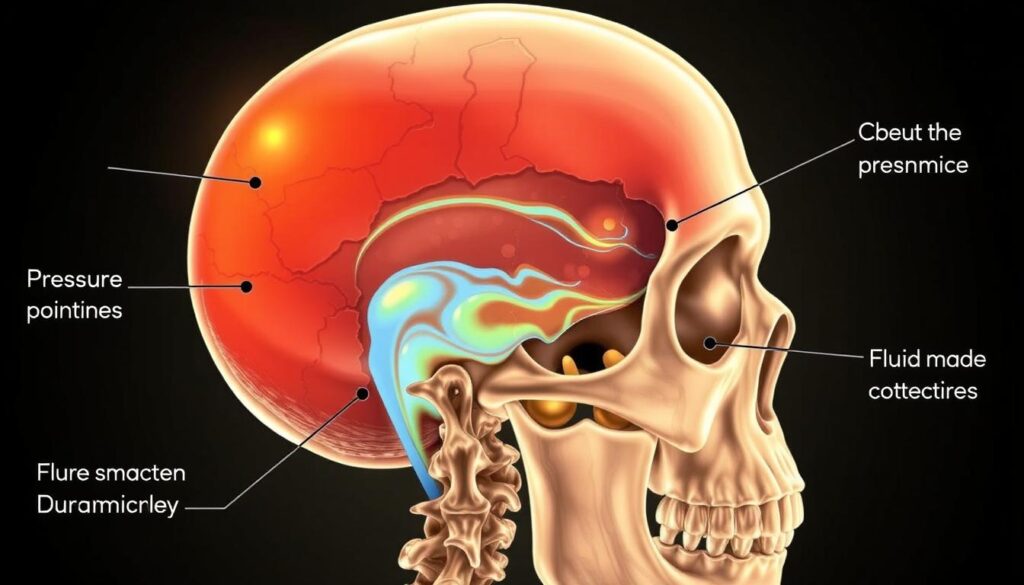
A CSF leak happens when brain and spinal fluid escapes through a torn membrane. This condition can affect your health in various ways. It can cause mild discomfort or serious neurological issues1. Knowing about CSF leaks helps with early detection and proper care.
CSF leaks can result from medical procedures like lumbar punctures or spinal surgeries. Sometimes, they occur without any clear cause1. Symptoms often include persistent headaches that get worse when standing up.
These headaches usually feel better when lying down1. CSF leaks may also impact your overall brain function.
Doctors use advanced tools to find CSF leaks. These include CT scans, MRI imaging, and special techniques. These methods can show exactly where the leak is2. Finding leaks early helps prevent problems and guide treatment.
Key Takeaways
- CSF leaks can occur spontaneously or after medical procedures
- Symptoms include positional headaches and potential neurological changes
- Multiple diagnostic imaging techniques can detect CSF leaks
- Treatment options range from conservative methods to surgical interventions
- Early detection is crucial for effective management
Understanding CSF Leak and Its Impact on Your Health
Your body’s central nervous system relies on a vital protective mechanism. Cerebrospinal fluid (CSF) plays a crucial role in maintaining your neurological health. It acts as a cushion and transport system for your brain and spinal cord.
What is Cerebrospinal Fluid?
Cerebrospinal fluid is a clear, colorless liquid circulating through your brain and spinal column. It serves multiple essential functions for your nervous system.
- Provides cushioning for your brain and spinal cord
- Removes waste products from the nervous system
- Delivers nutrients to brain tissue
- Helps regulate intracranial pressure
Types of CSF Leaks
CSF leaks can occur in two primary locations. Each type has unique characteristics:
- Cranial CSF Leaks: Occur in the skull region, often near the sinuses or ears3.
- Spinal CSF Leaks: Develop along the spinal column, causing potential neurological complications3.
How CSF Leaks Affect Your Body
A CSF leak can significantly impact your health. The risks associated with these leaks include potential complications.
CSF leaks require careful medical attention to prevent serious health consequences.
Some CSF leaks can heal naturally with rest. Others might require medical intervention. The treatment approach depends on the leak’s location, size, and underlying cause4.
Common Symptoms and Warning Signs of CSF Leak
CSF leaks can seriously affect your daily life. Knowing the warning signs helps protect your health. There are two main types: spinal and cranial5.
Spinal CSF leaks cause headaches that change with body position. These headaches improve when lying down. Pain gets worse when standing up5.
- Headaches that improve when lying down
- Pain intensifying when standing up
- Increased discomfort during coughing or straining6
CSF Leak Warning Signs include more than just headaches. You might have neck or shoulder pain. Ringing in ears and hearing changes can occur.
Dizziness, nausea, and visual problems are also possible5.
- Neck or shoulder pain
- Ringing in ears
- Hearing changes
- Dizziness and nausea
- Visual disturbances5
Cranial CSF leaks have their own unique symptoms. Watch for these critical warning signs:
- Clear, watery drainage from nose or ear
- Hearing loss
- Metallic taste in mouth
- Potential risk of meningitis6
“Early recognition of CSF Leak Headache symptoms can prevent serious complications” – Neurology Research Institute
Risk factors are important in CSF leak development. Previous surgeries and certain disorders can increase your risk.
| Spinal CSF Leak Risks | Cranial CSF Leak Risks |
|---|---|
| Previous spine surgeries | Skull base surgeries |
| Connective tissue disorders | Head trauma |
| Ehlers-Danlos syndrome | Obesity |
Knowing these symptoms and risks can help you act quickly. Quick action may prevent serious complications. Don’t hesitate to seek medical help if you notice these signs6.
Diagnosis and Treatment Options for CSF Leak
CSF leak diagnosis and treatment requires a thorough approach. Understanding various diagnostic and treatment methods is crucial for addressing this condition effectively.
Diagnostic Procedures
CSF Leak Diagnosis uses multiple techniques to locate and assess the leak. Medical experts rely on advanced imaging. These include cranial MRI scans, spinal MRI exams, CT myelogram studies, and digital subtraction myelography.
About half of suspected spinal CSF leaks are hard to image7. Multiple diagnostic approaches are often necessary. Some patients have complex symptoms that make diagnosis challenging7.
Conservative Treatment Methods
CSF Leak Treatment usually starts with conservative approaches. These aim to reduce symptoms and promote healing. Methods include bed rest, hydration management, pain medications, and inflammation reduction strategies.
Epidural blood patching is a promising non-surgical option. Patients often respond well to one or more procedures. Blood volumes used range from 10 to 100 mL8.
Surgical Interventions
CSF Leak Repair may need surgery if conservative methods fail. Surgical options are customized for each patient’s needs8. These include endoscopic nasal leak closure, ear CSF leak repair, and duraplasty for spinal leaks.
Recovery Timeline
Recovery time depends on the treatment method used. After epidural blood patching, patients should avoid certain activities. These include bending, lifting, and straining for 4-6 weeks8.
Early detection and appropriate treatment are key to managing CSF leaks effectively.
Conclusion
CSF leak prevention and recovery are vital for managing this complex condition. Early recognition and prompt medical care are key. Trauma often contributes to these medical challenges910.
Medical advances have improved CSF leak management. Tissue adhesives offer promising solutions for patients. Dermabond, a specialized skin sealant, effectively treats postoperative CSF leakage11.
Your recovery path depends on the leak’s type and cause. Some patients experience success through conservative and surgical interventions.
CSF leak recovery needs a comprehensive approach. Some leaks heal naturally, while others require targeted treatments. Staying informed and following medical advice can boost your healing process.
Medical research continues to develop new techniques for CSF leak care. Work closely with healthcare professionals to navigate this condition confidently. Stay proactive about your health for the best outcomes.
FAQ
What is a CSF leak?
A CSF leak happens when the protective layer around your brain and spinal cord tears. This allows cerebrospinal fluid to escape, causing various health issues.
What are the main types of CSF leaks?
There are two primary types of CSF leaks: spinal and cranial. Spinal leaks occur along the spinal column. Cranial leaks happen in the skull.
Each type can have different symptoms and treatments. The specific location and cause determine the approach.
What are the most common symptoms of a CSF leak?
Symptoms vary between spinal and cranial leaks. Spinal leaks often cause headaches that worsen when standing and improve when lying down.
Cranial leak symptoms may include clear, watery drainage from the nose or ear. You might also experience hearing loss or a metallic taste in your mouth.
How are CSF leaks diagnosed?
Diagnosis typically involves several tests, including fluid analysis and imaging scans. Your doctor may use CT scans, MRI scans, or specialized procedures like cisternograms.
The specific diagnostic approach depends on your symptoms and medical history.
What are the treatment options for a CSF leak?
Treatment ranges from conservative methods to surgical interventions. Conservative treatments may include bed rest, hydration, and medications.
If these fail, more direct treatments like blood patch injections might be necessary. Surgical options can include endoscopic repairs or duraplasty for spinal leaks.
Can CSF leaks heal on their own?
Some minor CSF leaks may heal with conservative treatment, like bed rest and hydration. However, not all leaks resolve without medical help.
It’s crucial to consult a doctor to determine the best treatment for your condition.
What causes CSF leaks?
CSF leaks can result from head or spine injuries, medical procedures, or spontaneous development. Some people may be more prone due to genetic factors or previous medical interventions.
Underlying conditions like connective tissue disorders can also cause CSF leaks.
How serious are CSF leaks?
CSF leaks can be quite serious if left untreated. They can lead to complications such as meningitis or subdural hematomas.
Prompt medical attention is crucial to prevent these serious health risks.
How long does recovery from a CSF leak take?
Recovery time varies depending on the treatment method. Some patients may feel better shortly after conservative treatment.
Those needing surgery might take days to weeks to fully recover. Your specific timeline depends on the leak’s severity and location.
Can CSF leaks be prevented?
Not all CSF leaks can be prevented, but you can reduce your risk. Avoid head and spine injuries and be cautious during medical procedures.
Manage underlying conditions that might increase your risk. Regular check-ups and addressing unusual symptoms promptly can help catch potential issues early.
Source Links
- Spinal CSF Leak Patient Guide – https://www.nm.org/conditions-and-care-areas/neurosciences/cerebrospinal-fluid-leak-program/cerebrospinal-fluid-leak-patient-guide
- Cerebrospinal Fluid (CSF) Leak: Diagnosis & Treatment | NewYork-Presbyterian – https://www.nyp.org/ochspine/cerebrospinal-fluid-csf-leak/treatment
- Cerebrospinal Fluid (CSF) Leak – https://www.hopkinsmedicine.org/health/conditions-and-diseases/cerebrospinal-fluid-csf-leak
- Cerebrospinal Fluid (CSF) Leak: Symptoms & Treatment – https://my.clevelandclinic.org/health/diseases/16854-cerebrospinal-fluid-csf-leak
- CSF leak (Cerebrospinal fluid leak) – Symptoms and causes – https://www.mayoclinic.org/diseases-conditions/csf-leak/symptoms-causes/syc-20522246
- Cerebrospinal Fluid (CSF) Leak: Symptoms & Causes | NewYork-Presbyterian – https://www.nyp.org/ochspine/cerebrospinal-fluid-csf-leak
- Diagnosis of Spinal CSF leak – Diagnosis – Spinal CSF Leak Foundation – https://spinalcsfleak.org/about-spinal-csf-leaks/diagnosis-of-spinal-csf-leak/
- Treatment of Spinal CSF leak – Treatment – Spinal CSF Leak Foundation – https://spinalcsfleak.org/about-spinal-csf-leaks/treatment/
- The Management of Cranial and Spinal CSF Leaks – https://www.barrowneuro.org/for-physicians-researchers/education/grand-rounds-publications-media/barrow-quarterly/volume-17-no-4-2001/the-management-of-cranial-and-spinal-csf-leaks/
- Traumatic Cerebrospinal Fluid Leak: Diagnosis and Management – https://kjnt.org/DOIx.php?id=10.13004/kjnt.2017.13.2.63
- Skin sealants: an effective option for closing cerebrospinal fluid leakage – https://pmc.ncbi.nlm.nih.gov/articles/PMC3211598/

