
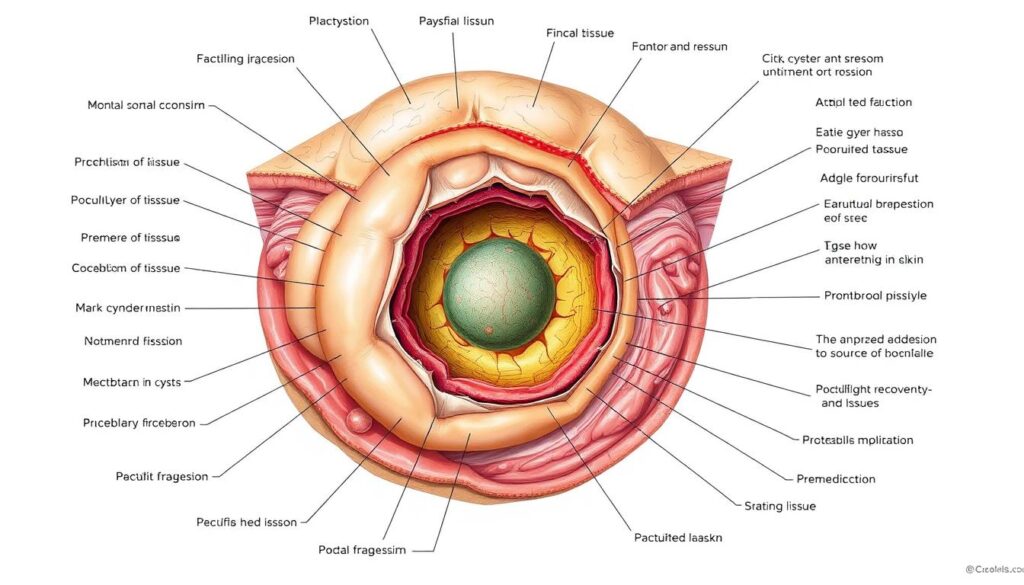
Cysts are pockets of tissue filled with fluid or other substances. They can form almost anywhere in your body. These sac-like growths range from tiny bumps to larger formations1.
Understanding cysts helps you recognize potential health issues. It’s important to seek medical advice when needed. Most cysts are harmless, but some may require attention.
Cysts come in many types, including skin, ovarian, and internal body cysts. They can develop due to infections, genetic conditions, or blocked drainage systems21.
Knowing the basics of cysts helps you make smart health choices. This includes breast cysts, cystic acne, or other growths. Some cysts need professional evaluation to ensure your health3.
Key Takeaways
- Cysts can develop in multiple body locations
- Most cysts are non-cancerous
- Different types of cysts require different treatments
- Regular medical check-ups can help detect potential issues
- Proper skin hygiene can help prevent some cyst formations
Understanding Different Types of Cysts
Cysts are complex growths that can form in various body parts. They have unique features and potential health impacts. Knowing these types helps you spot and address medical concerns better.
Cysts come in many categories. They range from skin growths to internal formations. Let’s explore the diverse world of cystic structures.
Skin and Superficial Cysts
Skin cysts are common growths that appear on different body parts. An epidermoid cyst usually contains keratin. It develops on the face, neck, or torso4.
These skin cysts can be smaller than a pea or several centimeters across4. Women are more likely to get these cysts than men4.
- Sebaceous cysts contain sebum and form within oil-producing glands
- Pilonidal cysts often occur near the tailbone area
- Ganglion cysts appear along tendons or joints5
Internal Body Cysts
Internal cysts can grow in various organs and systems. Some common types include:
- Ovarian cysts that may develop when follicles fail to release eggs properly6
- Kidney cysts that can potentially cause back or abdominal discomfort6
- Pancreatic cysts that require medical monitoring
Specialized Cysts
Some cysts have unique features and locations. Ganglion cysts range from ¼ to 1¼ inches in size. They can be found on hands, knees, or feet5.
Baker’s cysts typically form behind the knee. Vocal fold cysts can affect speaking abilities.
Most cysts are benign, but understanding their nature is crucial for proper medical assessment6.
Many cysts are harmless, but any unusual growth should be checked. A healthcare professional can rule out potential complications.
Common Causes and Risk Factors of Cyst Development
Cysts can form due to various conditions that disrupt your body’s normal functioning. Knowing these causes helps you spot potential risks and seek medical help7.
- Hormonal imbalances associated with polycystic ovary syndrome
- Genetic predispositions
- Chronic inflammatory conditions
- Blocked ducts or glands
- Infections and tissue damage
Polycystic ovary syndrome can affect your body’s ability to control cyst growth. This condition often causes enlarged ovaries with multiple fluid-filled follicles7.
Some people may face higher risks due to specific health issues. Your unique body traits play a key role in cyst risk.
“Understanding your body’s unique characteristics is crucial in identifying potential cyst risks.”
Different cyst types form in unique ways. Epidermoid cysts often appear on the face, neck, and trunk after puberty8.
Your health history is crucial in determining possible cyst formation. Knowing your body helps you spot potential issues early.
| Cyst Type | Primary Causes | Risk Factors |
|---|---|---|
| Ovarian Cysts | Hormonal Changes | Pregnancy, Endometriosis |
| Skin Cysts | Blocked Glands | Skin Injury, Age |
| Kidney Cysts | Genetic Factors | Inherited Disorders |
Many cysts are harmless, but some can cause problems. Regular check-ups and knowing your risk factors help manage potential cyst growth9.
Note: Cystic fibrosis can also contribute to cyst formation in specific organ systems, highlighting the complex nature of these fluid-filled structures.
Symptoms and Diagnosis of Cysts
Knowing cyst signs can help spot health issues early. Different cysts show unique symptoms. Early detection is key for proper care10.
Physical Symptoms to Watch
Cysts appear differently based on location. Thyroid cysts might cause neck swelling or swallowing problems. Liver cysts often have no symptoms10.
Pancreatic cysts could lead to stomach pain or weight loss. Skin cysts usually form lumps under the skin10.
- Skin cysts often appear as lumps under the skin
- Internal cysts might cause localized discomfort
- Some cysts can create pressure on surrounding organs
Advanced Diagnostic Methods
Finding cysts needs expert medical review. Your doctor may suggest imaging tests like ultrasound, MRI, or CT scans10.
“Early detection is crucial in managing potential health complications” – Medical Research Institute
Doctors might do extra tests like fluid aspiration or biopsy. These help determine the cyst’s nature and risks10.
| Cyst Type | Common Diagnostic Method | Potential Symptoms |
|---|---|---|
| Thyroid Cyst | Ultrasound | Neck swelling |
| Liver Cyst | CT Scan | Often asymptomatic |
| Pancreatic Cyst | MRI | Abdominal pain |
Remember, most cysts are benign, but professional medical evaluation remains essential for proper diagnosis and treatment10.
Conclusion
Your cyst treatment approach depends on several factors. Most cysts are benign and don’t need immediate action11. Your doctor will assess your cyst to decide the best strategy11.
Cyst removal methods vary based on type, size, and location. A “watch and wait” approach is often recommended for benign, symptom-free tumors11. Some cases may need surgery or drainage, as medical research suggests.
Your health profile guides the best cyst treatment. Some cysts go away on their own, while others need medical help. Regular check-ups help catch and manage cyst issues early.
With hundreds of cyst types, personalized medical advice is crucial11. Stay informed and work closely with your healthcare team. This approach will help you manage cysts confidently.
FAQ
What exactly is a cyst?
A cyst is a sac-like pocket of tissue. It can contain fluid, air, or other substances. These growths can develop almost anywhere in your body or under your skin.
Most cysts are benign and not cancerous. They can range from tiny pimple-like bumps to larger growths.
Are all cysts dangerous?
Most cysts are not dangerous. Many are harmless and may go away on their own. Some cysts can cause discomfort or need medical care.
It’s best to have any unusual growths checked by a doctor. They can determine if treatment is needed.
What causes cysts to develop?
Cysts can form due to many factors. These include infections, clogged glands, hormonal imbalances, and genetic conditions. Chronic inflammation and blockages in the body’s drainage systems can also cause cysts.
Some conditions, like polycystic ovary syndrome, contribute to cyst formation. Trauma or injury can sometimes lead to cyst development too.
How are cysts diagnosed?
Diagnosis typically involves a physical exam. It may include imaging tests such as ultrasound, MRI, or CT scans. Your doctor might perform a biopsy or fluid aspiration for further analysis.
What are the treatment options for cysts?
Treatment depends on the cyst’s type, size, location, and symptoms. Some cysts may go away on their own. Others might need surgical removal or draining.
Medication and antibiotics can help in some cases. Your doctor will recommend the best treatment for your situation.
What’s the difference between types of cysts?
There are various types of cysts. Skin cysts include epidermoid, sebaceous, and pilonidal cysts. Internal cysts can be ovarian, kidney, or pancreatic.
Specialized cysts include ganglion cysts, Baker’s cysts, and vocal fold cysts. Each type has unique characteristics and treatment needs.
Can cysts be prevented?
Not all cysts can be prevented. However, you can reduce your risk. Maintain good hygiene and avoid body trauma. Manage underlying health conditions and get regular check-ups.
Addressing hormonal imbalances can also help prevent some types of cysts. Consult your doctor for personalized prevention strategies.
When should I see a doctor about a cyst?
Consult a healthcare professional if you notice rapid cyst growth. Seek help for persistent pain or discomfort. Watch for signs of infection like redness, swelling, or warmth.
See a doctor if the cyst’s appearance changes. Get checked if cysts interfere with your daily activities. Early evaluation can lead to better outcomes.
Source Links
- Cysts | Causes and Treatment | The Dermatology & Skin Cancer Surgery Center at Creedmoor – https://www.creedmoorskinsurgerycenter.com/conditions/cysts
- Cysts: Types, pictures, symptoms, causes, and treatment – https://www.medicalnewstoday.com/articles/160821
- Everything You Need to Know About 14 Types of Cysts and Pseudocysts – https://www.healthline.com/health/cyst
- Skin cyst – https://www.nhs.uk/conditions/skin-cyst/
- Types of Cysts – https://www.cincinnatichildrens.org/health/c/cysts-types
- Cysts – https://www.healthdirect.gov.au/cysts
- Cyst: Symptoms, Causes, Types, & Treatment – https://www.medicinenet.com/cyst/article.htm
- Epidermoid cysts – Symptoms and causes – https://www.mayoclinic.org/diseases-conditions/epidermoid-cysts/symptoms-causes/syc-20352701
- Ovarian cysts – Symptoms and causes – https://www.mayoclinic.org/diseases-conditions/ovarian-cysts/symptoms-causes/syc-20353405
- Cysts: Symptoms and Treatment | Rencic Dermatology – https://www.rencicderm.com/conditions/cysts
- Difference Between a Tumor and a Cyst – https://www.massgeneralbrigham.org/en/about/newsroom/articles/difference-between-cyst-and-tumor

