
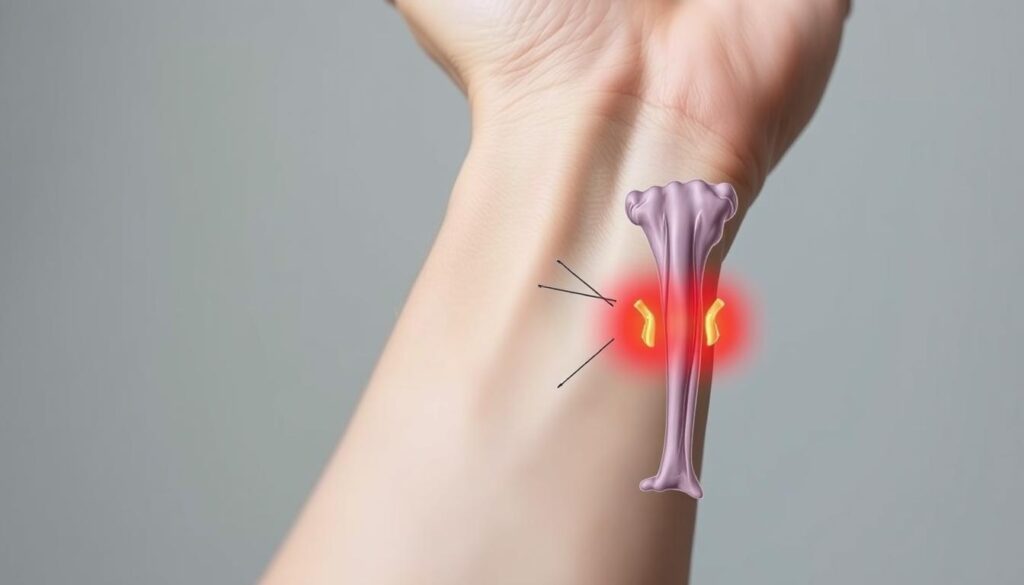
Struggling with constant thumb-side wrist pain? You might have De Quervain tenosynovitis. This common condition can make daily tasks tough. It can seriously affect your everyday life and comfort1.
De Quervain tenosynovitis is a type of thumb tendonitis. It causes swelling in the tendons around the thumb and wrist. Women are 8 to 10 times more likely to get it than men1.
This issue usually hits adults aged 30 to 50. It’s common among working pros and parents2. Certain activities raise your risk of getting it.
These include repetitive hand moves, pregnancy, childcare, sports, and using smartphones1. Knowing the signs and getting early help can prevent bigger problems later.
Key Takeaways
- De Quervain tenosynovitis causes significant wrist pain near the thumb
- Women are most likely to experience this condition
- Repetitive hand and wrist movements increase risk
- Early diagnosis can prevent long-term complications
- Multiple treatment options are available
Understanding De Quervain Tenosynovitis
De Quervain tenosynovitis causes pain in the tendons around your thumb and wrist. When these tendons get irritated, you might feel discomfort during daily activities.
This condition can make simple tasks challenging. It may affect your ability to grip objects or turn your wrist.
What Causes Thumb Side Wrist Pain
Radial styloid tenderness comes from inflamed tendon sheaths near your thumb base. This issue often develops through repetitive hand movements or wrist overuse.
Direct wrist injuries and inflammatory conditions can also trigger it. Chronic overuse of the wrist and thumb is another common cause.
- Repetitive hand movements3
- Chronic overuse of wrist and thumb
- Direct injury to the wrist area
- Inflammatory conditions
Common Risk Factors for Development
Some people are more likely to develop this condition. Those between 30 and 50 years old have a higher risk.
Women are particularly vulnerable to De Quervain tenosynovitis3. New mothers and workers with repetitive jobs face increased risks.
| Risk Group | Likelihood |
|---|---|
| New Mothers | High Risk4 |
| Repetitive Job Workers | Increased Risk5 |
| Post-Injury Patients | Moderate Risk5 |
Impact on Daily Activities
The Finkelstein test helps diagnose this condition. It can affect your ability to perform simple tasks like gripping objects.
Even holding a baby might become difficult4. Early detection and proper treatment are crucial for managing De Quervain tenosynovitis.
“Managing De Quervain tenosynovitis requires early recognition and proper treatment,” says Dr. Sarah Thompson, orthopedic specialist.
Without treatment, tendon sheath inflammation may lead to long-term problems. It could potentially limit your hand’s mobility3.
Diagnosis and Treatment Options
Diagnosing De Quervain tenosynovitis involves a careful physical exam. Doctors use the Finkelstein test to check for pain. This test involves bending your thumb and moving your wrist6.
Treatment aims to reduce inflammation and restore hand movement. Your doctor may suggest several approaches:
- Wrist splinting to immobilize the affected area
- Corticosteroid injection to reduce swelling
- Hand therapy exercises
- Over-the-counter pain relievers
- Ice application to minimize pain
Nonsurgical treatments help 50 to 80% of cases6. Most patients improve within 4 to 6 weeks of early treatment7. If these methods fail, surgery might be needed8.
“Early and targeted treatment is key to managing De Quervain tenosynovitis effectively”
Your recovery may involve working with hand or occupational therapists. They can guide you through exercises and offer personalized treatment plans7.
| Treatment Option | Effectiveness | Duration |
|---|---|---|
| Corticosteroid Injection | High | 4-6 weeks |
| Wrist Splinting | Moderate | 2-4 weeks |
| Hand Therapy | Moderate to High | 6-8 weeks |
Remember, each patient’s experience with De Quervain tenosynovitis is unique, and treatment should be tailored to your specific needs.
Conclusion
Understanding De Quervain Tenosynovitis is key to managing wrist pain. This thumb tendonitis can affect daily activities. With proper treatment, you can regain strength and mobility9. Most patients improve within 4-6 weeks following a recommended treatment plan.
Early recognition and proactive management are crucial for recovery. Physical therapy and exercises play a vital role in healing9. Women are more prone to this condition. About 80% of cases occur in females aged 30 to 5010.
Targeted treatments can help with pregnancy-related symptoms or sports-induced wrist pain. Each patient’s experience differs. Most people can return to normal activities with consistent care.
Genetic factors and specific movements like racket sports can lead to this condition9. Work closely with healthcare professionals to manage symptoms effectively. Following their guidance can prevent future recurrences.
FAQ
What is De Quervain Tenosynovitis?
De Quervain Tenosynovitis causes pain in the tendons on your wrist’s thumb side. It happens when two tendons connecting your wrist to thumb base get irritated and inflamed. This leads to pain, swelling, and trouble moving your thumb and wrist.
Who is most likely to develop this condition?
Women aged 30-50, especially pregnant or caring for babies, are at higher risk. People with jobs or hobbies involving repetitive hand movements are also prone.
What are the typical symptoms?
You may feel pain near your thumb base and notice swelling. Your thumb might “stick” and gripping objects could be hard. Moving your wrist or making a fist often hurts.
How is De Quervain Tenosynovitis diagnosed?
Doctors usually diagnose it through a physical exam and the Finkelstein test. This test involves bending your thumb across your palm. Then, you close your fingers over it and bend your wrist.
Pain during this movement suggests you have the condition.
What are the treatment options?
Treatment aims to reduce swelling and keep thumb movement. Options include pain relievers, steroid shots, and wearing a splint. Applying ice, avoiding thumb overuse, and physical therapy can also help.
In severe cases, doctors might suggest outpatient surgery.
How long does recovery take?
Most patients recover within 4-6 weeks if treated early. For pregnant women, symptoms often improve after pregnancy or breastfeeding ends. Following doctor’s advice and avoiding painful activities speeds up healing.
Can the condition be prevented?
While not always avoidable, you can lower your risk. Take breaks during repetitive tasks and use ergonomic tools. Keep proper hand and wrist position during activities.
When should I see a doctor?
See a doctor if you have ongoing thumb and wrist pain or swelling. Also, seek help if you struggle to move your thumb. Early treatment can prevent problems and speed up recovery.
Source Links
- What Is de Quervain’s Disease? – https://www.webmd.com/rheumatoid-arthritis/de-quervains-disease
- De Quervain Tenosynovitis | University of Michigan Health – https://www.uofmhealth.org/conditions-treatments/hand-program/de-quervain-tenosynovitis
- De Quervain tenosynovitis – Symptoms and causes – https://www.mayoclinic.org/diseases-conditions/de-quervain-tenosynovitis/symptoms-causes/syc-20371332
- De Quervain’s Tenosynovitis: Understanding Wrist Pain | Kerlan Jobe – https://kerlanjobe.org/de-quervains-tenosynnovitis-wrist-dr-modabber/
- De Quervain’s tenosynovitis | Ohio State Medical Center – https://wexnermedical.osu.edu/orthopedics/hand-and-upper-extremity/conditions/de-quervains-tenosynovitis
- De Quervain’s Tenosynovitis – OrthoInfo – AAOS – https://orthoinfo.aaos.org/en/diseases–conditions/de-quervains-tendinosis
- De Quervain tenosynovitis – Diagnosis and treatment – https://www.mayoclinic.org/diseases-conditions/de-quervain-tenosynovitis/diagnosis-treatment/drc-20371337
- de Quervain’s Tenosynovitis: Causes & Treatment – familydoctor.org – https://familydoctor.org/condition/de-quervains-tenosynovitis/
- De Quervains Tendinitis New York City, NY – https://handsurgeonsnyc.com/de-quervains-tendinitis-mommy-thumb/
- De Quervain’s Tenosynovitis: Effective Diagnosis and Evidence-Based Treatment – https://www.intechopen.com/chapters/64725

